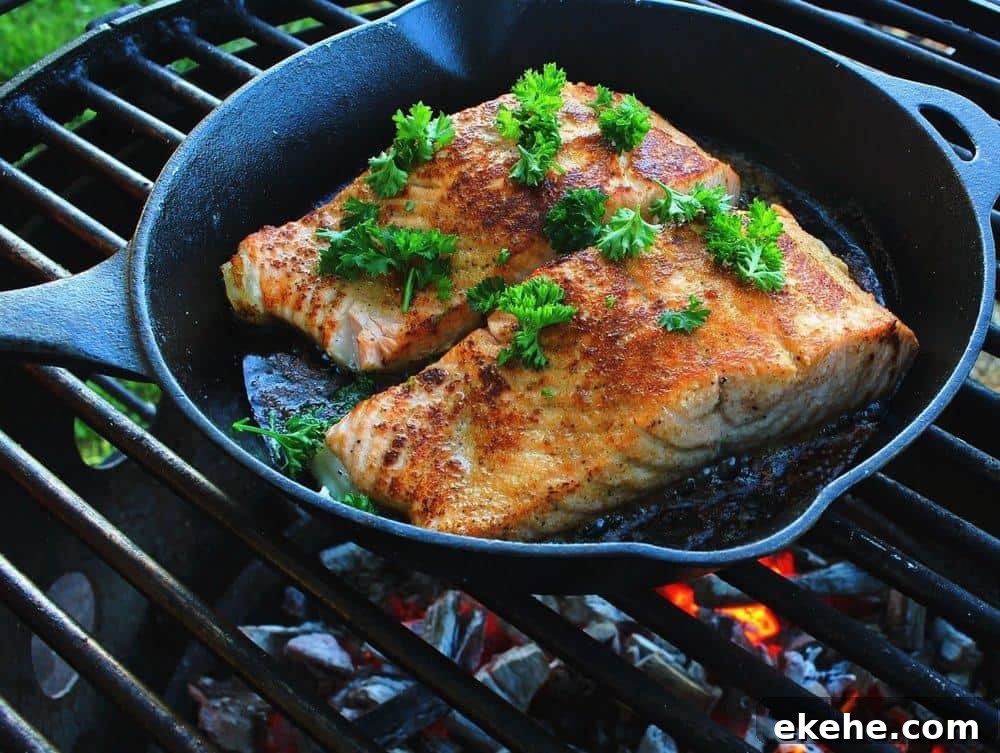
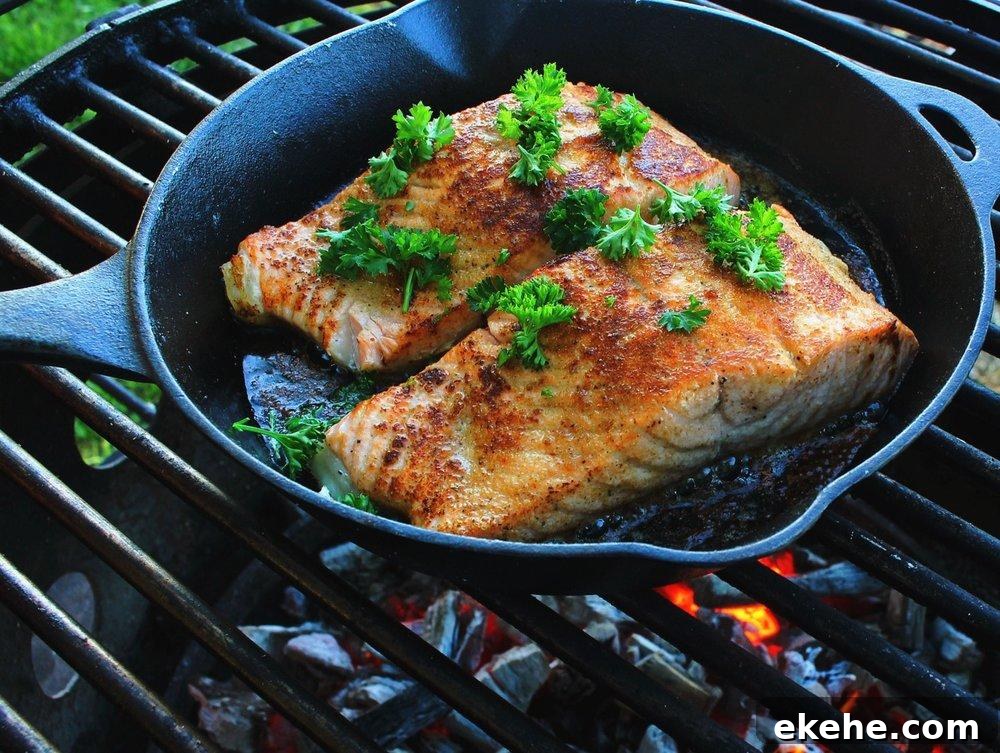
Cast Iron Skillet Salmon is one of my favorite recipes because it uses simple, high-quality ingredients and delivers big flavor. With a hot cast iron pan and a quick-burning hardwood charcoal, the salmon sears quickly, forming a golden crust while the center stays tender and pink. A classic mix of lemon, garlic, and butter brightens and balances the richness.
Post sponsored by Cowboy Charcoal
Table of Contents
- Why You’ll Love Cast Iron Skillet Salmon
- Tender Salmon Ingredients Round-Up
- How to Make Cast Iron Skillet Salmon
- Pro-Tip: Best charcoal for cooking salmon
- What to Serve with Cast Iron Skillet Salmon
- Leftovers and Reheating Salmon
- Cast Iron care & more Recipes
- FAQs for Salmon Recipe
- Flavor X Fire & FOOD X Fire
- Cast Iron Skillet Salmon Recipe
Why You’ll Love Cast Iron Skillet Salmon
There are many ways to cook salmon, but a hot cast iron skillet over high heat is a reliable method for great results. The searing heat crisps the skin and creates a savory crust while locking moisture into the flesh. The result is an attractive, flaky fillet with a bright, flaky interior.
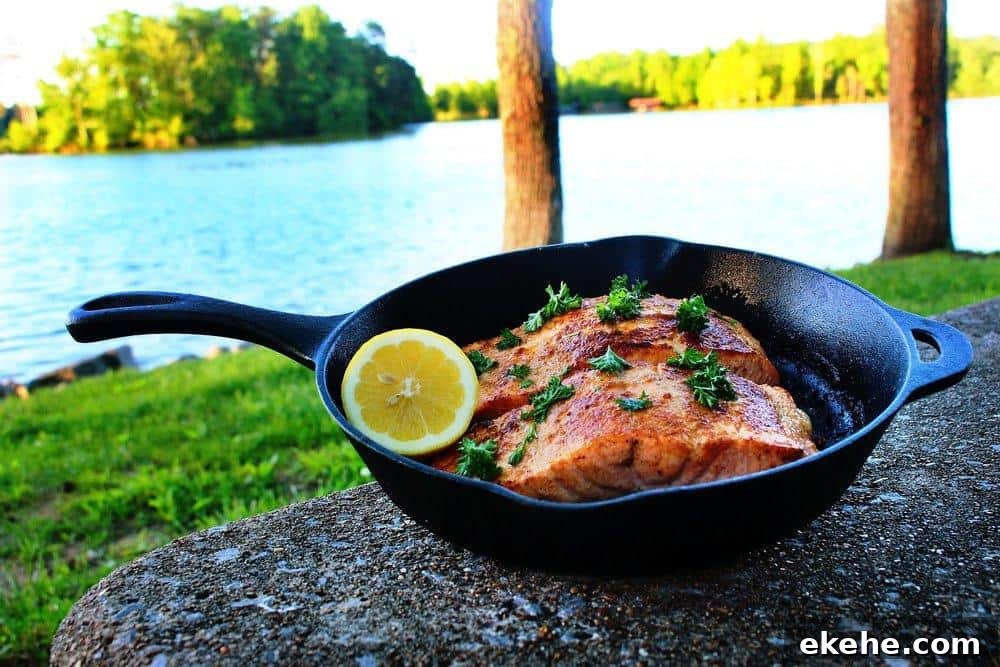
The high heat renders fat and crisps the skin while keeping the center tender. This method works well with wild-caught, sockeye, or farm-raised salmon—just adjust cooking times for fillet thickness. It’s quick to prep, making it ideal for weeknight dinners, and leftover salmon transforms easily into salads or bowls the next day.
Tender Salmon Ingredients Round-Up
A great dish starts with good ingredients. This recipe uses a short list you likely have on hand.
- Salmon – Skin-on fillets are best for crisp skin and juicy flesh. Season simply with lemon, garlic salt, parsley, and butter.
How to Make Cast Iron Skillet Salmon
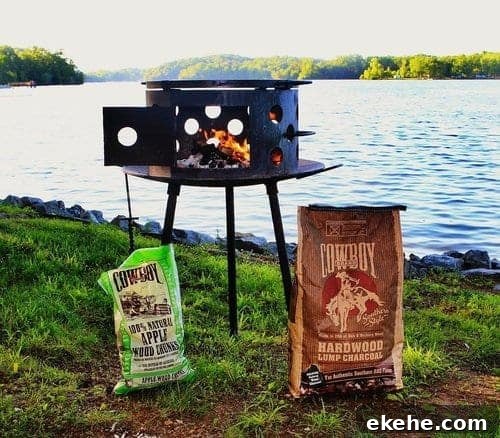
Start by lighting hardwood lump charcoal and letting it burn until the coals are hot and glowing. Spread the coals evenly and preheat your cast iron skillet on the grill for about 10 minutes. A properly preheated pan is essential for a good sear.
Pro-Tip: What’s the best charcoal for cooking salmon in a cast iron skillet?
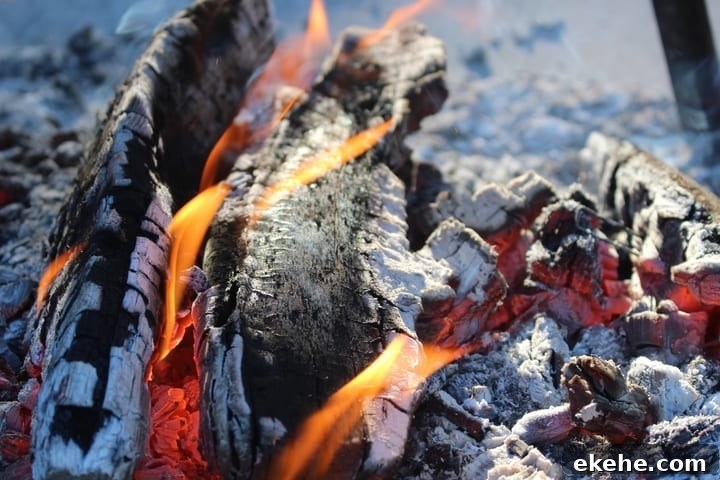
Hardwood lump charcoal burns hot and clean, which gives you quick, high heat for searing without an overly smoky finish. If you want steadier, longer-burning heat, hardwood briquettes work well and still contribute a subtle wood flavor.
While the pan heats, pat the salmon dry to help the skin crisp. Season the flesh side with garlic salt and squeeze lemon over the fillets. Let them rest at room temperature for a few minutes to allow the flavors to settle.
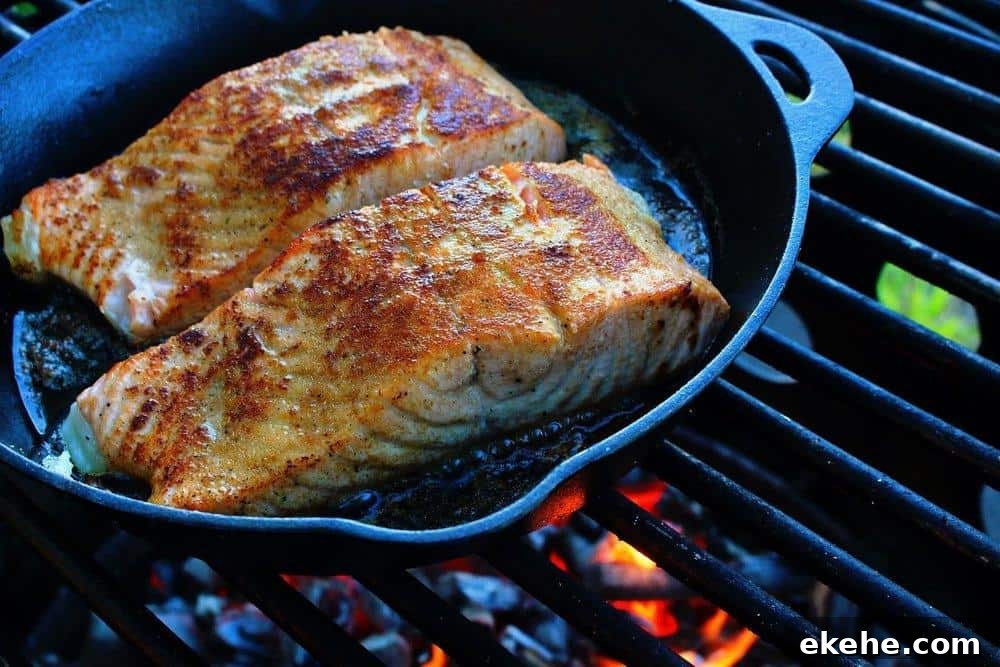
When the skillet is very hot, add the butter and let it melt. Carefully place the salmon skin-side down and sear without moving it for about 6–8 minutes, depending on thickness. Use a fish spatula to flip the fillet, cook flesh-side for 2–3 minutes, then return skin-side down. Finish with a squeeze of lemon and a sprinkle of fresh parsley. Serve immediately.
What to Serve with Cast Iron Skillet Salmon
This salmon pairs with many sides: a crisp green salad, sautéed green beans, grilled asparagus, or roasted potatoes are all excellent choices. For a lighter meal, serve with lemony herbs and a simple vinaigrette.
Leftovers and Reheating Salmon
Store leftovers in an airtight container in the refrigerator for up to two days. Reheat gently over indirect heat on the grill at around 300°F until warmed through, or give it a quick sear for a couple of minutes to refresh the exterior. Chilled leftover salmon can be flaked into salads or served over rice.
Cast Iron care & more Recipes
Dry your cast iron thoroughly after washing to prevent rust—heat it briefly on the stove and apply a thin layer of oil while warm. Regular seasoning keeps the pan non-stick and long-lasting.
5 Ways to Better Use Your Cast Iron
Season or Re-Season a Cast Iron Skillet
Cleaning Your Cast Iron Skillet
Cast Iron Skillet Recipes
FAQs for Salmon Recipe
Wild-caught salmon is often preferred for flavor and leaner texture. Sockeye offers deep flavor; Atlantic (farm-raised) tends to be milder and slightly fattier.
Seek wild salmon from well-managed fisheries and certified sustainable sources. Avoid suppliers with unclear farming practices.
Choose a reputable brand that fits your budget and cooking needs. Look for a skillet with good heat retention and a durable finish.

Get The Cookbooks!
Flavor X Fire & FOOD X Fire
By Derek Wolf
These books explore the main elements of flavor—salty, sour, sweet, bitter, and umami—along with aroma, heat, and texture to help you build balanced dishes.
Cast Iron Skillet Salmon
Pin Recipe
Print Recipe
Ingredients
- 2 fresh salmon filets 5-6 oz each with skin on
- 1 lemon cut in quarters
- 1 tbsp of garlic salt
- 1/2 cup of freshly chopped parsley
- 1/4 cup of butter
Instructions
-
Light hardwood lump charcoal in a chimney and let burn for 10–15 minutes until hot and glowing.
-
Spread hot coals evenly, then preheat the grill and cast iron pan for about 10 minutes.
-
On a plate, pat salmon dry, coat the flesh side with garlic salt, and squeeze two quarters of lemon over the fillets. Let sit for 5 minutes.
-
When the skillet is hot, add all the butter and let it melt.
-
Place salmon skin-side down and sear undisturbed for about 6–8 minutes, depending on thickness.
-
Flip onto the flesh side and cook for 2–3 minutes.
-
Return salmon to skin-side down, squeeze the remaining lemon quarters over the top, and sprinkle with fresh parsley.
-
Serve immediately and enjoy.
Notes
What kind of charcoal is best for cooking salmon in a cast iron skillet?
Hardwood lump charcoal is an excellent choice because it burns hot and clean, providing the high, quick heat needed for a good sear. For steadier heat and longer burn time, hardwood briquettes are a solid alternative and still add a touch of wood flavor.
Gear: Hardwood charcoal, a well-seasoned cast iron skillet, and tongs.
Nutrition
Add flavor to everything you’re cooking
shop over the fire spice lines