
Ferns are attractive, leafy plants that bring a fresh, green feel to any indoor or outdoor space. Keeping them healthy often comes down to the right watering routine — too much water leads to root rot, while too little dries them out. Below is a clear, practical guide to watering ferns, recognizing when they need more or less water, and a few extra care tips to keep their foliage vibrant.
Whether you grow ferns in pots or in the garden, this guide explains how often to water, how to check soil moisture, and useful practices like misting and occasional supplements. Follow these steps to help your ferns thrive.
The Right Way to Water Ferns
Proper watering keeps ferns healthy and green. Use these simple habits:
-
Check the soil first: Before watering, press your finger about an inch into the soil. If it feels dry, water the plant. If it’s still slightly damp, wait a day or two and check again.
-
Water slowly and evenly: Pour water gently so it soaks into the soil rather than running off the surface. The goal is to moisten the root zone, not just the top layer.
-
Allow excess water to drain: For potted ferns, use containers with drainage holes so extra water can escape. Standing water in the pot leads to soggy roots and disease.
-
Use room-temperature water: Water that is too cold can shock the roots. Lukewarm or room-temperature water is best.
-
Mist for humidity: Ferns enjoy humidity. Lightly mist the fronds when indoor air is dry, but remember misting cannot replace deep watering of the soil.
How Often Should You Water Ferns?
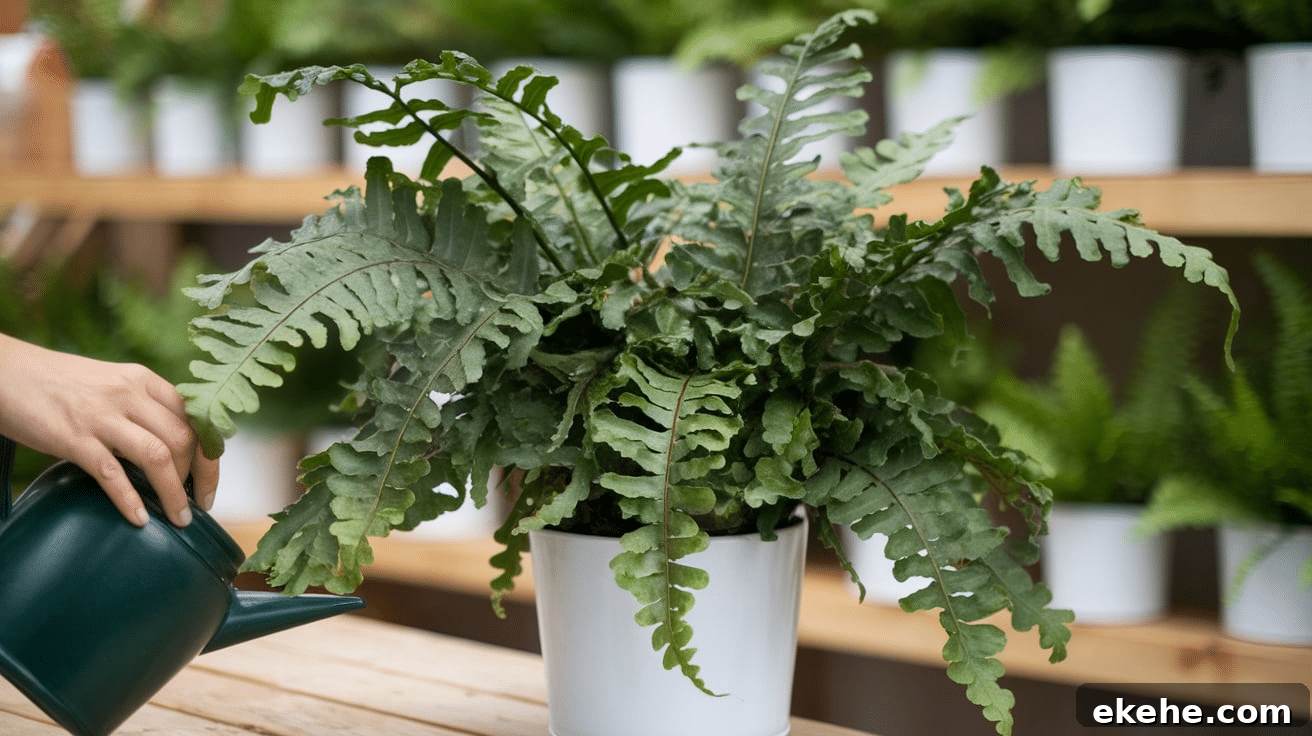
Watering frequency depends on location and conditions. For indoor ferns, a typical schedule is once or twice a week. Always check the soil before watering — ferns like consistently moist soil but not waterlogged conditions.
Outdoor ferns may need more frequent watering during hot or dry weather. In summer, watering every other day can be necessary, while in cooler seasons once a week is often sufficient. Aim to keep the soil slightly damp: not bone-dry, and not soggy. If unsure, err on the side of a light watering rather than heavy saturation, since prolonged soggy soil harms roots.
Signs Your Fern Needs More or Less Water
Watching your fern’s leaves and soil is the easiest way to detect watering problems. Here are common signs:
1. Signs Your Fern Needs More Water
- Dry, crispy leaves: Brown, crunchy leaf edges indicate underwatering.
- Drooping or wilting: Limp, drooping fronds often mean the plant needs more water.
- Dry soil: If the soil is dry an inch or more below the surface, it’s time to water.
2. Signs Your Fern Needs Less Water
- Yellowing leaves: Excess water commonly causes leaves to yellow.
- Mushy stems or roots: Soft or slimy bases are a warning of overwatering and possible rot.
- Soggy soil or foul smell: Consistently wet soil that smells bad is holding too much moisture and may need improved drainage or reduced watering.
Respond to these signs by adjusting your watering schedule and checking pot drainage and soil mix.
What About Watering Ferns with Epsom Salt?
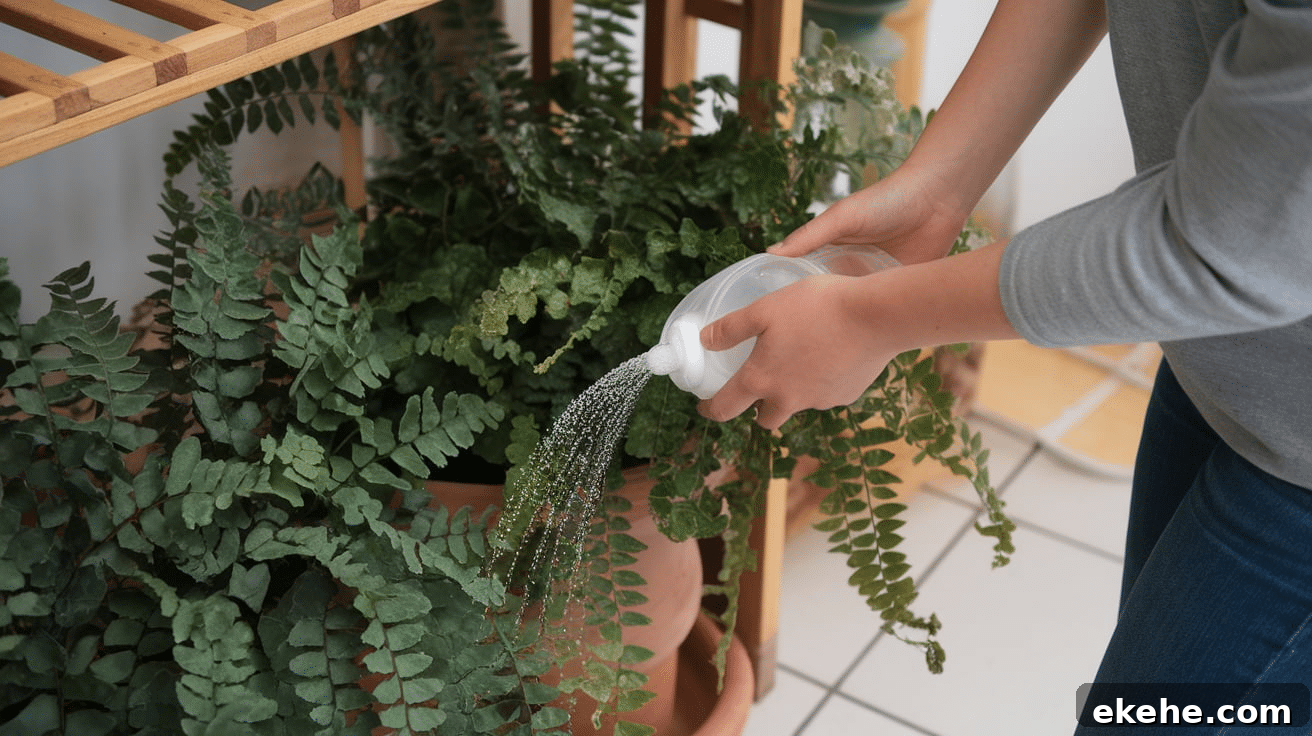
Epsom salt contains magnesium and sulfate, nutrients that can help plants produce chlorophyll and support growth. For ferns, Epsom salt can be beneficial in specific situations, but it is not a routine requirement for most healthy plants.
1. Is Epsom Salt Good for Ferns?
Magnesium supports chlorophyll production, and sulfate contributes to overall plant health. If a fern shows signs of magnesium deficiency — such as pale or yellowing leaves not caused by overwatering or pests — Epsom salt may help. However, healthy ferns generally receive sufficient nutrients from a balanced potting mix and regular care.
2. When Should You Use Epsom Salt?
Consider Epsom salt if you see:
- Yellowing leaves not linked to overwatering or pests
- Slow growth despite adequate light and water
- Pale, dull foliage lacking normal green color
These symptoms may indicate a magnesium deficiency. Confirm other causes first before adding supplements.
3. How to Use Epsom Salt for Ferns
Use Epsom salt sparingly and follow these steps:
- Mix 1 tablespoon of Epsom salt with 1 gallon of water.
- Stir until the salt dissolves completely.
- Use this solution to water the fern once a month at the base of the plant.
- Avoid frequent use to prevent mineral buildup in the soil.
4. Important Tips to Remember
- Don’t overdo it — excessive Epsom salt can damage roots and burn leaves.
- Rule out other problems first; yellow leaves can result from poor light, pests, or overwatering.
- Regular care and proper soil usually supply the nutrients most ferns need.
5. Do Ferns Really Need Epsom Salt?
Most of the time, no. If a fern is healthy with vibrant green leaves and steady growth, Epsom salt isn’t necessary. Treat it as a targeted supplement for suspected magnesium deficiency, not a routine additive.
Tips for Keeping Ferns Healthy
Beyond watering, several care practices help ferns stay lush and attractive:
1. Keep soil moist but not waterlogged: Aim for a consistency like a wrung-out sponge. Check soil moisture regularly and avoid prolonged saturation.
2. Provide indirect light: Ferns prefer filtered or indirect light. Avoid harsh direct sunlight, which can scorch fronds.
3. Increase humidity: Misting, a nearby tray of water, or grouping plants together helps maintain humidity levels ferns appreciate.
4. Use well-draining soil: A light, loose potting mix with good drainage, or adding peat moss, supports healthy roots.
5. Trim dead foliage: Remove brown or yellow leaves with clean scissors to encourage new growth and keep the plant tidy.
6. Avoid over-fertilizing: Feed with a weak liquid fertilizer once a month in spring and summer if needed; avoid heavy feeding.
7. Protect from drafts: Keep ferns away from cold drafts, vents, and sudden temperature changes.
Consistent care and attention to watering, light, and humidity will keep your ferns thriving.
Conclusion
Caring for ferns is straightforward when you focus on steady soil moisture, appropriate light, and adequate humidity. Watch for signs such as yellowing or drooping fronds to adjust watering. Epsom salt can help only when a magnesium deficiency is suspected, but most ferns do well with good soil, moderate feeding, and correct watering practices.
With these guidelines, your ferns should remain healthy and vibrant, adding natural beauty to your home or garden.