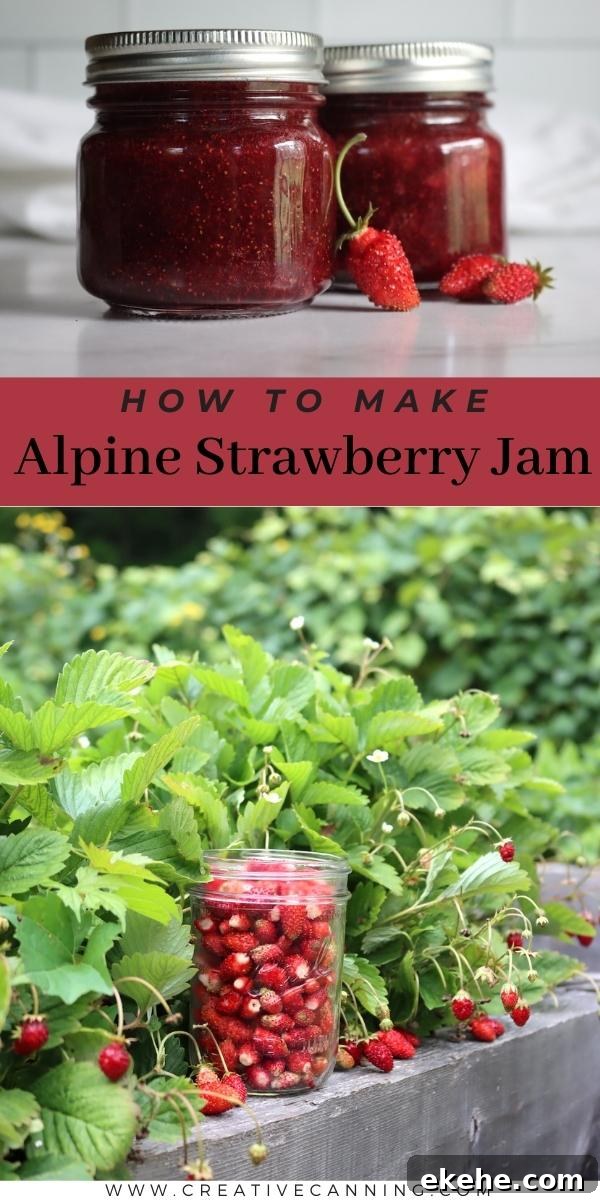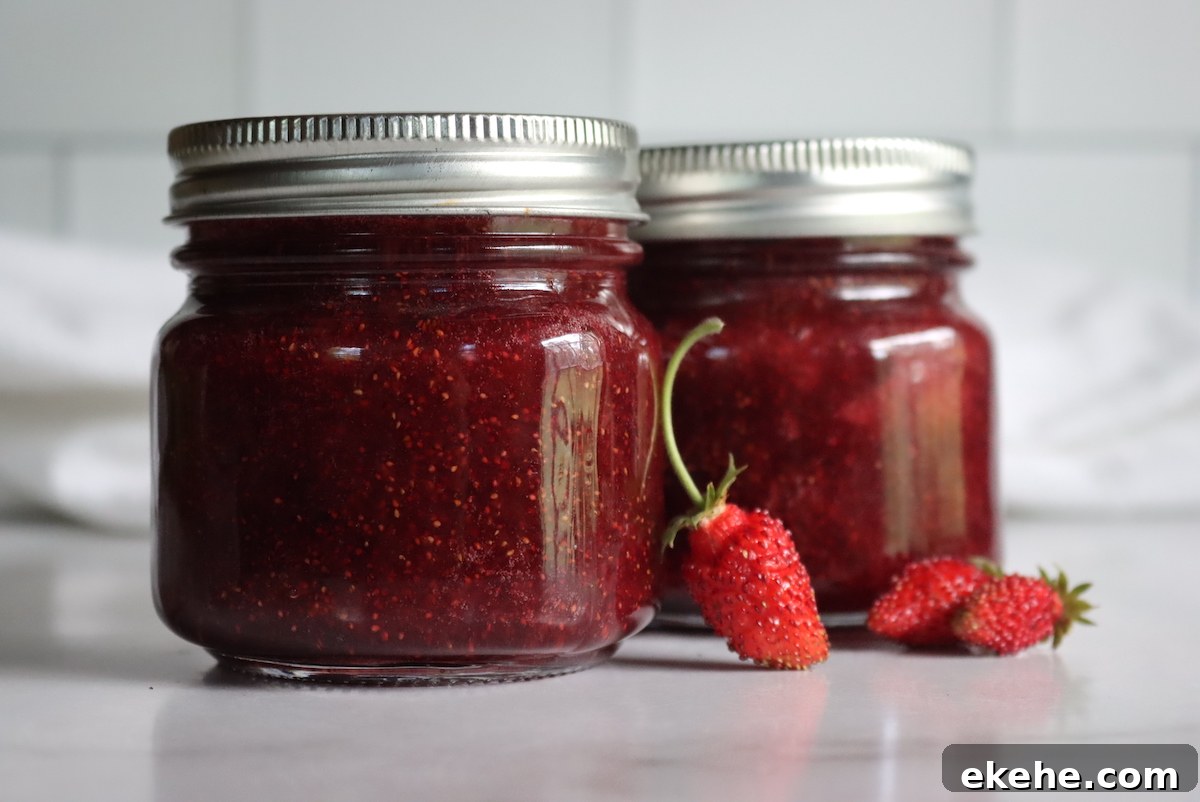
Alpine strawberry jam delivers an intense, concentrated strawberry flavor and is simple to make at home with just a few ingredients — no added pectin required.
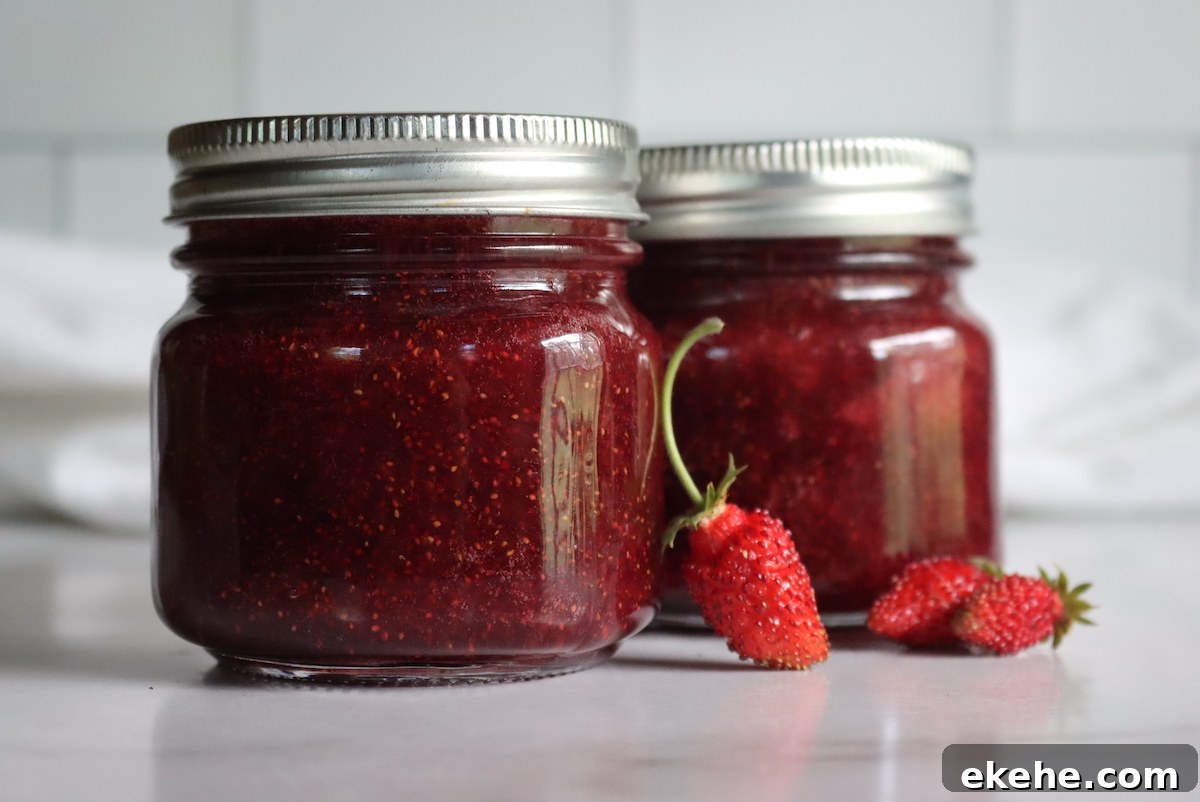
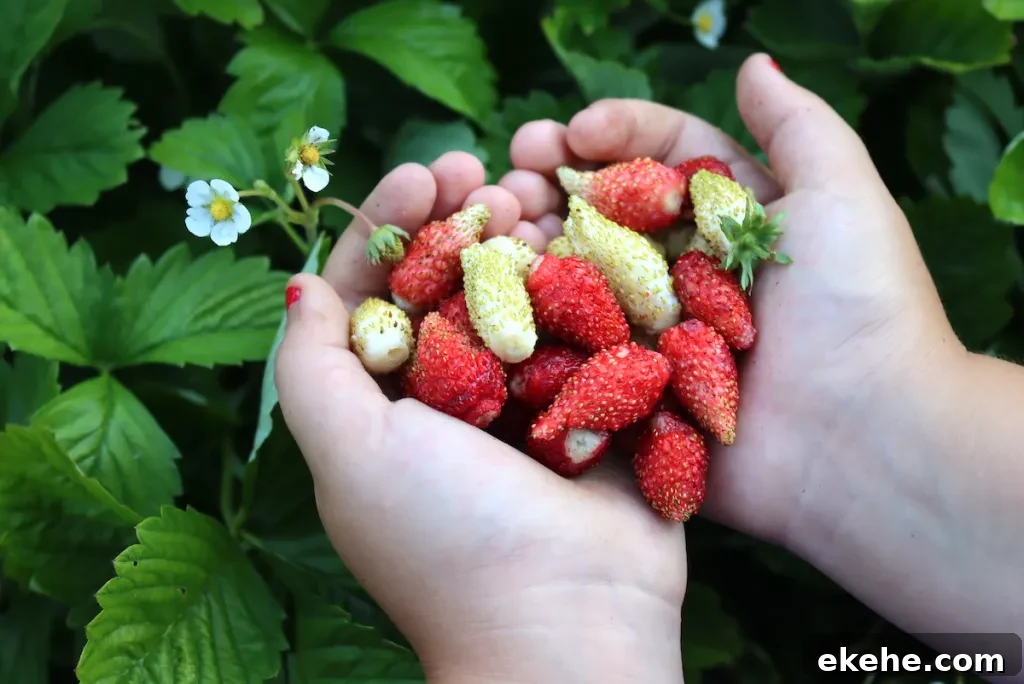
Alpine strawberries differ from garden strawberries in a few notable ways. Their flavor is far more intense, as if the full sweetness and aroma of a larger berry have been concentrated into a tiny fruit. They are also firmer and less juicy, which makes them ideal for quick, flavorful jams.
Because alpine strawberries have more flavor and less liquid, they work especially well for making a small-batch jam that cooks quickly on the stove and yields a richly flavored preserve.
This jam tastes like the most concentrated strawberry spread you’ve had, and it comes together in minutes. The recipe below works nicely with European-style alpine strawberries as well as with wild strawberries commonly found across the U.S. in summer.
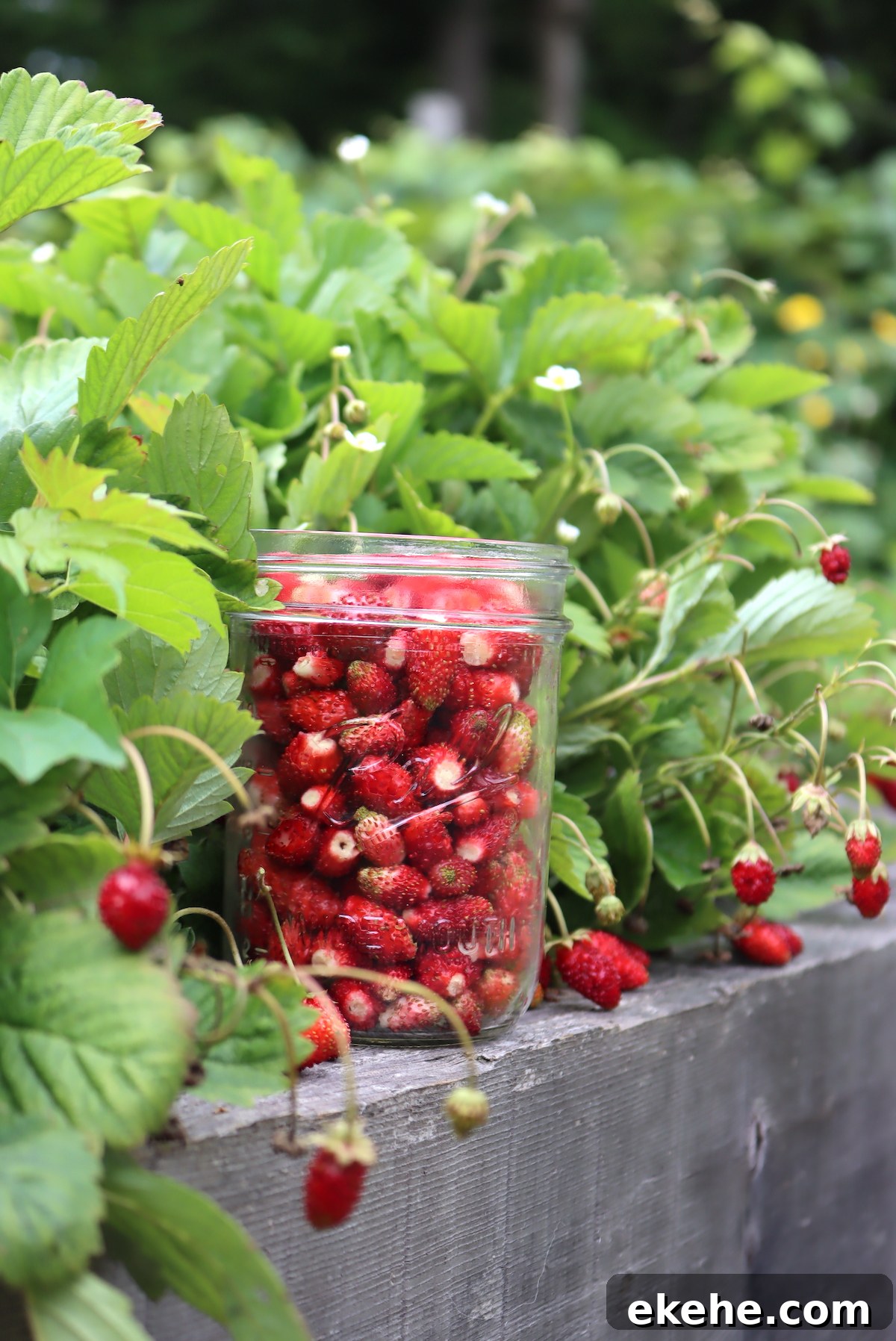
Ingredients for Alpine Strawberry Jam
You only need three ingredients to make alpine strawberry jam: fresh alpine or wild strawberries, granulated sugar, and lemon juice.
To make about two 8-ounce jars (roughly 2 cups) of jam, use:
4 cups whole fruit (about 360 grams)
2 cups sugar (about 400 grams)
2 tablespoons lemon juice (about 30 ml)
This yields a traditionally sweet European-style jam. The lemon juice balances the sweetness and contributes natural pectin to help the jam set. You can add a touch more lemon juice for brightness, but reducing it can affect how well the jam gels and will make the spread noticeably sweeter.
This recipe relies on a higher sugar ratio to set without added pectin. If you prefer a lower-sugar version, use a low-sugar pectin product and follow the manufacturer’s instructions for strawberry jam.
Note: 1 cup of whole alpine strawberries is roughly 90 grams.
How to Make Alpine Strawberry Jam
Making this jam is straightforward. Put all ingredients into a deep saucepan or jam pot, gently mash some of the berries with the back of a spoon, then bring the mixture to a boil over medium-high heat. Boil vigorously, stirring frequently to prevent scorching, for about 8–10 minutes until the jam reaches its gel point.
For testing the set, you can chill a small plate in the freezer and spoon a drop of jam onto it; if it wrinkles when pushed with a finger, it’s set. A more reliable method is to use an instant-read thermometer: jams typically reach gel stage at 220°F (105°C) at sea level. That temperature drops by about 1°F for every 500 feet above sea level, so adjust accordingly.
When the jam reaches the proper temperature and appearance, remove it from the heat and ladle into prepared jars, leaving about 1/4 inch headspace.
Alpine Strawberry Jam Variations
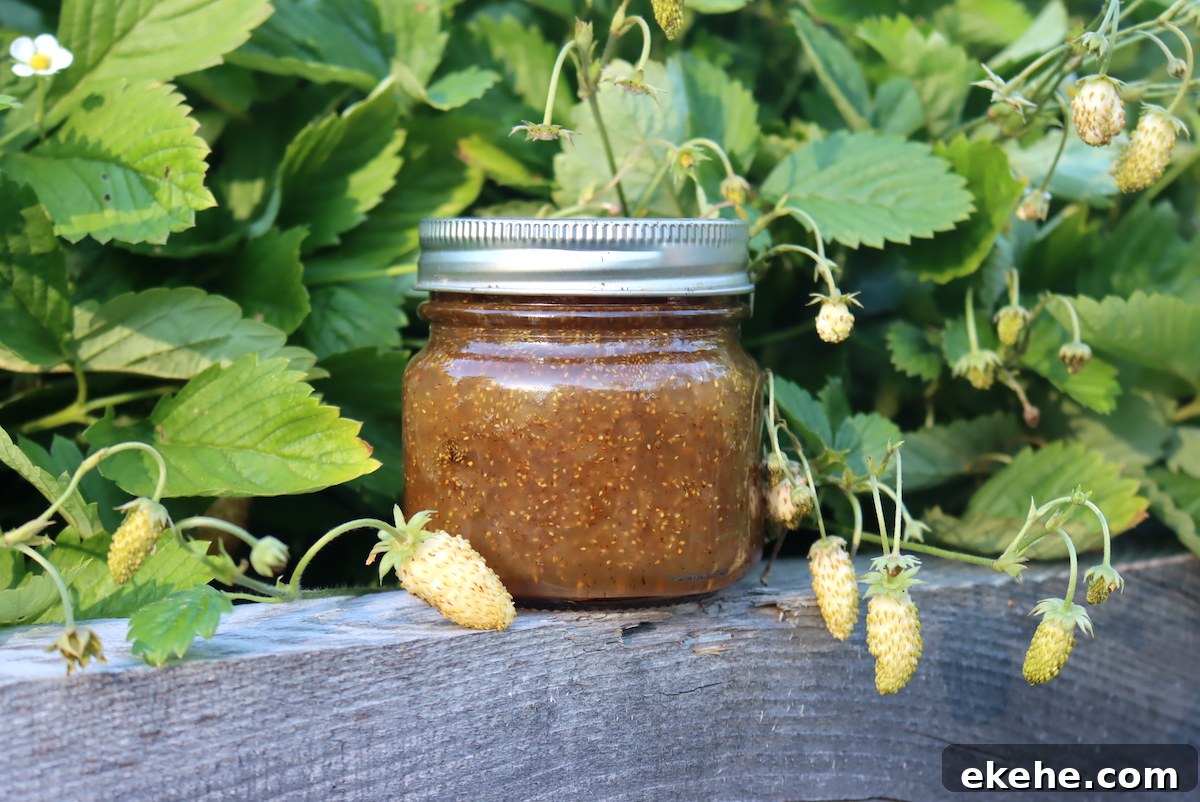
Alpine strawberries come in several varieties, some ripening to white or pale yellow. These lighter types have a slightly different, more tropical flavor—somewhat reminiscent of pineapple—and produce a visually and flavorfully unique jam.
You can also fold in complementary flavors at the end of cooking, such as a splash of vanilla extract, a bit of citrus zest, or a touch of fresh herbs like basil or mint for an inventive twist.
Canning Alpine Strawberry Jam
Alpine strawberries are naturally acidic like regular strawberries, and adding lemon juice in this recipe increases acidity and helps preserve the jam. If you plan to shelf-stable can the jam, process filled jars in a boiling water bath canner for 10 minutes. At elevations above 6,000 feet, increase processing time to 15 minutes.
If you’re new to water-bath canning, consult a trusted canning guide before starting to ensure safe jar preparation, headspace, and processing procedures.
Alpine Strawberry Jam
Rate
Equipment
-
Water Bath Canner (optional)
Ingredients
- 4 cups Alpine Strawberries, or about 360 grams
- 2 cups sugar, 400 grams
- 2 tbsp lemon juice, 30 ml
Instructions
-
If canning, prepare a water bath canner before you begin.
-
Place the strawberries, sugar, and lemon juice in a deep saucepan or jam pot. Mash some of the berries with the back of a spoon to release juices.
-
Bring to a boil over medium-high heat and boil hard, stirring frequently, for 8–10 minutes until the mixture reaches gel stage (about 220°F / 105°C at sea level; adjust for elevation).
-
Remove from heat and ladle into prepared jars, leaving 1/4 inch headspace.
-
If canning, process jars in a water bath canner for 10 minutes (15 minutes if above 6,000 feet elevation).
-
If not canning, cool and store the jam in the refrigerator and use within a few weeks.
Notes
Gel stage is reached when the mixture hits about 220°F (105°C) at sea level. Reduce the target temperature by about 1°F for every 500 feet of elevation above sea level.
Nutrition
Nutrition information is automatically calculated and should be used as an approximation.
Old Fashioned Jam Recipes
If you enjoy making jam the old-fashioned way with no added pectin, try other classic recipes that rely on fruit, sugar, and time to set.
- Raspberry Jam
- Cranberry Apple Jam
- Nectarine Jam
- Apricot Jam
- Persimmon Jam
Summer Fruit Canning Recipes
If you’re preserving summer fruit, there are many simple canning recipes to explore for peaches, plums, blueberries, blackberries, and raspberries. Canning season is a great way to enjoy peak-season fruit year-round.
- Canning Peaches
- Canning Plums
- Canning Blueberries
- Canning Blackberries
- Canning Raspberries