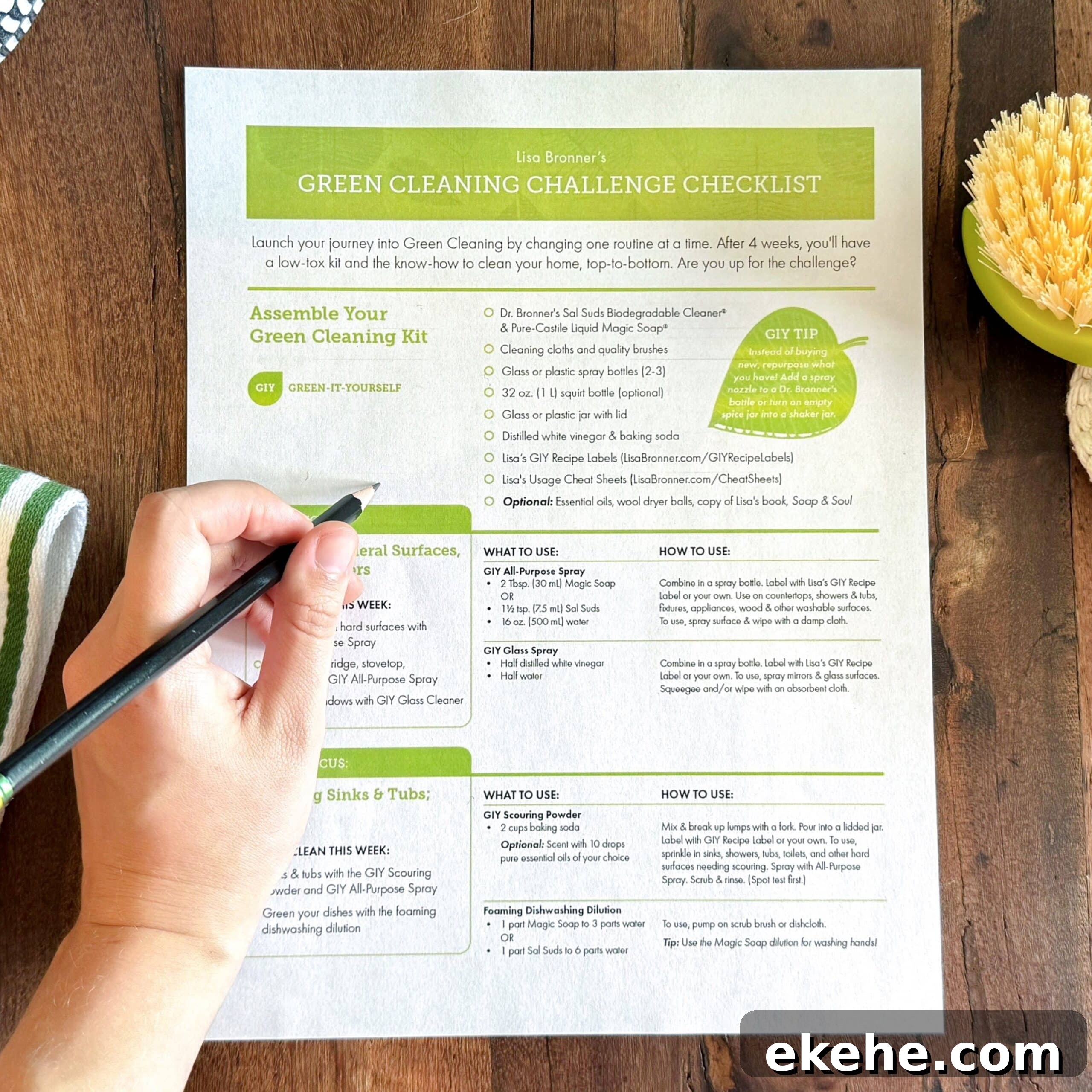
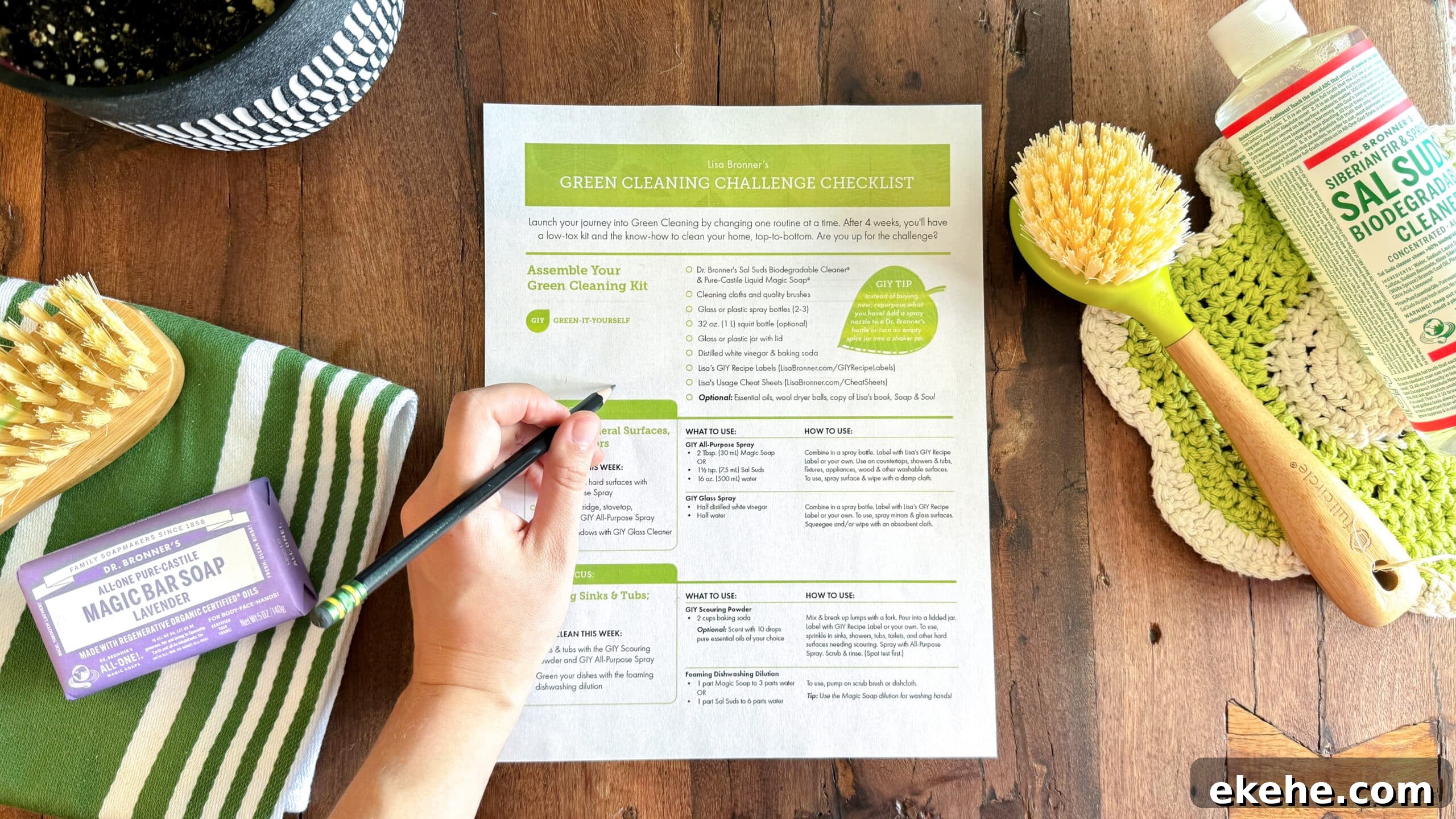
You’ve meant to switch to greener cleaning, but life got busy or you weren’t sure where to begin. This Green Cleaning Challenge Checklist is designed for the well-intentioned, time-pressed person who wants to make safer, more sustainable choices at home without overwhelm. Over four weeks you’ll build a low-tox cleaning kit and learn reliable, easy-to-remember solutions to clean your home from top to bottom. The plan moves you step-by-step from conventional products to effective, natural alternatives so you can create a dependable DIY non-toxic cleaning arsenal.
Table of contents:
- What is green cleaning?
- What are the benefits of green cleaning?
- Why make your own cleaners?
- How is GIY different from DIY?
- Your Green Cleaning Starter Kit
- How to take that first step into green cleaning
- How to use the Challenge Checklist
- The Green Cleaning Challenge Checklist
- How to dispose of conventional cleaners safely
- What is the shelf life of homemade cleaners?
What is green cleaning?
Green cleaning is about stewardship: caring for our homes, bodies, pets, workplaces, gardens, and the outdoors in ways that promote health, minimize harm and waste, use sustainable and renewable resources, and remain practical for our schedules and budgets. In a home context, green cleaning focuses on methods that remove dirt and germs while leaving minimal residues, reducing airborne pollutants and other harmful side effects. The word “green” is used widely and without regulation, so here it simply means leaving a place better than you found it.
What are the benefits of green cleaning?
We clean for hygiene, to reduce germs and particles that can make us ill; for appearance and comfort, to make spaces pleasant; and for longevity, to keep our homes in good working order. Conventional cleaners can undermine these goals by exposing people to undisclosed fragrance chemicals, hormone-disrupting preservatives, and sensitizing compounds. Production and disposal of petrochemical-based or non-biodegradable cleaners can also harm soil, water, and air.
My working definition of “green” is: leave the place better than I found it. Fundamentally, it is about stewardship.
Worse, when conventional products are misused or accessed by children or pets, label warnings like “causes irreversible skin damage” or “call Poison Control” are common. Natural cleaning options can handle household tasks effectively without those risks. Research has also linked frequent use of intensive cleaning products to higher risks of respiratory disease, which motivated many people to seek safer alternatives.
Why make your own cleaners?
Making your own cleaners gives you control over ingredients, allows customization for your needs and scent preferences, reduces packaging waste, and saves money. While some commercial products label themselves “green,” the term is unregulated and can hide questionable ingredients. DIY—or as I like to call it, GIY (Green-It-Yourself)—keeps you in charge of safety and transparency.
How is GIY different from DIY?
GIY stands for Green-It-Yourself. It’s the same hands-on approach as DIY but with a specific focus on non-toxic, low-impact ingredients. GIY emphasizes safety and sustainability while delivering effective cleaning solutions.
Your Green Cleaning Starter Kit
You don’t need a lot of items to begin. A small, well-chosen kit can replace many conventional products because homemade solutions tend to be versatile. Gather a few basics and you’ll be ready to start making replacements one by one.
What you’ll need:
- Dr. Bronner’s Sal Suds Biodegradable Cleaner® or Pure-Castile Liquid Soap® (either works; see below for differences)
- Cleaning cloths and quality brushes
- 2–3 glass or plastic spray bottles (a 16 oz size is practical)
- Optional 32 oz squirt bottle
- Glass or plastic shaker jar with holes in the lid
- Distilled white vinegar (4–5% kitchen vinegar)
- Baking soda
- Recipe labels and usage cheat sheets for reference
- Optional: essential oils, wool dryer balls, and helpful reading on low-tox cleaning
Dr. Bronner’s Sal Suds vs. Castile Soap – which should you use?
Sal Suds is a mild detergent; Pure-Castile is a true soap. Both are concentrated, biodegradable, and versatile cleaners. If you have one, use it; if both, choose whichever is handy. Detergents like Sal Suds perform better in hard water and on shiny surfaces, while true soaps can be affected by mineral-rich water and sometimes leave a cloudy residue. For most tasks they are interchangeable.
Green cleaning tools
Invest in durable tools so you buy less and keep them longer. Quality cleaning cloths should be washable, absorbent, and low-lint—microfiber works well when cared for properly. Wash new microfiber in a mesh bag to capture initial shedding. Choose sturdy spray bottles from hardware stores and sizes you’ll use up every few weeks so solutions stay fresh. Keep cheat sheets for dilutions handy, for example on the inside of your cleaning cabinet door.
My book and reference sheets explain recipes and the science behind them for those who want deeper understanding and confidence.
Supporting ingredients
Vinegar: Useful on glass, ceramic, and porcelain, but it is acidic and can corrode metal, etch natural stone, and damage wood. Use standard 4–5% kitchen vinegar; avoid highly concentrated “cleaning vinegar.”
Baking soda: Great for scouring and deodorizing; it stores well and is a versatile abrasive.
Other helpful items include wool dryer balls for laundry and essential oils to personalize scent and support cleaning, used sparingly and properly diluted.
What not to mix
Chemical reactions can make combinations ineffective or dangerous. Avoid these mixes:
- Soap and vinegar (or any acid): they react and create a messy, ineffective result.
- Sal Suds and vinegar: vinegar can reduce Sal Suds’ cleaning effectiveness.
- Baking soda and vinegar: the fizz is satisfying but the reaction leaves ineffective water and sodium acetate; don’t premix or store in a closed container.
- Vinegar and hydrogen peroxide: together they form peracetic acid, which is hazardous.
Never mix bleach with other cleaners: bleach plus ammonia creates chloramines, bleach plus acid releases chlorine gas, and bleach with alcohol forms chloroform. Avoid combining bleach with unknown store-bought formulations.
How to take that first step into green cleaning
Change one thing at a time. Replacing everything at once is expensive, confusing, and often short-lived. Learn one new recipe, use it until you’re comfortable, then move on. This gradual approach increases your chance of lasting success. The Green Cleaning Challenge Checklist below is intended to guide that gradual shift simply and affordably.
How to use the Green Cleaning Challenge Checklist
Print the checklist and keep it inside a cabinet door or bookmark this page. Gather your supplies—many are likely already in your kitchen—and buy only what you need. Up-front costs are modest and infrequent; over time you’ll save money compared to buying multiple conventional cleaners.
The Green Cleaning Challenge Checklist
Here is the Challenge Checklist to guide you through a month of GIY swaps, one week at a time. Start with the product you use most: an all-purpose cleaning spray for counters, sinks, fixtures, tubs, appliances, walls, and more. A single versatile cleaner can replace many specialized bottles and reduce clutter.
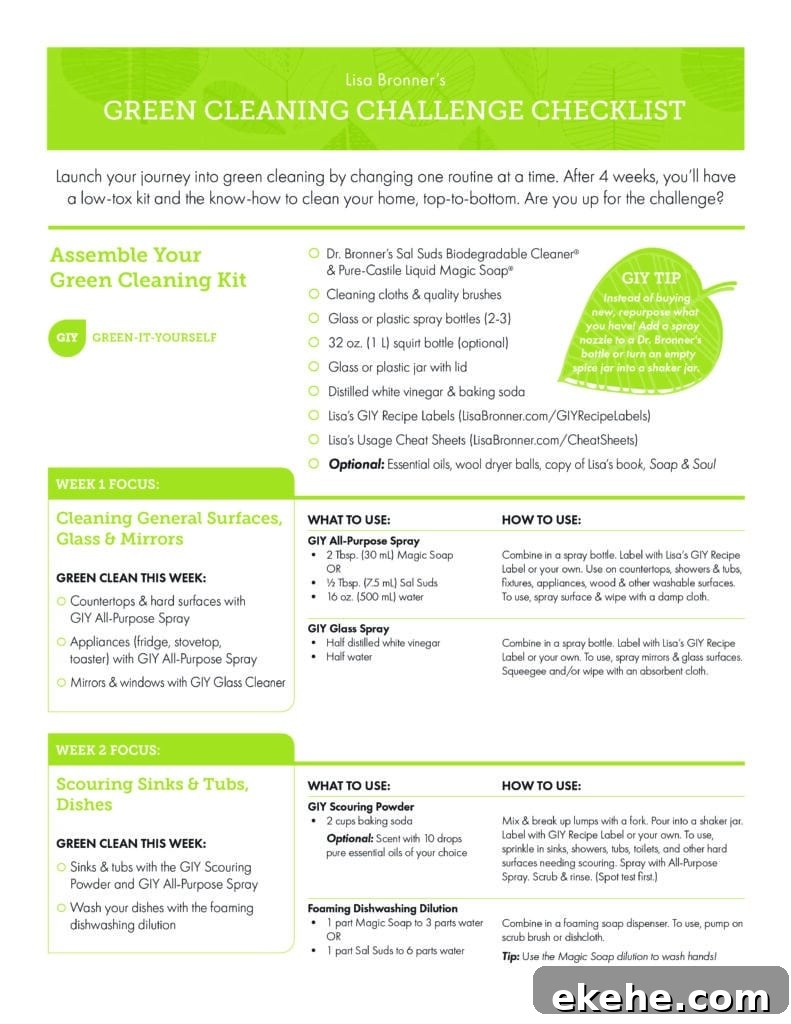
Work through the checklist to replace cleaners for countertops, glass and mirrors, dishes, tubs and sinks, laundry, furniture, and floors. The aim is to simplify and standardize your cleaning routine while improving safety and reducing waste.
How to dispose of conventional cleaners safely
When you phase out conventional products, choose one of two responsible options:
- Give them away to someone who is still using conventional cleaners, which avoids immediate waste and keeps packaging out of the landfill.
- Dispose of them as hazardous waste at an appropriate municipal drop-off. Do not pour these products down drains or into septic systems.
What is the shelf life of homemade cleaners?
Homemade cleaners lack chemical preservatives, which is part of their safety advantage. Expect a shelf life of about 2–4 weeks; after that remake them. Over time you’ll learn how much you use in that window and prepare appropriate batch sizes. Store solutions in a cool, dark place and use distilled or filtered water to extend longevity. Label bottles with dates and recipes for easy refills.
Frequently asked questions
How is Dr. Bronner’s Sal Suds different from Castile Magic Soap? Sal Suds is a gentle detergent formulated for household cleaning and hard water; Castile Magic Soap is a true soap that also works well for the body and many household tasks. Choose based on availability and the specific cleaning situation.
Which conventional cleaner should I replace first? Start with the one you use most—usually an all-purpose spray.
How do I dispose of conventional cleaners? Give them away to someone who still uses them or take them to a hazardous waste disposal site.
What is the shelf life of homemade cleaners? About 2–4 weeks; make smaller batches if you don’t use them up.
Are homemade cleaners as effective as store-bought? Yes—when properly formulated and used, homemade cleaners work as well as conventional products.
Are green cleaners safe for pets and kids? Green cleaners are generally safer than conventional alternatives. Essential oils can be of concern only if applied full-strength to animals; in diluted cleaning recipes they do not leave residues that harm pets or children when used properly.
Now is the time to begin your green cleaning challenge
Starting is the hardest part, but you can do this one step at a time. As you continue you’ll spend less, live in a healthier environment, and gain confidence in low-tox cleaning. Share your experience and tips so others can learn from your journey.
Further reading
- 13 Non-Toxic DIY Recipes for Cleaning and Body Care
- Your Guide to Building a Green Cleaning Starter Kit
- How Green Cleaning Can Save You Money
Many of these tips and more are explained in detail in Soap & Soul: A Practical Guide to Minding Your Home, Your Body, and Your Spirit with Dr. Bronner’s Magic Soaps.