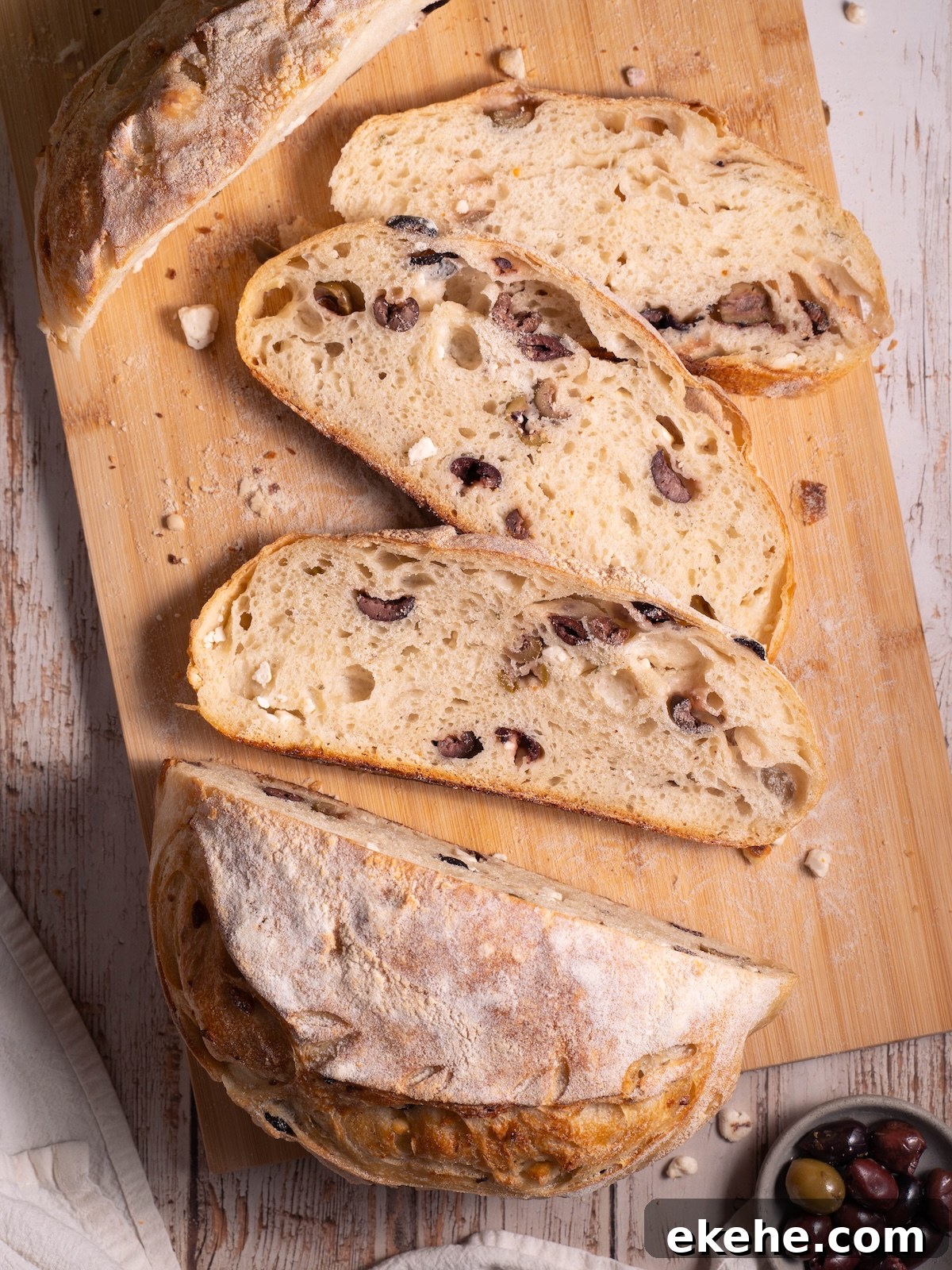
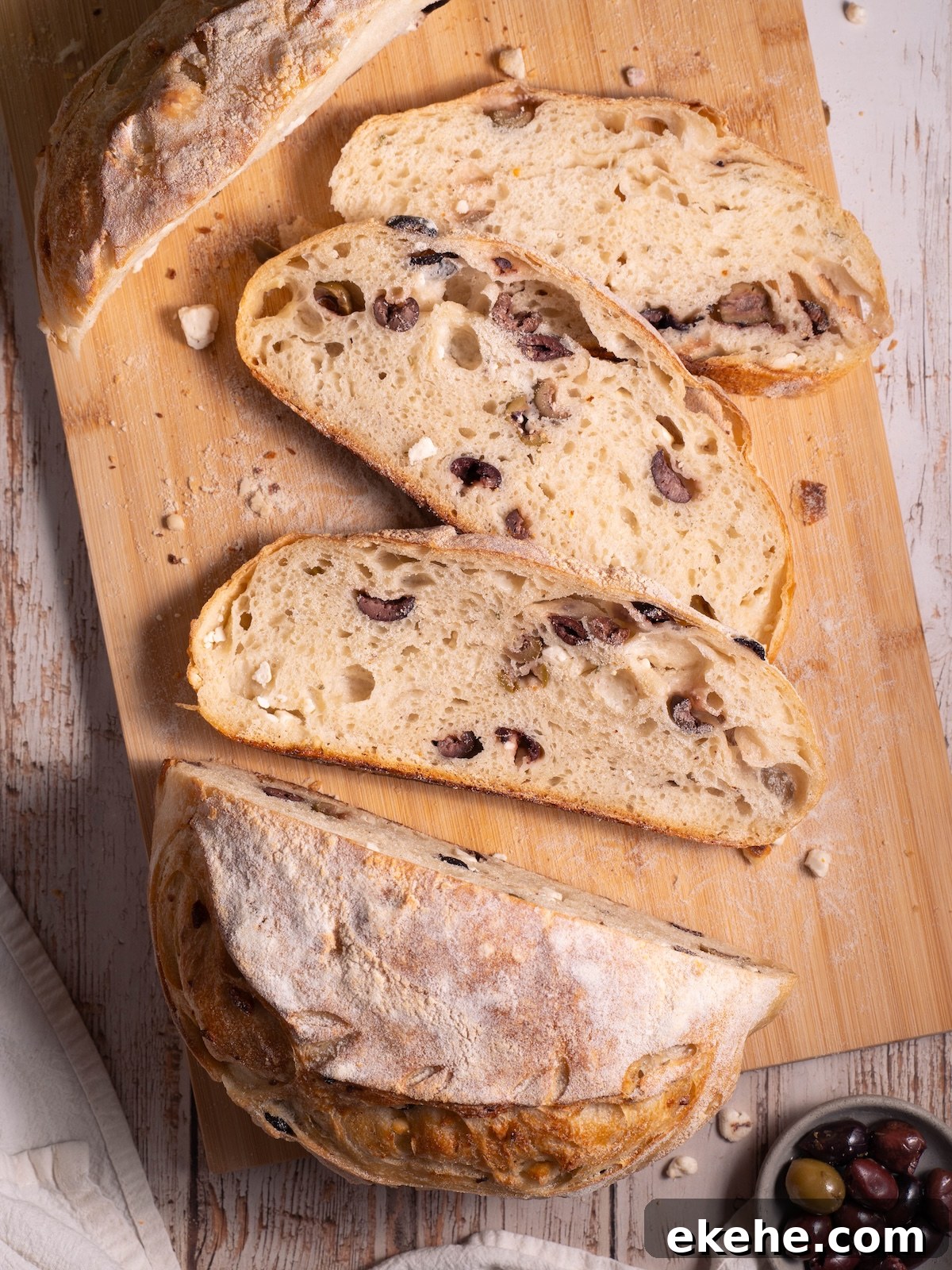
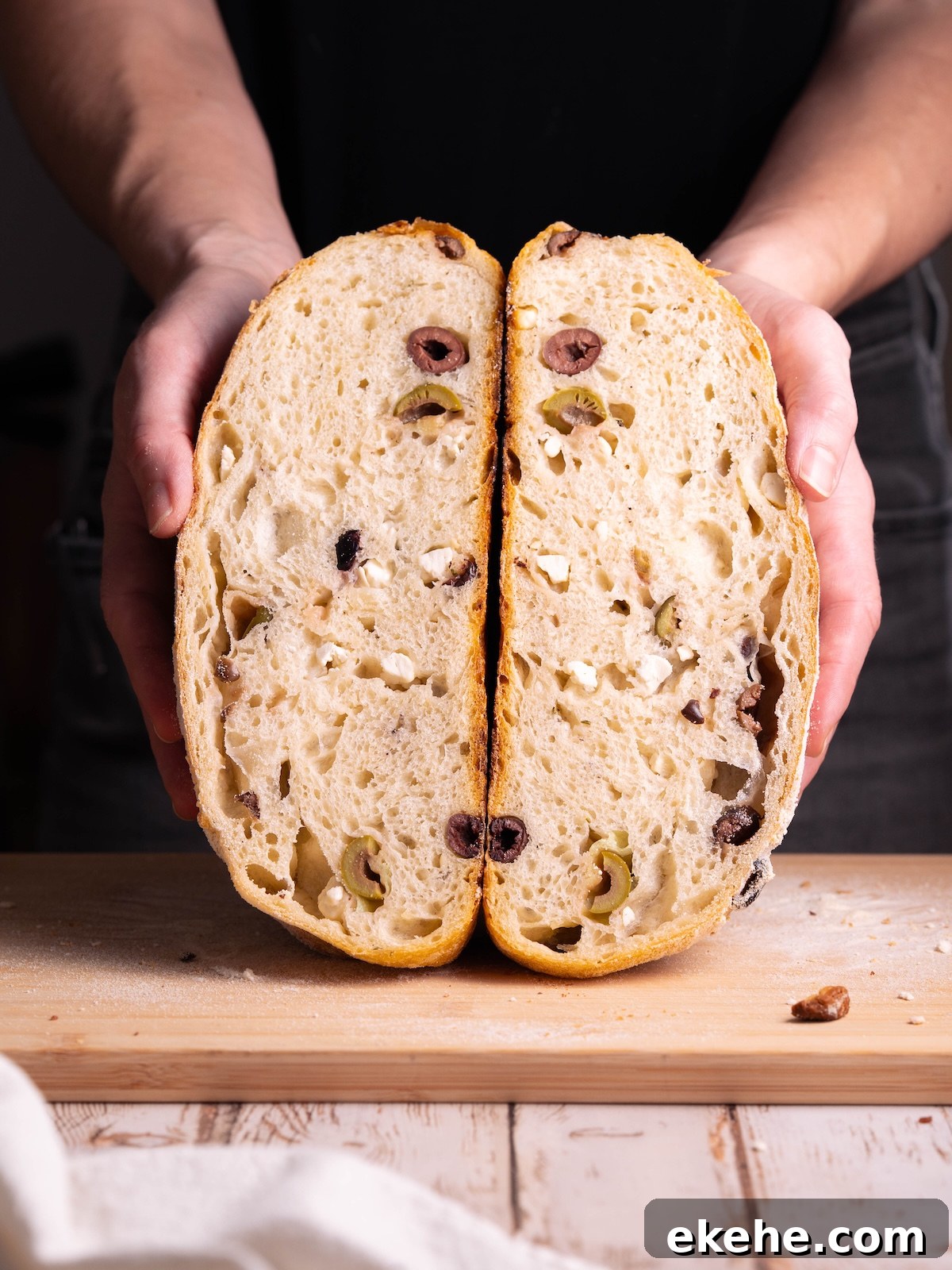
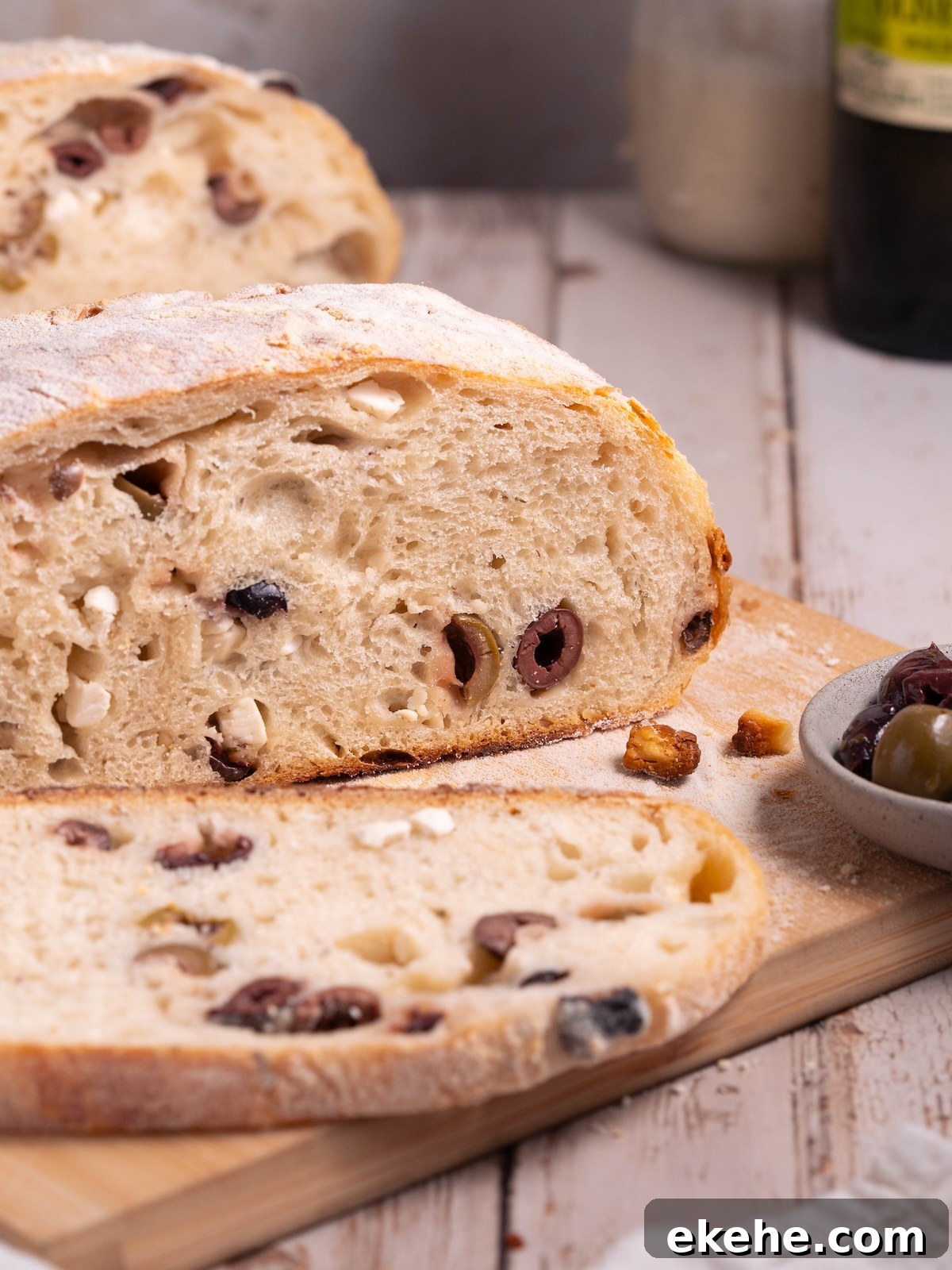
This olive feta sourdough is a bold, savory loaf loaded with briny olives and tangy feta. It bakes up with a crackly, golden crust and a chewy, open crumb, while fresh rosemary and a touch of olive oil give it a distinct Mediterranean character.
This is not a subtle bread—the feta gives bright, salty hits and the olives add rich, briny pockets throughout the crumb. If you enjoy savory bakes and sourdough variations, this loaf is an excellent addition to your repertoire.
Recipe highlights
- Robust Mediterranean flavors from olives, feta, and rosemary
- Classic sourdough texture: crisp crust and chewy interior
- Low-effort handling: no kneading, just stretch-and-folds
- Versatile: great for meals, sandwiches, or snacking
- Customizable: easily swap olives, herbs, or adjust the feta
Recipe overview
⏱️ Prep: ~30 minutes active • Bulk ferment: 3–5 hours • Cold proof: Overnight
🔥 Bake: 45–50 minutes
🍞 Yield: 1 loaf
💪 Skill level: Intermediate
😋 Flavor profile: Savory, briny, tangy, herby. Pairs well with: olive oil, hummus, fresh tomatoes, roasted vegetables, Mediterranean soups and salads.
If you like savory sourdoughs, try other flavored loaves to explore variations and techniques that complement this recipe.
How to make olive & feta sourdough bread
Below is a concise overview of the process. The full ingredient list and detailed steps follow in the recipe section.
- Mix the dough: Combine starter, water, olive oil, flour, salt, and minced rosemary until a shaggy dough forms. Rest 20–30 minutes.
- Stretch & fold: Perform a series of stretch-and-folds to develop strength—typically four rounds spaced 30–45 minutes apart.
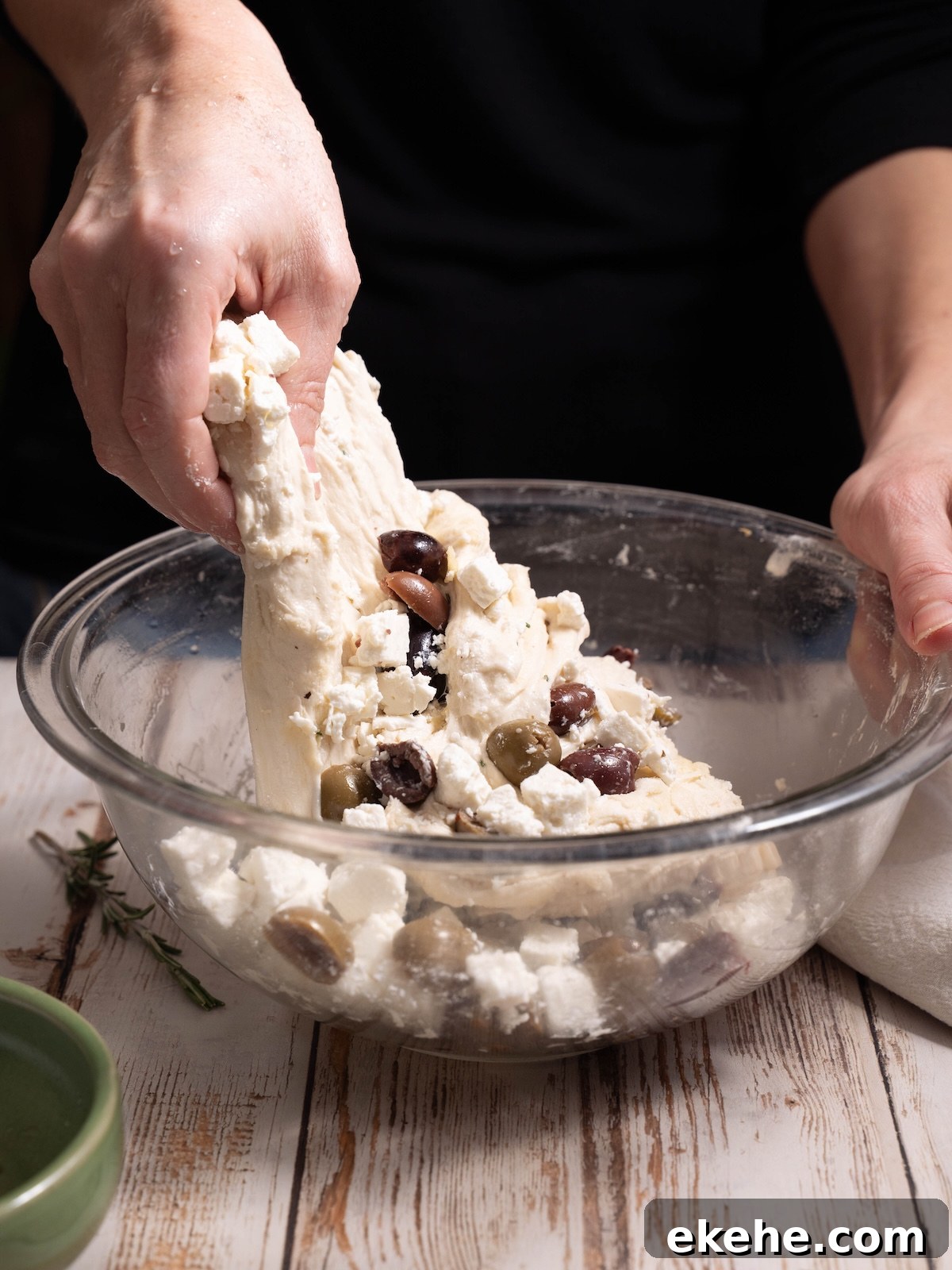
- Add the olives and feta: During the second round, laminate the olives and feta into the dough so they become evenly distributed without disrupting gluten development.
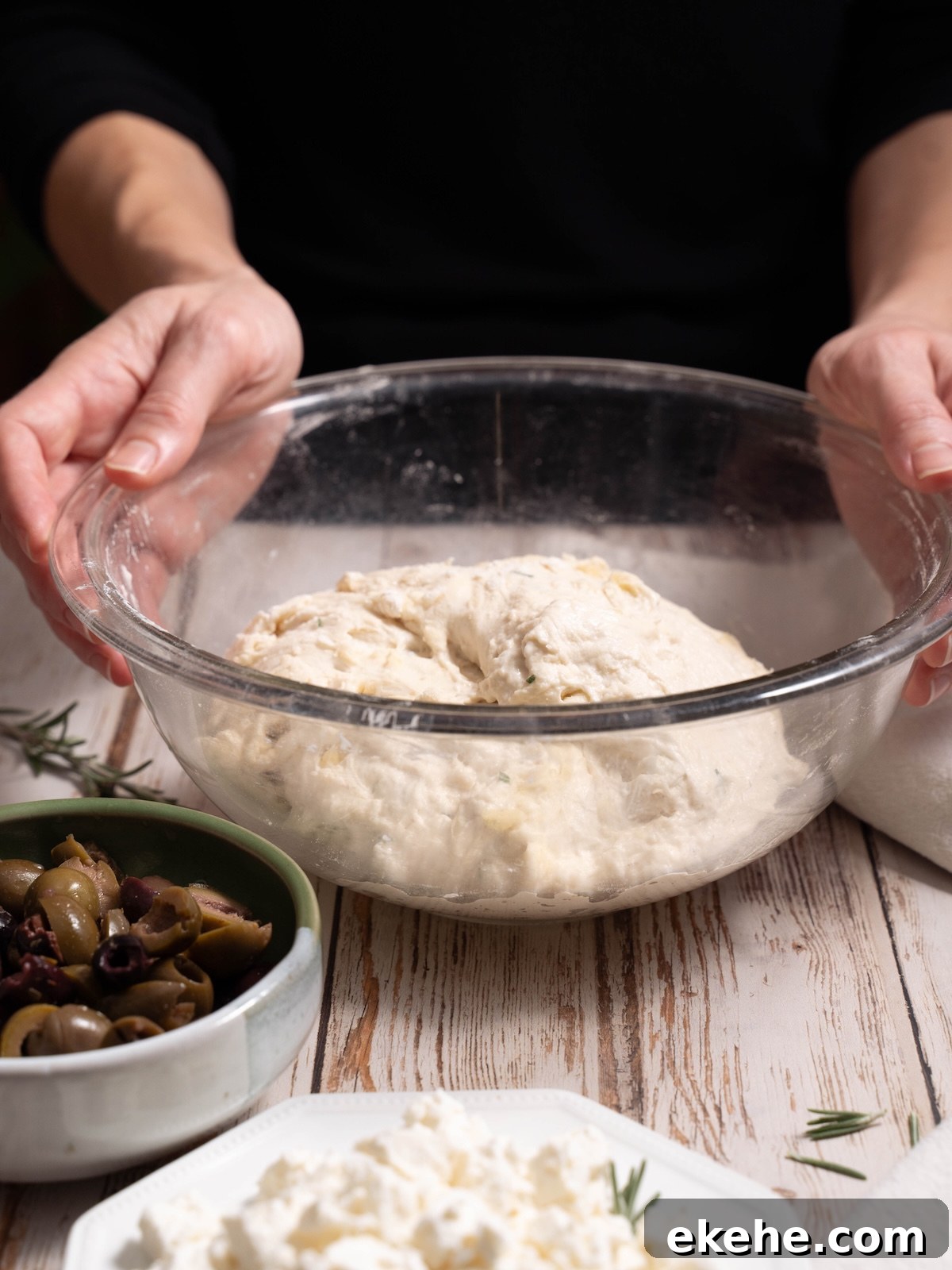
- Bulk fermentation: Allow the dough to ferment until puffy and increased by roughly 30–50%.
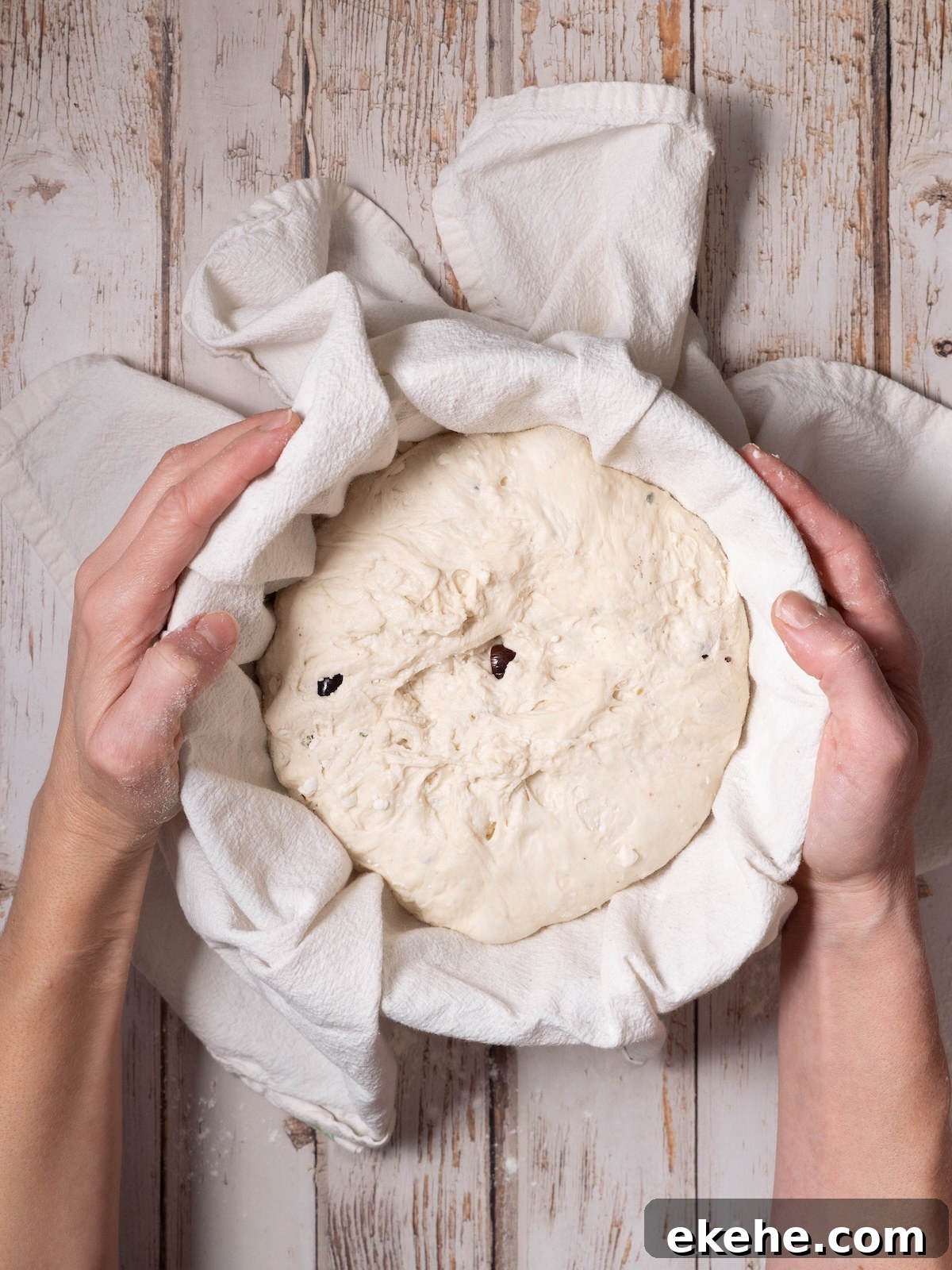
- Shape and cold proof: Shape the loaf, place seam-side up in a floured banneton, and refrigerate overnight.
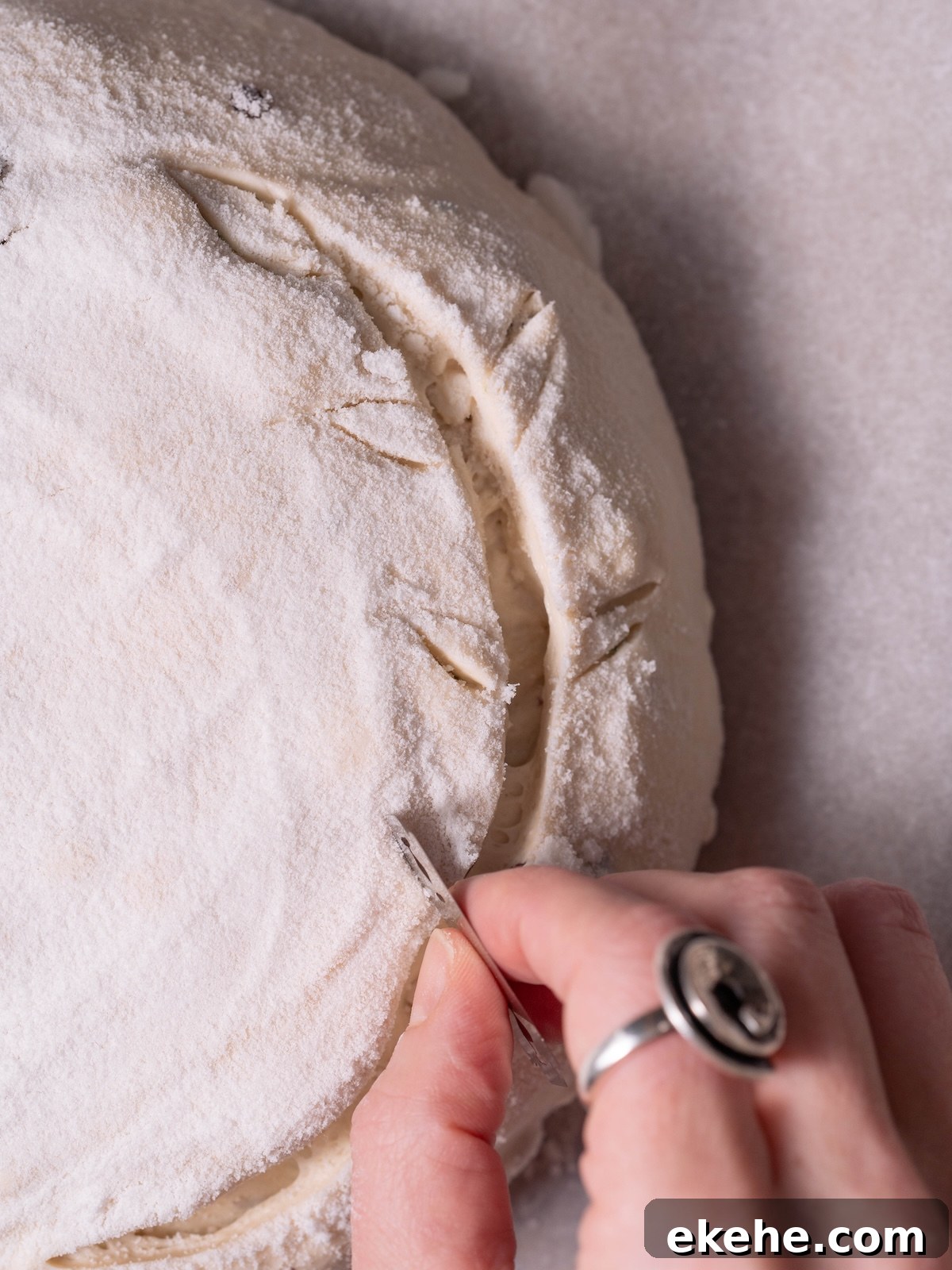
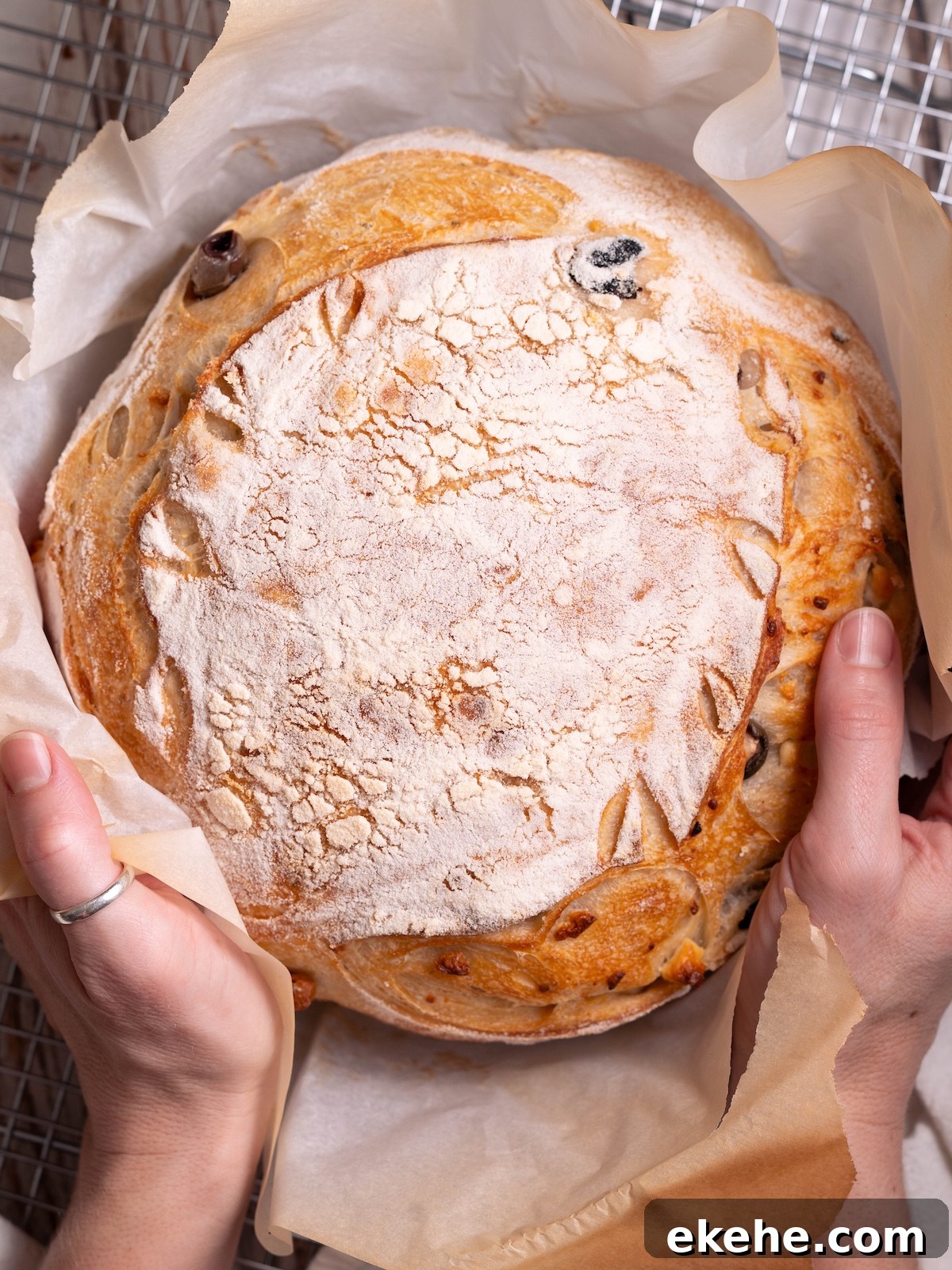
- Bake: Score and bake the loaf straight from the fridge in a preheated Dutch oven until deep golden and fully cooked.
When to add olives to sourdough
Adding olives too early can hinder gluten development. The recommended approach is to laminate them into a dough that already has some structure—typically during the second round of stretch-and-folds. This helps distribute the add-ins evenly without compromising the dough’s strength.
Pro baker’s tips
Learn a basic sourdough first. Laminated add-ins are straightforward, but having familiarity with a standard sourdough process makes the technique easier.
Use an active starter. Feed your starter several hours before mixing so it’s bubbly and near peak when you begin.
Adjust feta to taste. The recipe is intentionally bold—reduce the feta if you prefer a milder profile.
Drain olives well. Excess liquid from olives can affect dough hydration, so drain and pat them dry before folding them in.
Variations & substitutions
Customize this loaf to suit your preferences:
- Olive choice: Use kalamata, castelvetrano, black olives, or a mix. Marinated olives add extra flavor.
- Herb options: Substitute thyme or oregano for rosemary, or omit herbs for a simpler loaf.
- Cheese level: Reduce or omit feta for a gentler flavor or a classic olive bread.
- Lemon zest: Add a little zest to brighten the overall flavor.
- Oil optional: Omit olive oil and replace with water if preferred.
Serving & storing olive feta sourdough
This loaf pairs naturally with Mediterranean flavors. Serve it:
- With hummus or baba ganoush
- Alongside lemony soups or vegetable stews
- With a fresh salad or roasted vegetables
- Warm with olive oil and balsamic for dipping
- Toasted with fresh tomato or cucumber slices
Storage: Keep the bread loosely wrapped at room temperature for up to three days. Because of the cheese and olives, it may soften sooner than a plain loaf. For longer storage, freeze slices wrapped tightly for up to three months; thaw at room temperature and reheat or toast before serving.
What to bake next
- Sourdough bacon & cheddar scones
- Cheesy no-knead sourdough bread
- Jalapeño cheddar sourdough
- Sourdough Caprese focaccia
- Garlic & herb sourdough
If you bake this Olive Feta Sourdough, please leave a comment and rating to share how it turned out.
Olive Feta Sourdough
Equipment
-
Dutch oven with lid (optional)
Ingredients
- 150 grams active sourdough starter
- 310 grams water
- 20 grams olive oil
- 10 grams salt
- 2 teaspoons (1½ g) fresh rosemary, finely chopped
- 500 grams bread flour
- 120 grams (1 cup) pitted olives, halved and drained
- 125 grams (4 oz) feta, crumbled or chopped small
Instructions
-
Mix the dough: In a large bowl, mix 150 g active starter with 310 g water and 20 g olive oil. Stir to disperse the starter, then add 500 g bread flour, 10 g salt, and 2 tsp finely chopped rosemary. Mix until a shaggy dough forms. Cover and rest 20–30 minutes.
-
Stretch and fold (round 1): With slightly damp hands, stretch one side of the dough up and fold it over. Rotate the bowl and repeat on the other sides. Cover and rest 30–45 minutes.
-
Lamination (add olives & feta): Scatter 120 g halved, drained olives and 125 g crumbled feta over the dough. Fold the dough over itself several times to enclose the add-ins. Cover and rest 30–45 minutes.
-
Continue stretch and folds: Perform two more rounds, spaced 30–45 minutes apart. By the final round the dough should feel smoother, stronger, and the add-ins evenly distributed.
-
Bulk fermentation: Cover and ferment at room temperature until the dough is puffy and increased 30–50%—usually 3–6 hours depending on room temperature.
-
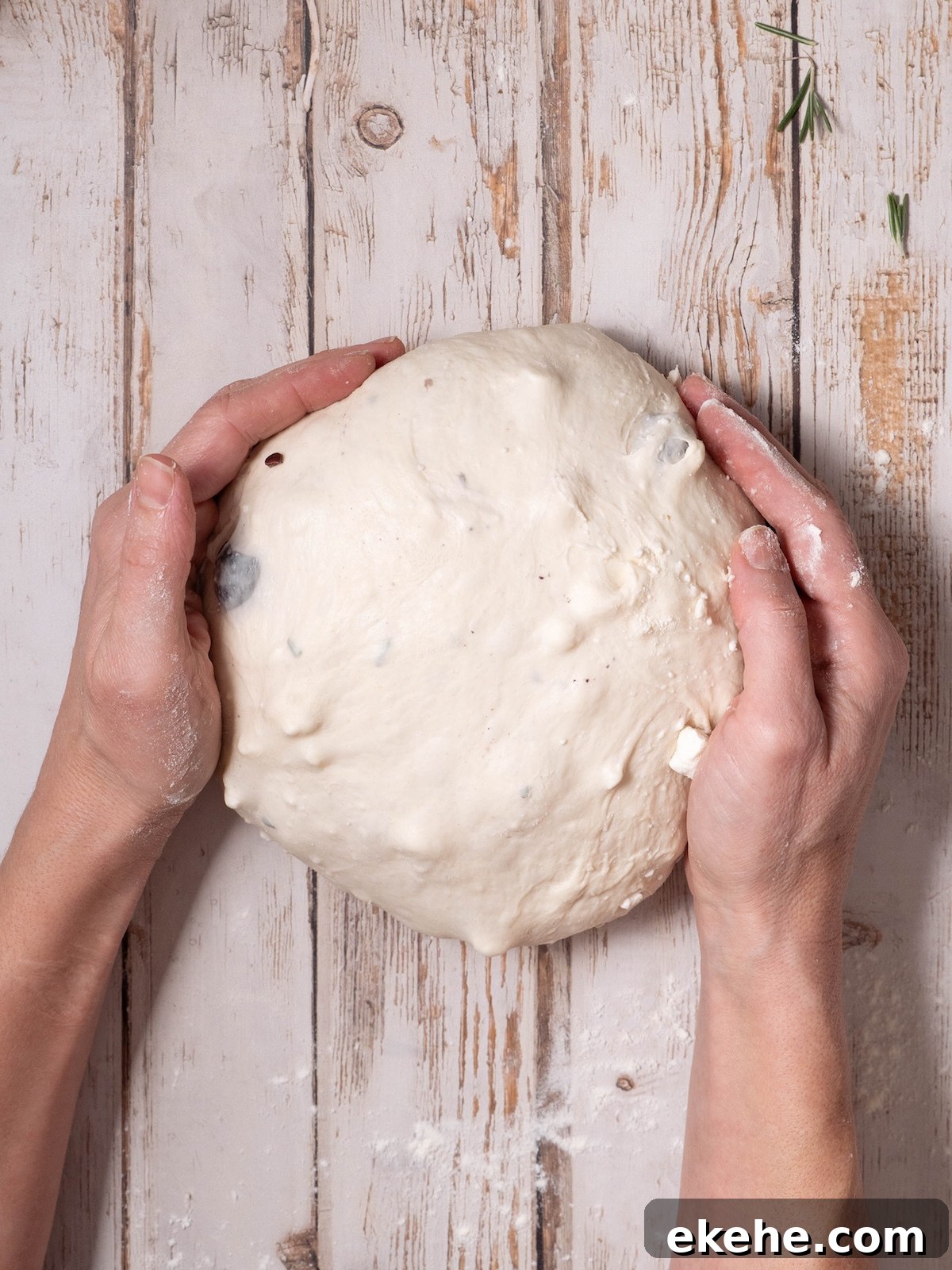
Shape: Turn the dough onto a lightly floured surface, fold the edges to the center, flip, and create surface tension to form a round or oval.
-
Cold proof: Place the shaped dough seam-side up in a well-floured banneton or bowl lined with a floured towel. Cover and refrigerate overnight.
-
Preheat: When ready to bake, preheat your oven with a Dutch oven inside to 450°F (230°C).
-
Score and bake: Invert the dough onto parchment, score the top, place it in the preheated Dutch oven, cover, and bake 20 minutes covered. Remove the lid and bake an additional 18–25 minutes until deeply golden and the internal temperature reaches 200–210°F (93–99°C).
-
Cool: Transfer the loaf to a wire rack and cool at least 1 hour before slicing to allow the crumb to set.
Did you try this recipe?
Be sure to leave a comment below!