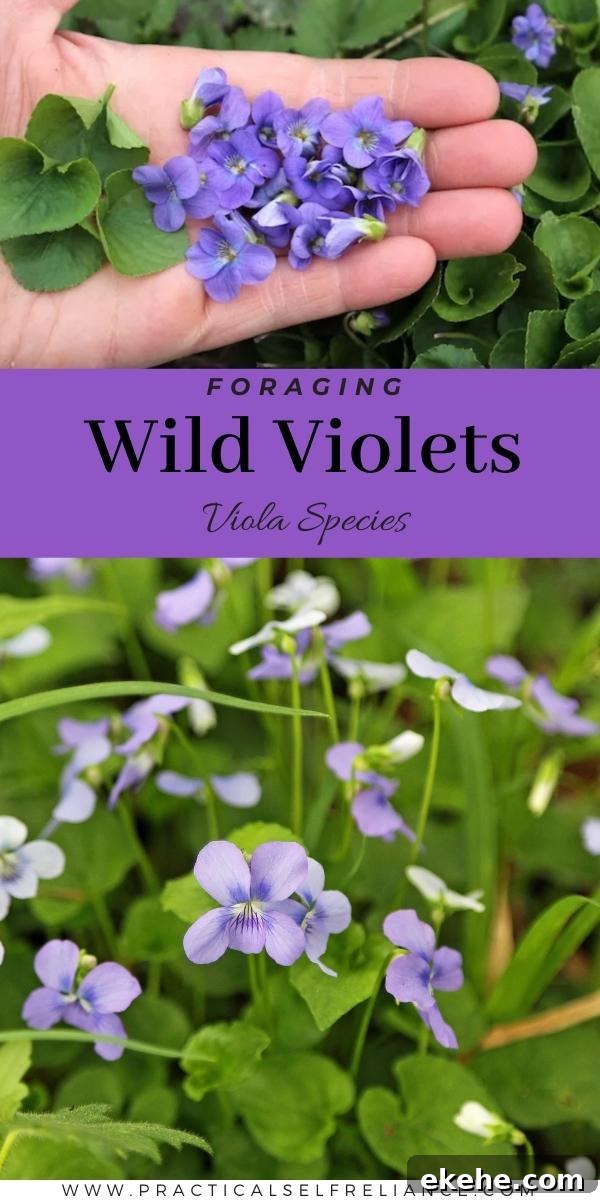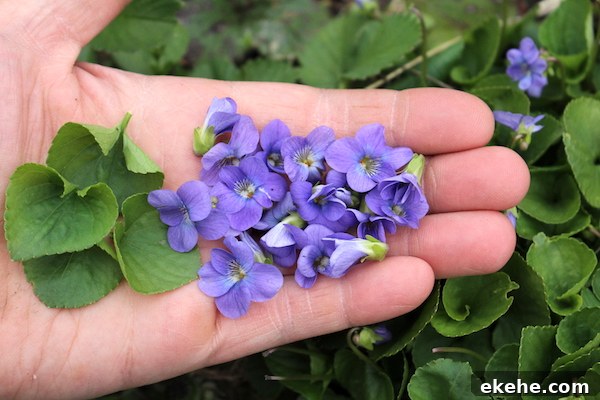
Wild violets brighten the spring landscape and are both edible and medicinal.
They are easy to identify, and all viola species—wild or cultivated—are edible. That means plenty of opportunities to forage violets, including garden pansies.
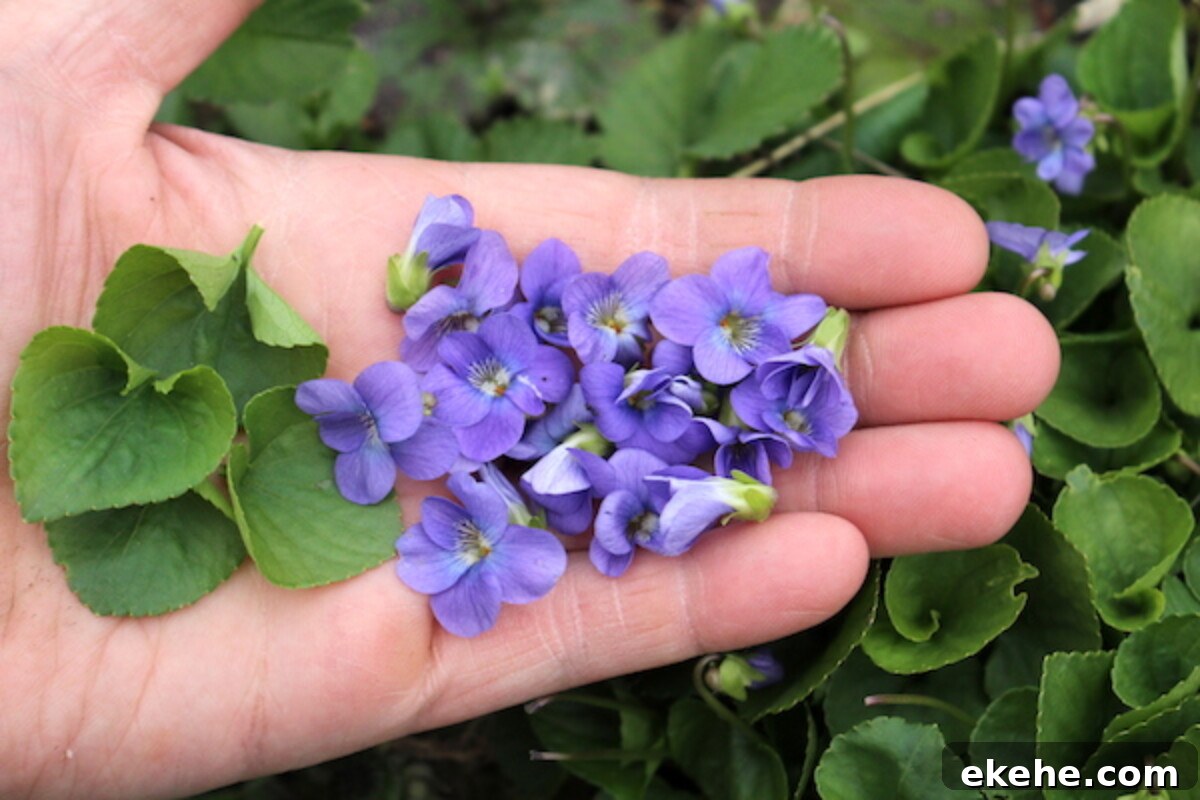
My mother loves wild violets and was thrilled to see them carpet our Vermont land each spring. In California she cultivates them under trees with drip irrigation, since they prefer moist, shaded soil—conditions that are scarce in the Mojave.
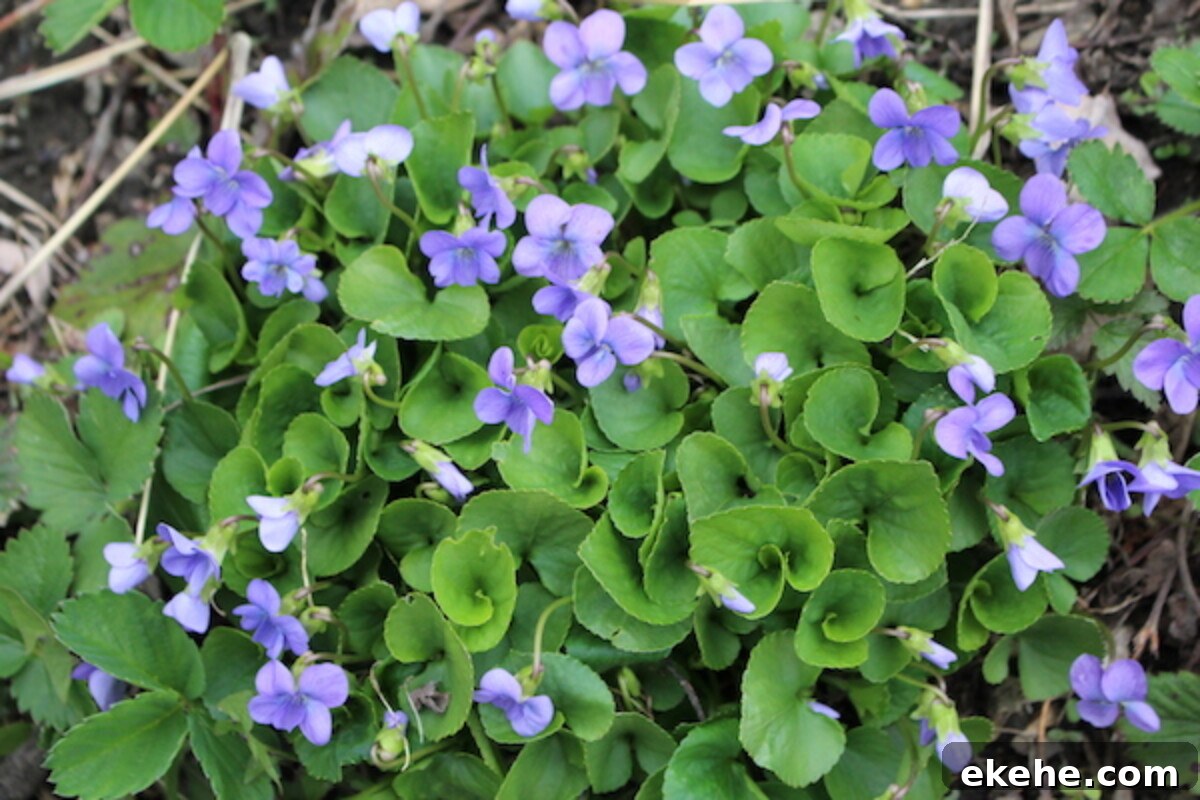
Violets propagate readily from root divisions and self-seeding, so in temperate regions they often appear with little care. You’ll commonly find them in moist lawn patches, shaded areas beneath trees, or along the north side of buildings.
They are also common in woods and along field edges where shade and steady moisture support their growth.
Where to Find Wild Violets
Violets can be either abundant or scarce depending on soil and moisture. In fertile, well-drained gardens they may be rare, but in mesic forests—woodlands with shallow, consistently moist soils—they thrive.
Across the United States wild violets appear wherever shade and steady moisture exist: low shady lawn areas, damp spots beside trails, and wet meadows. They can also grow in full sun when the soil is heavy and retains moisture; some gardens naturally develop violet carpets even in sunnier locations if the soil stays wet.
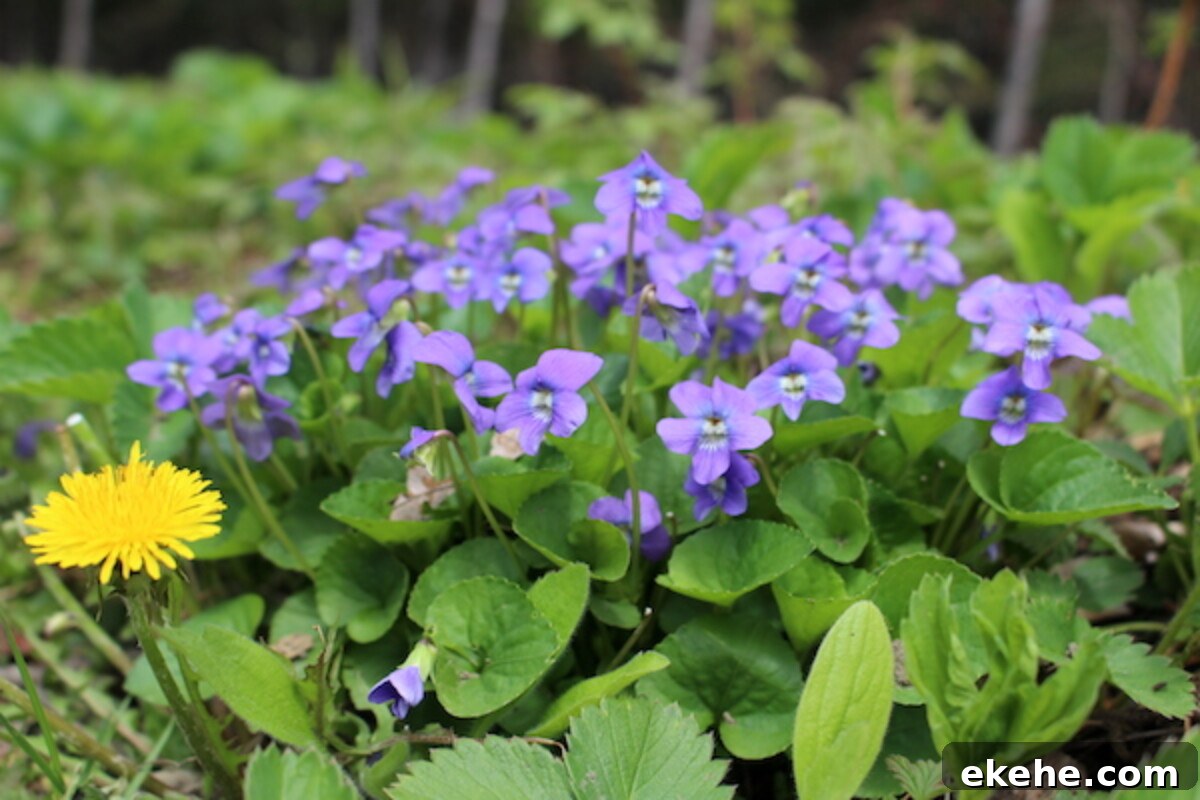
When Do Wild Violets Bloom?
Wild violets are spring bloomers. In mild climates they can appear as early as February or March. In colder regions like Vermont they typically bloom in mid-May alongside other edible spring flowers such as dandelions and lilacs.
Identifying Wild Violets
Here I focus on viola sororia and similar small-flowered violets with blue or purple blossoms, though cultivated violas that escape into the wild also appear often.
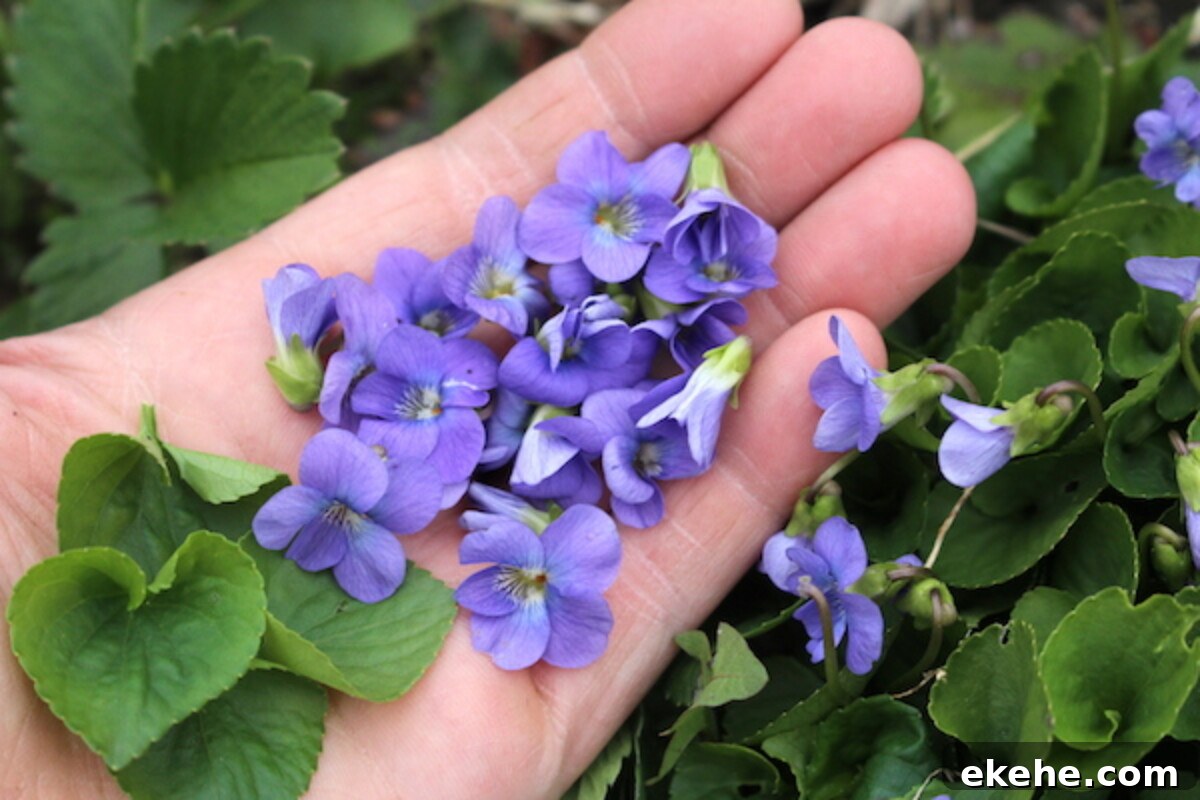
Wild Violet Flowers
Violet flowers are distinctive: five petals arranged like a star with the single petal pointing down. Two petals point up, two to the sides, and one downward. The center often shows contrasting streaks. Each blossom rises on a leafless stalk from the plant’s basal rosette.
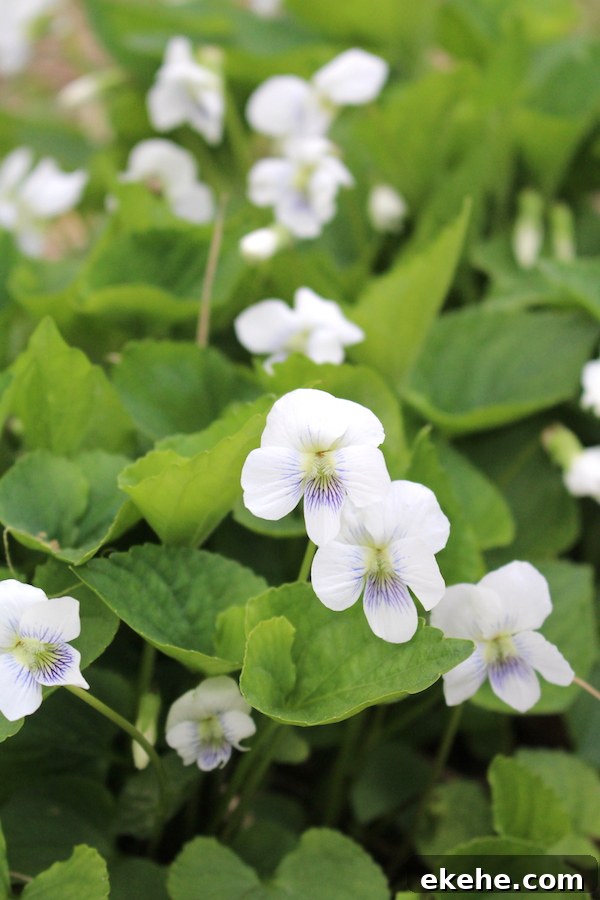
Blue or purple is the most common color, but white and occasionally yellow forms occur.
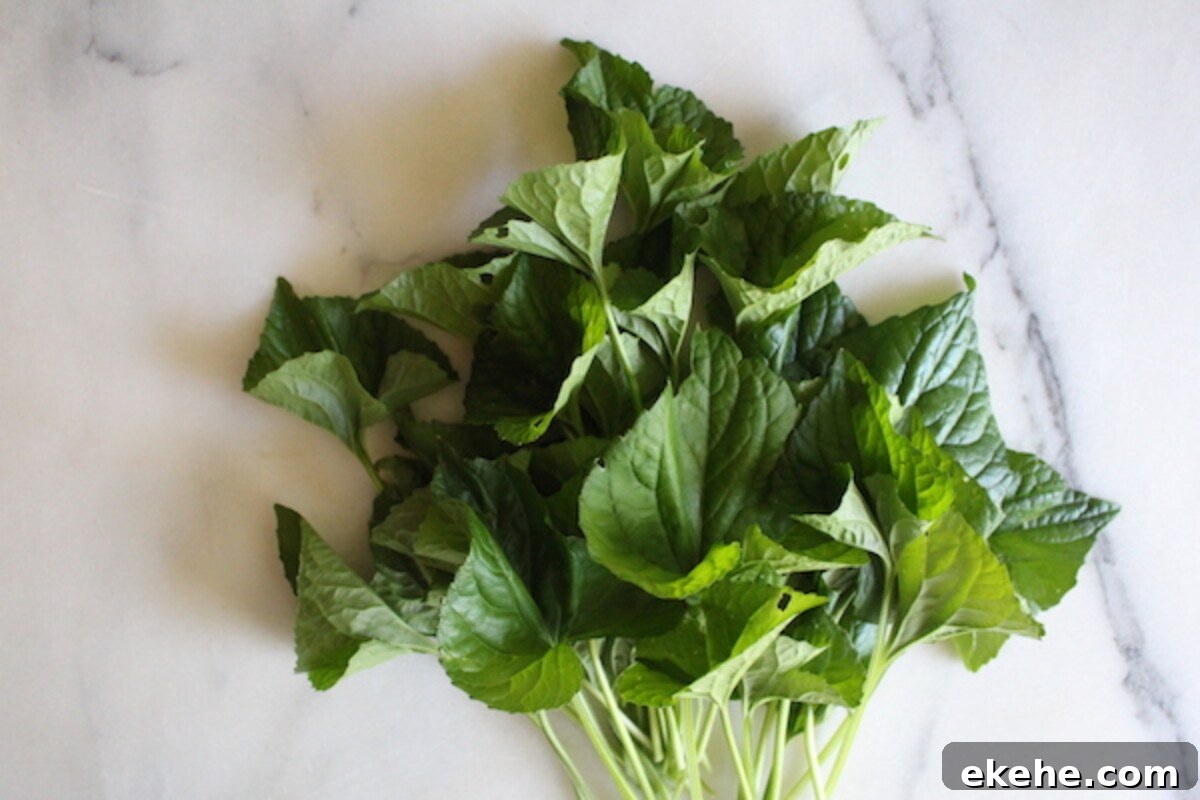
Wild Violet Leaves
Leaves are smooth, heart-shaped, and often have lobes that curl toward the petiole. Each leaf emerges on its own stalk from the plant’s base. Shade-grown leaves tend to be larger and darker green, while sun-grown leaves are smaller and lighter.
Violet Look-Alikes
Violet flowers have few true look-alikes, so identification is usually straightforward once they bloom. Leaves, however, can resemble other plants—some compare them to lesser celandine (which is toxic) or marsh marigold (which is edible). Because those species have bright yellow flowers very different from violets, waiting for blooms makes positive identification easy and safe.
Are Violets Edible?
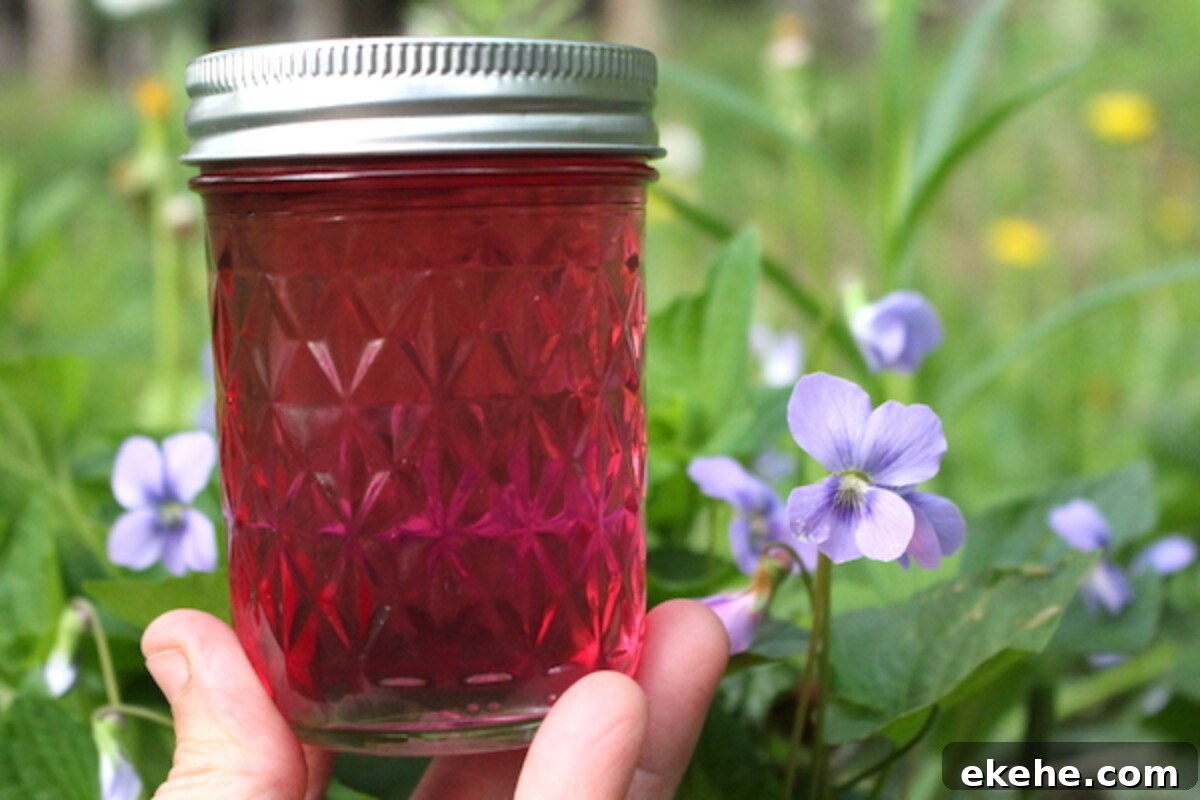
All violets are edible, including wild species and cultivated violas. Traditionally, violets have been used in recipes ranging from liqueurs like crème de violette to candied or pressed flowers on baked goods. Violet jelly, a delicate floral preserve with a berry-like flavor, is a popular modern use.
Harvesting Wild Violets
How you harvest depends on whether you want flowers or leaves. Flowers are prized for culinary uses and mild diuretic properties but are not the main medicinal part. Leaves contain more medicinal constituents and are used topically and internally for lymphatic support, inflamed skin, rashes, hives, eczema, sore throats, and coughs.
Violet leaves are rich in mucilage, offering soothing properties for digestion and respiratory irritation, though the mucilage gives the fresh leaves a somewhat gummy texture that some people find unappealing. Many prefer to enjoy the flowers for flavor and appearance, while preparing salves, tinctures, or syrups from the leaves for medicinal use.
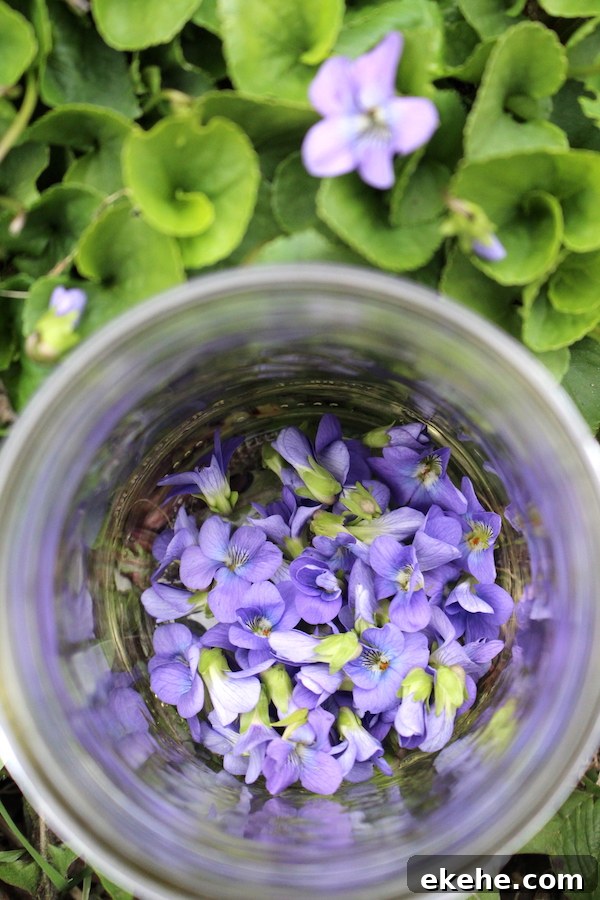
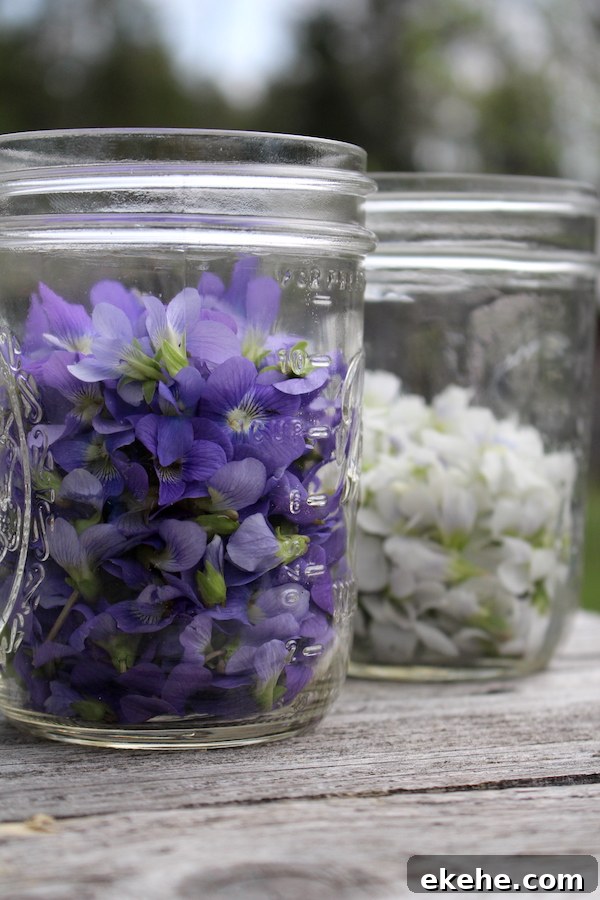
We have large patches of both purple and white violets. My daughter experimented with each and found the purple variety to have slightly stronger, berry-like notes, while white violets are more delicate and floral.
Ways to Use Wild Violets
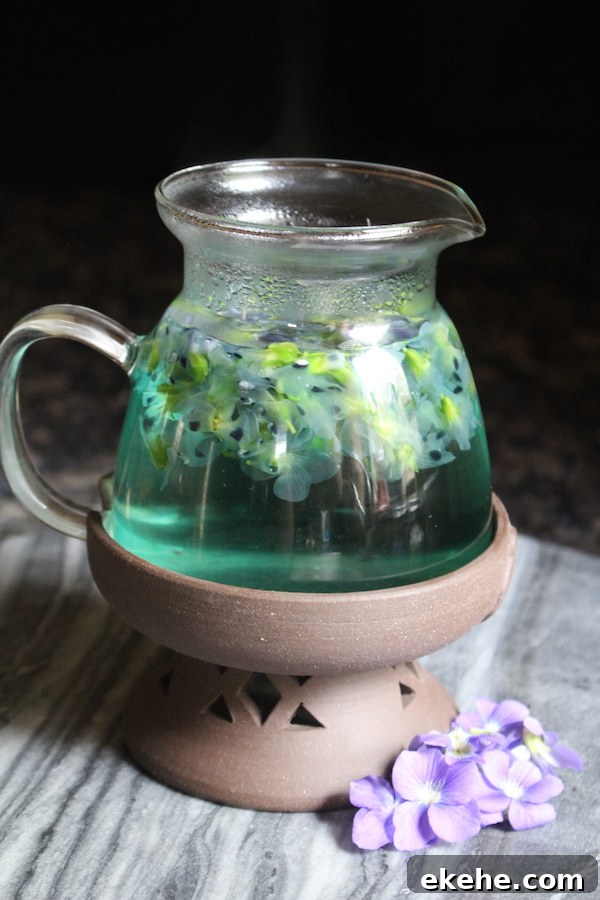
Violet flowers are versatile: they decorate salads, garnish dishes, and make lovely teas that steep to a turquoise color and turn magenta with a few drops of lemon. Try violet jelly, candied violets, violet syrup, or violet-infused vinegar for creative culinary uses.
Violet greens can be eaten fresh in small amounts or cooked as a green, though their mucilaginous texture is off-putting to some. For medicinal preparations, leaves are typically used to make salves, tinctures, cough syrups, and soothing topical remedies.
Below are a few example ways people commonly use violets (recipes and preparations vary):
- Violet jelly
- Candied or pressed violet flowers for baked goods
- Violet syrup or liqueur
- Violet-infused vinegar or sugar
- Violet leaf salve, tincture, or cough syrup
Spring Foraging
Violets are a delightful part of spring foraging. They pair well with other early wild foods like ramps, fiddleheads, chickweed, and morels. When foraging, always positively identify plants before using them, harvest sustainably, and avoid areas treated with herbicides or pollutants.