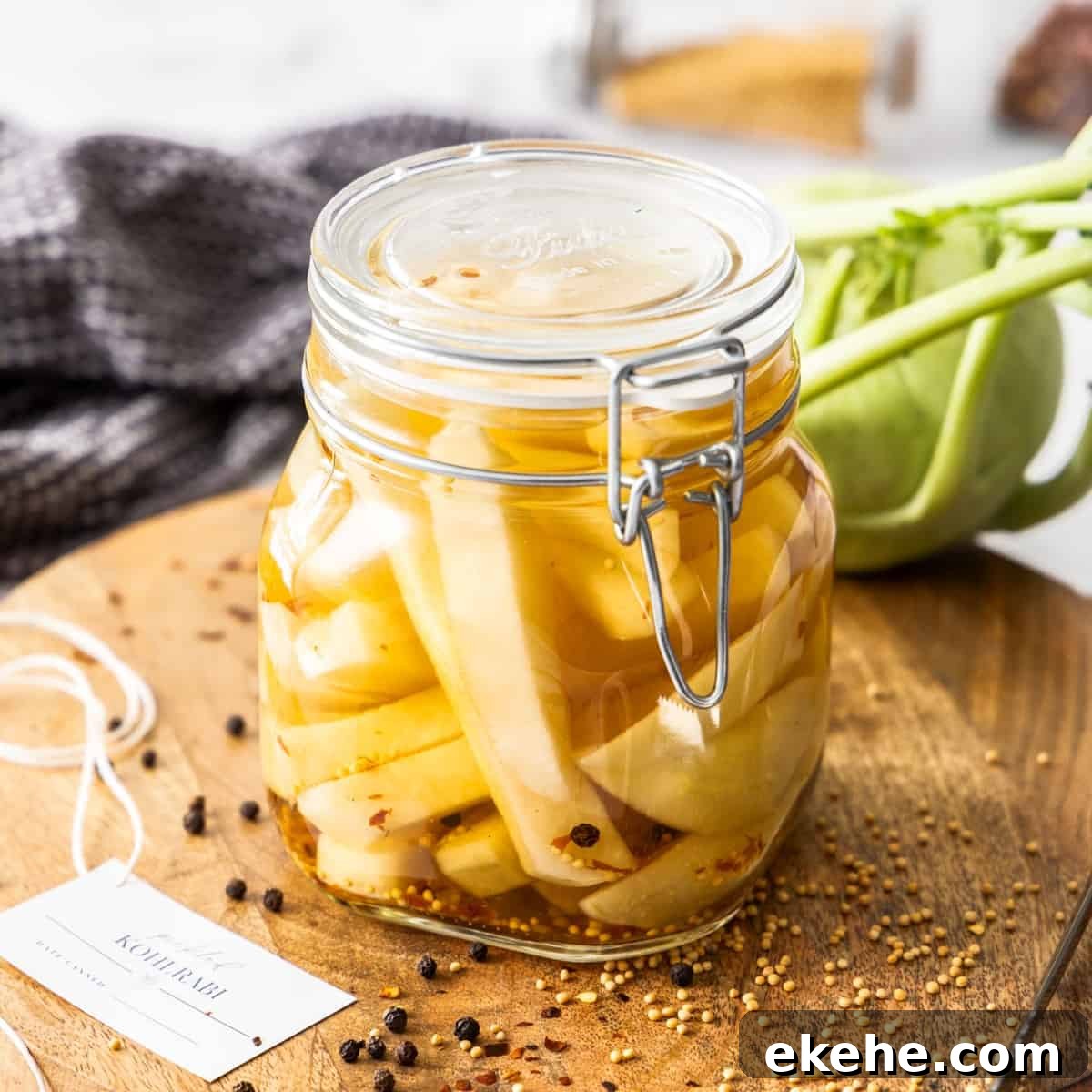
If you love a crunchy, bright quick pickle, this Pickled Kohlrabi recipe is for you. Tangy and crisp, it’s an easy pickle that’s ready after a short rest. Small batons of kohlrabi are immersed in a spiced vinegar brine — simple, versatile and delicious.
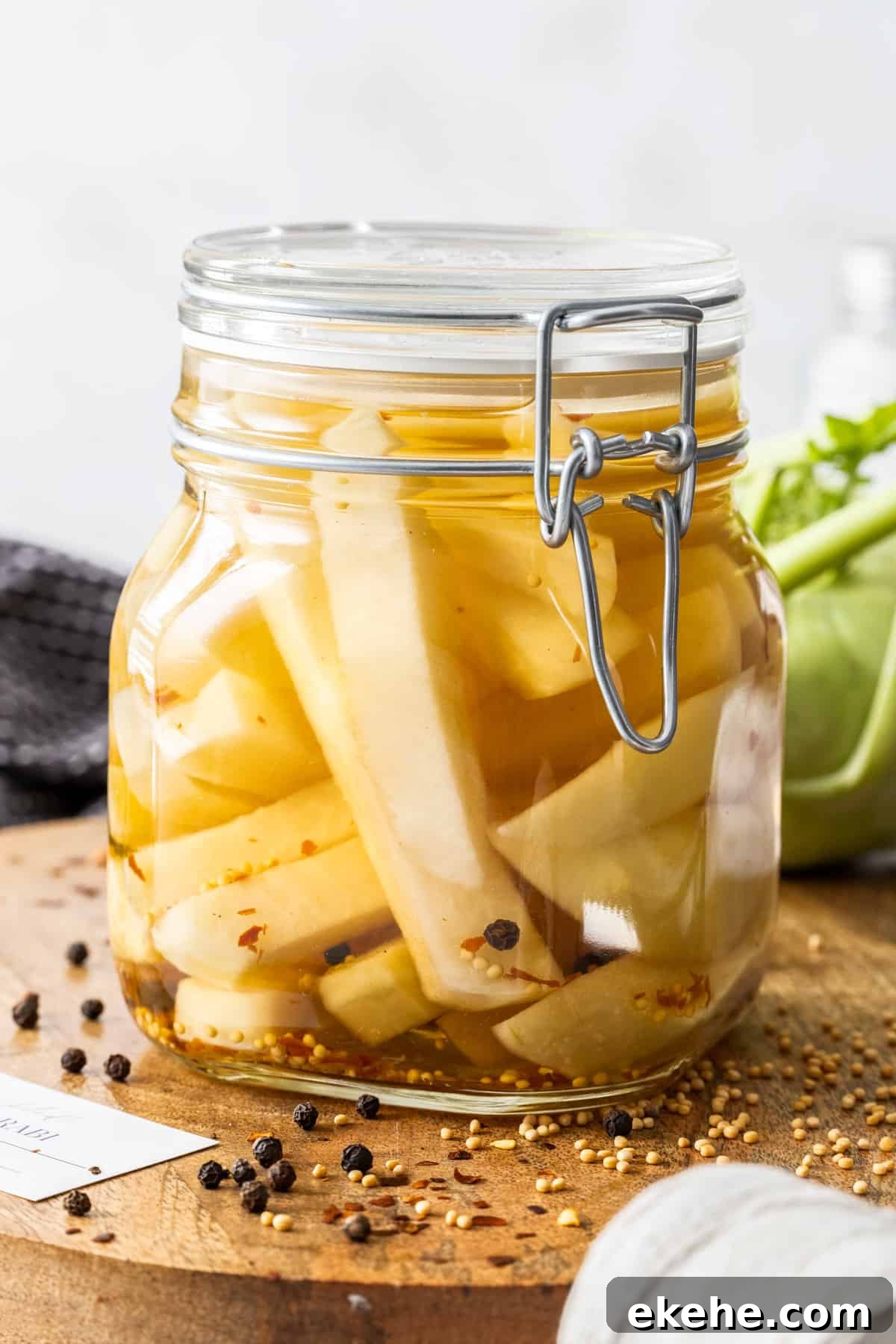
Why you’ll love this recipe:
Quick pickling enhances a vegetable’s flavour and texture. Kohlrabi is mild and stays delightfully crunchy, making it an ideal candidate for this easy method. These pickled batons make a bright flavour boost for many dishes.
You will love this Pickled Kohlrabi because:
- Homemade pickles are quick to prepare and full of fresh flavour.
- When you make your own pickles you control the ingredients and can adjust the seasoning to taste.
- Quick pickles are simple for beginners yet useful for experienced cooks too.
- These pickled kohlrabi batons work in many dishes — suggestions are below.
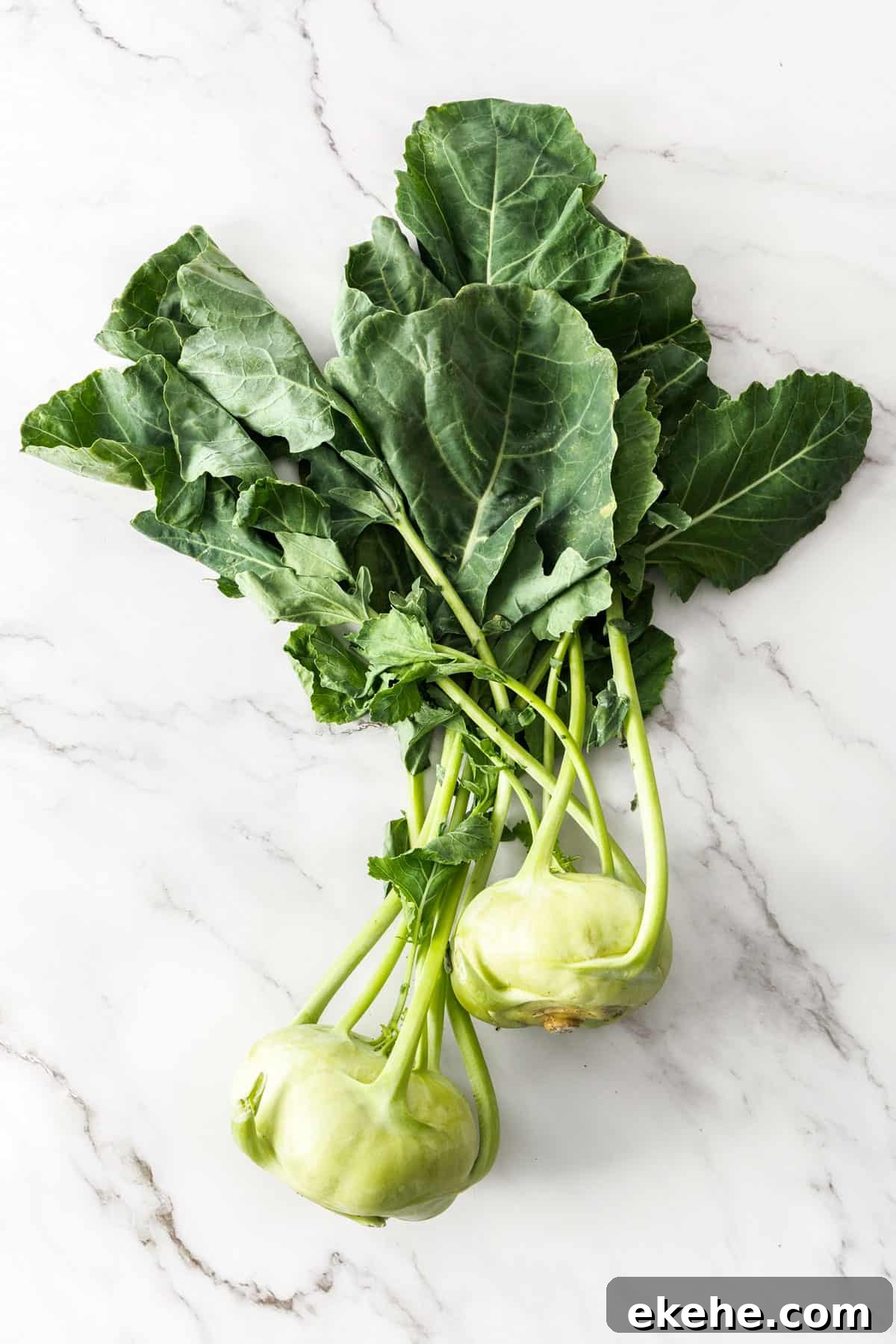
What is kohlrabi?
Kohlrabi, also called German turnip or cabbage turnip, belongs to the brassica family along with broccoli and kale. The common varieties are green and purple, both of which have creamy white flesh.
Choose small to medium bulbs for pickling; large bulbs can become woody. Look for firm, blemish-free bulbs and avoid wilted leaves. The leaves are edible and can be used like other leafy greens — store them separately and use within a few days.
Ingredients in this recipe:
See the recipe card below for exact quantities and the full method.
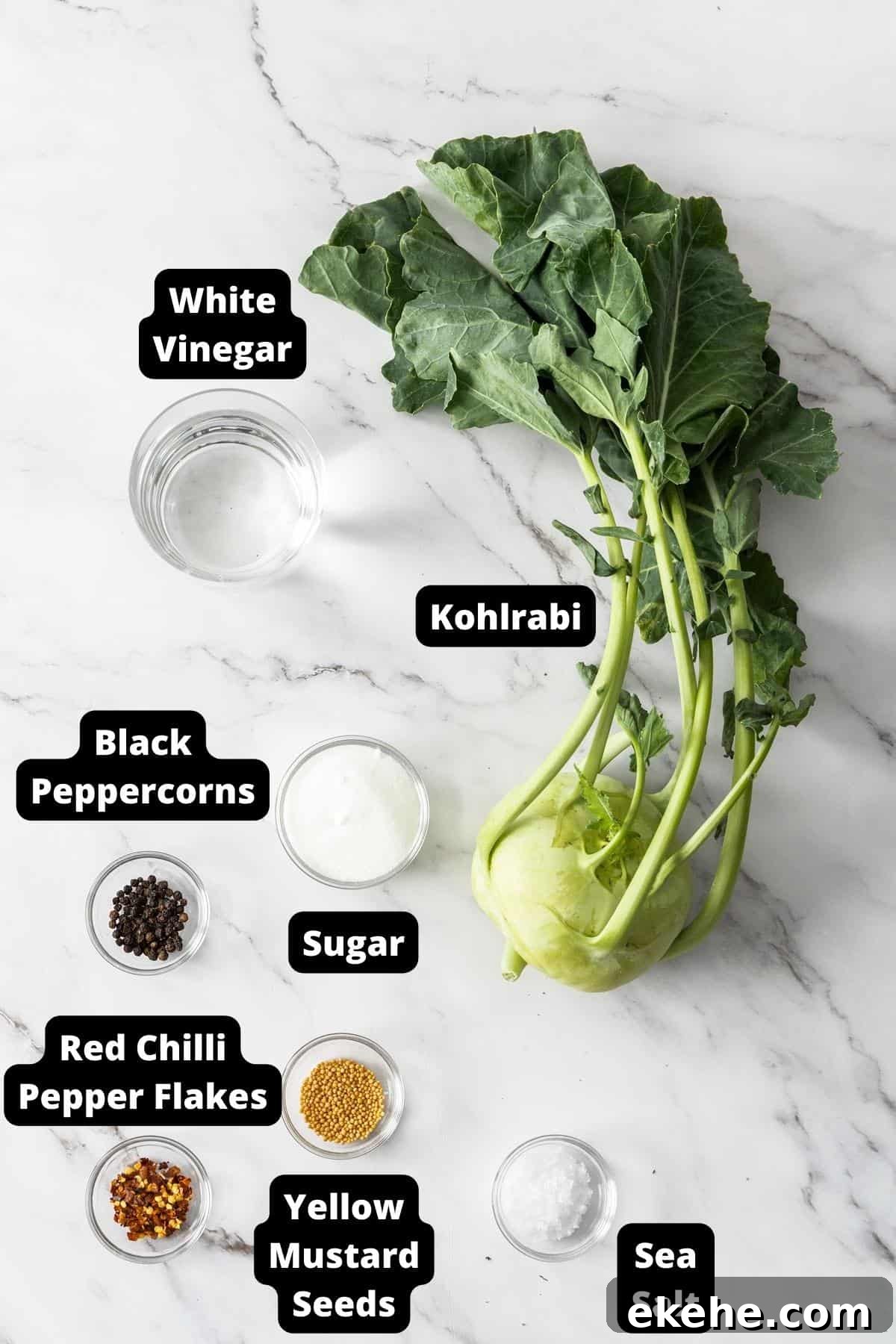
Kohlrabi: small to medium bulbs, peeled and cut into batons.
White vinegar: 5% acidity white vinegar is used, though white wine or apple cider vinegar also work.
Water: a little water mellows the brine; filtered water is best to avoid chlorine flavours.
Salt: use sea salt or coarse cooking salt rather than fine table salt.
Sugar: granulated sugar balances the vinegar and helps preserve the pickles.
Spices: whole mustard seeds, black peppercorns and a pinch of red chilli flakes for a touch of heat.
How To Make Pickled Kohlrabi:
See the recipe card below for exact quantities and the full method.
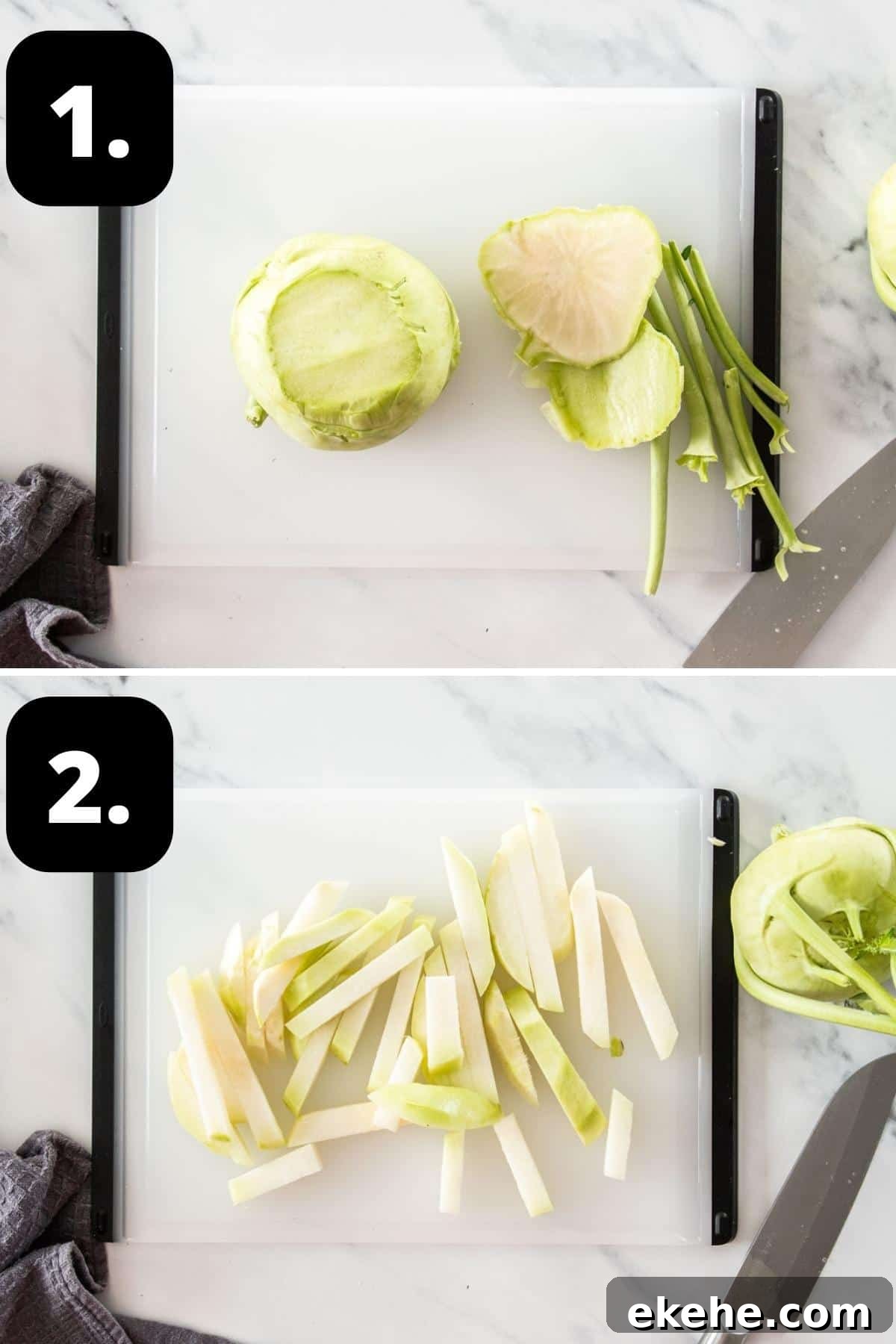
1 – Prepare the kohlrabi: Trim top and base, remove the skin and peel. Set leaves aside for another use.
2 – Cut into batons: Halve the bulb, slice into roughly 1 cm pieces, then cut into 1 cm strips. Place the strips in acidulated water (water with a squeeze of lemon) to prevent browning.
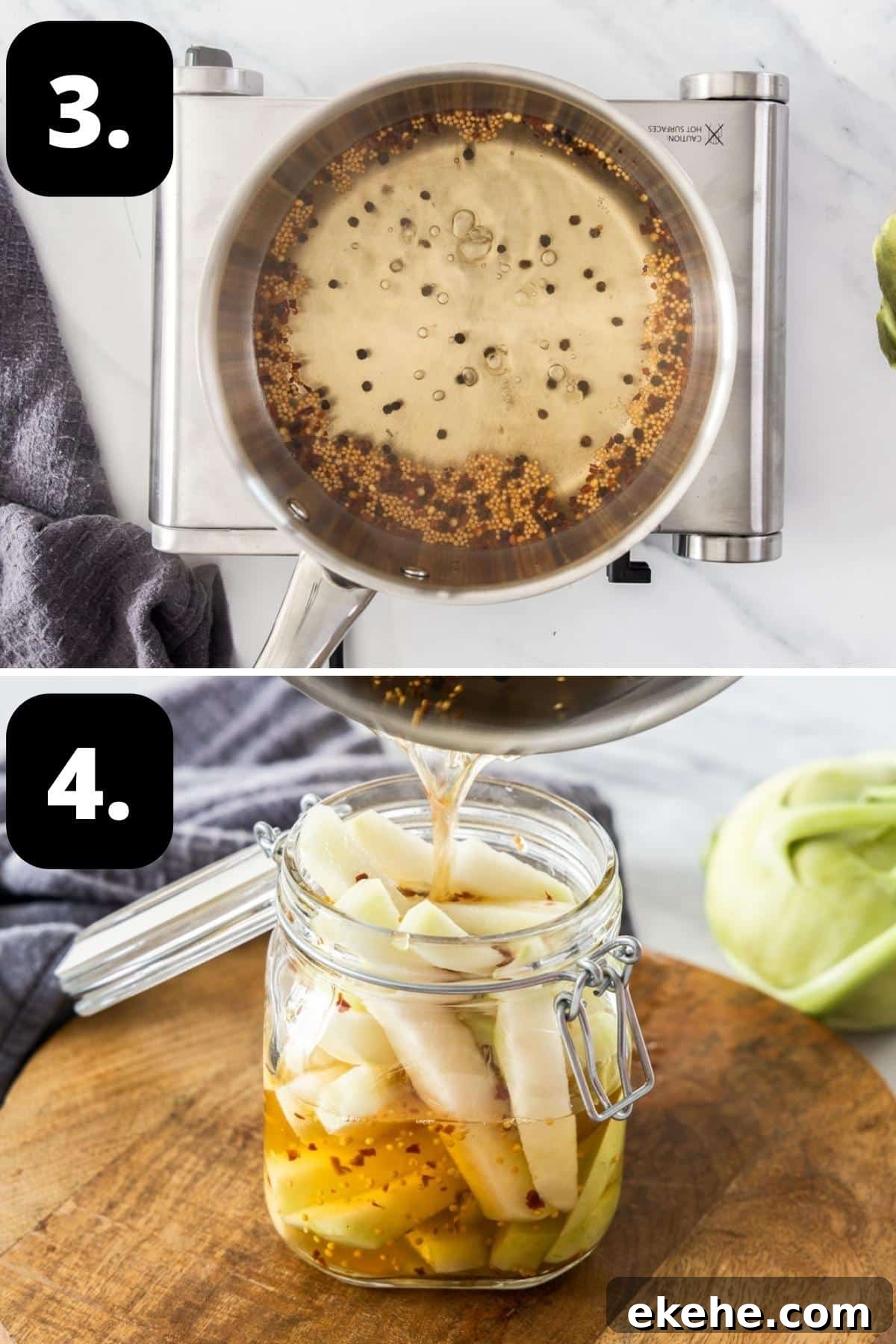
3 – Make the pickling liquid: In a small non-reactive saucepan combine vinegar, water, sugar, salt and the spices. Warm gently, stirring until the sugar dissolves, then bring to a boil and remove from heat.
4 – Pack and seal: Fill sterilised jars with kohlrabi batons, pour the hot brine over them to cover, then seal immediately. Let jars cool on the counter before refrigerating. Allow at least 12 hours, preferably 12–24 hours, for the flavours to develop.
Tips for success and FAQs:
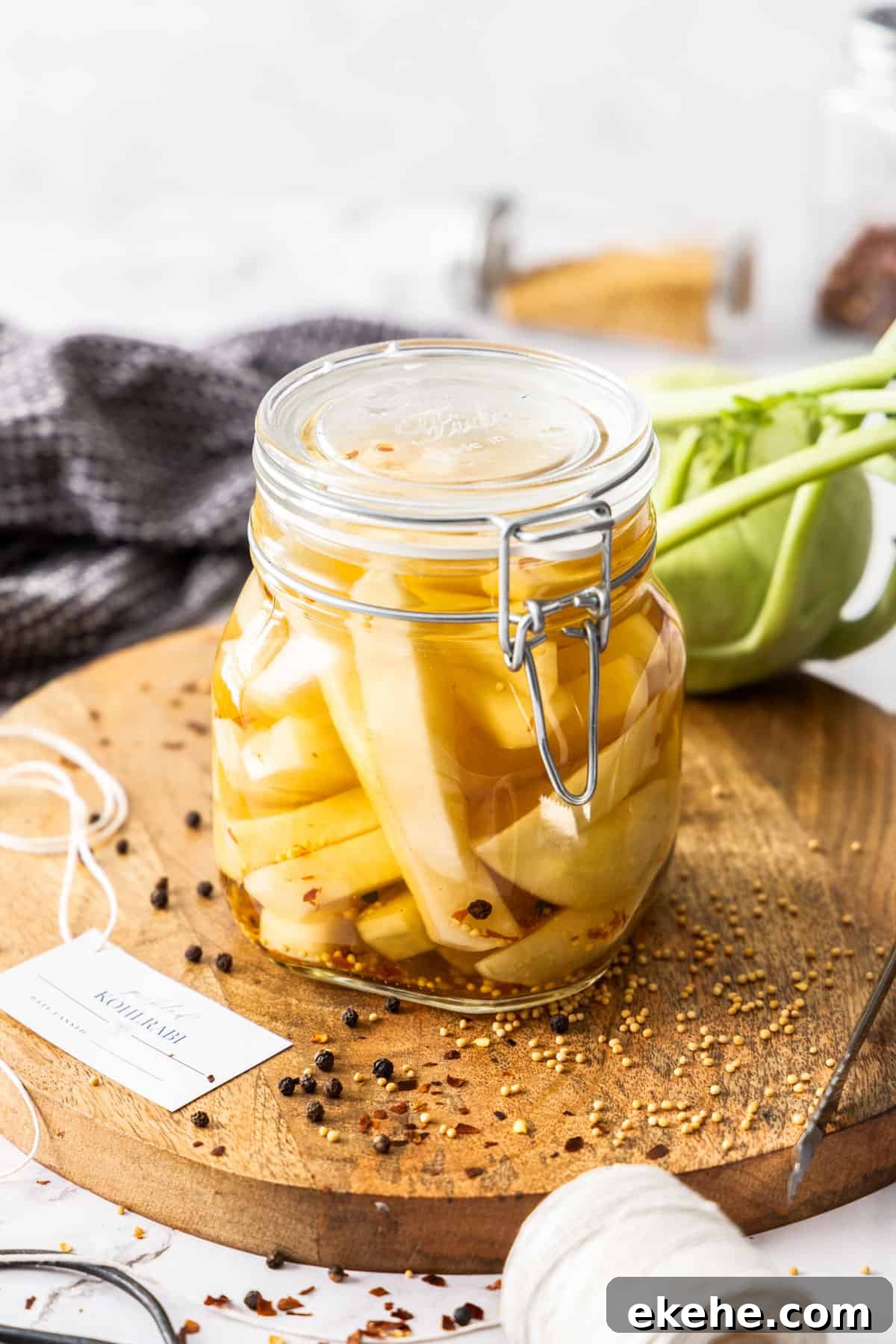
Use the freshest kohlrabi you can find for the best crunch and flavour. Sterilise jars properly: wash in hot soapy water, rinse, then warm jars in a low oven (about 130°C / 270°F) for 15–20 minutes and keep them warm while filling. Choose jars with wide mouths to make filling easier.
Stored in the refrigerator, these quick pickles keep for up to three weeks. Texture softens over time.
Yes, but the flavour is better after 12–24 hours while the vinegar mellows and the spices infuse.
They have a mild, slightly peppery flavour and a crunchy texture similar to broccoli stems or a mild radish.
Yes — scale the ingredients to suit the number of jars you want to make.
Variations and substitutions:
Vinegar: white wine vinegar or apple cider vinegar can be substituted; keep the acidity around 5%.
Mustard seeds: yellow seeds are milder; brown seeds give more heat and depth.
Serving suggestions:
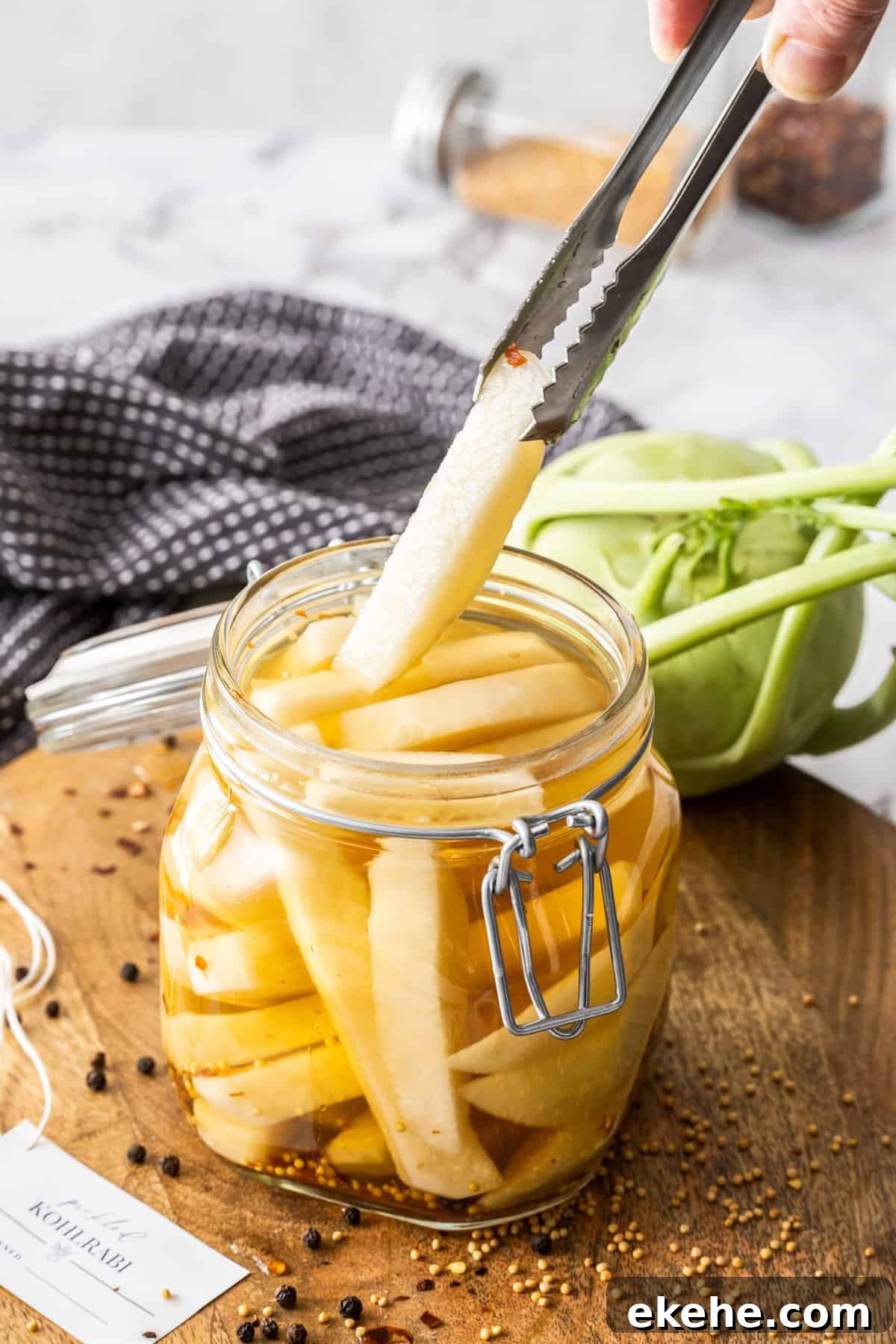
Pickled kohlrabi is versatile. Try it:
- On a grazing platter with cheeses and cured meats.
- As a tangy topping for hot dogs or burgers.
- Alongside a cheese board.
- In green salads for a crisp bite.
- As an accompaniment to roast meats or poultry.
- Packaged in a jar, they make a lovely homemade gift.
I hope you enjoy this simple Pickled Kohlrabi recipe. If you try it, please leave a comment and rating.
Alex xx
More delicious recipes for you to try:
-
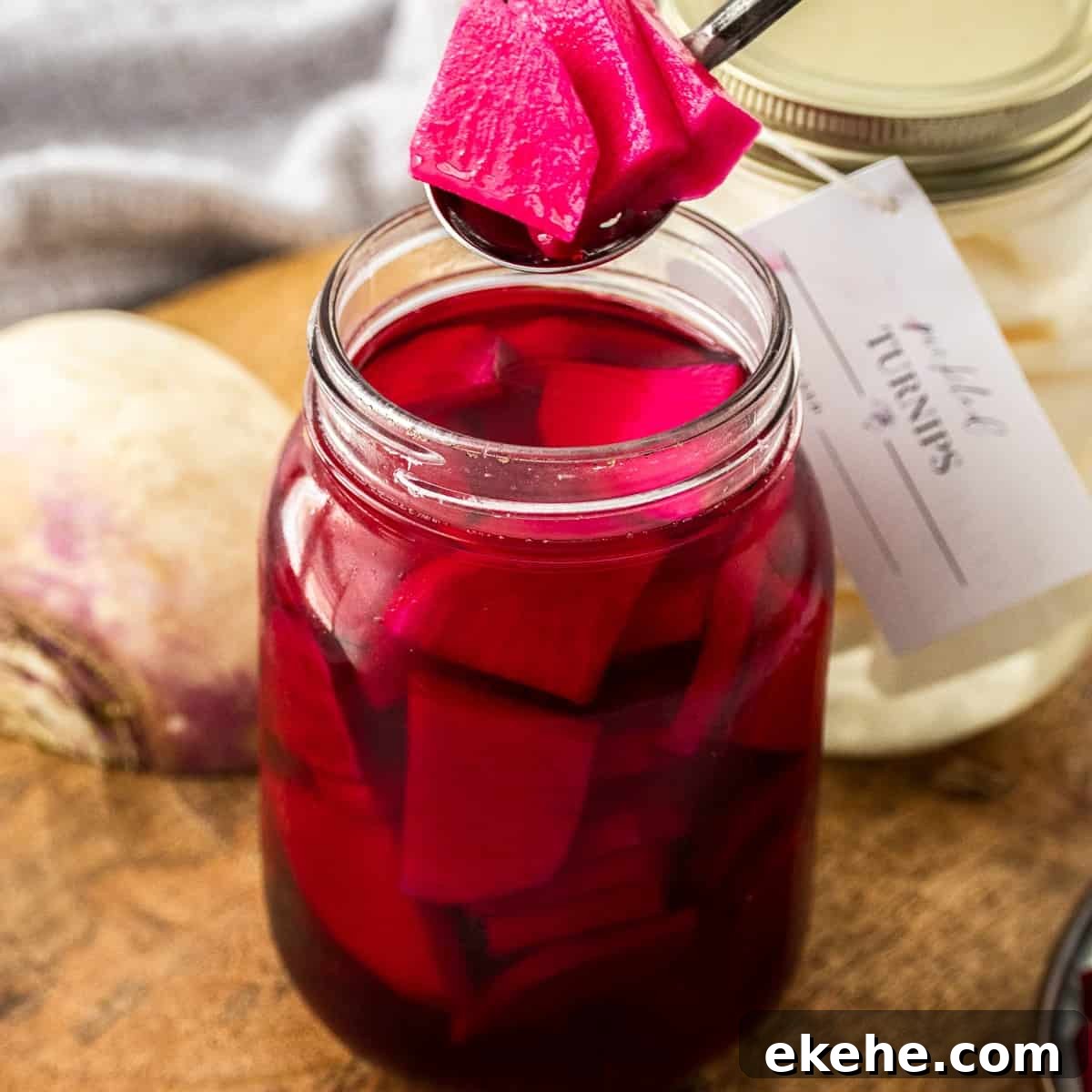
Pickled Turnips
-
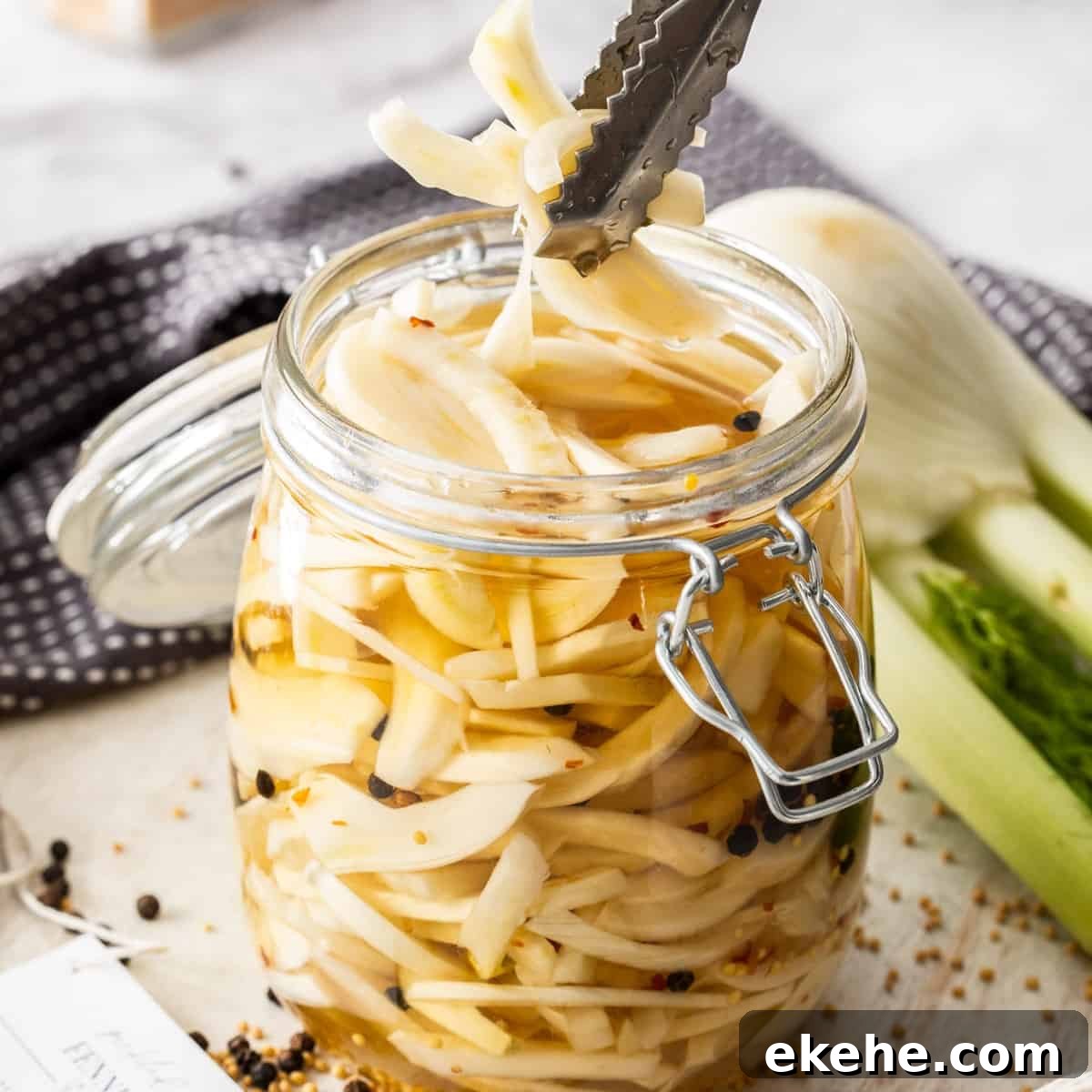
Pickled Fennel
-
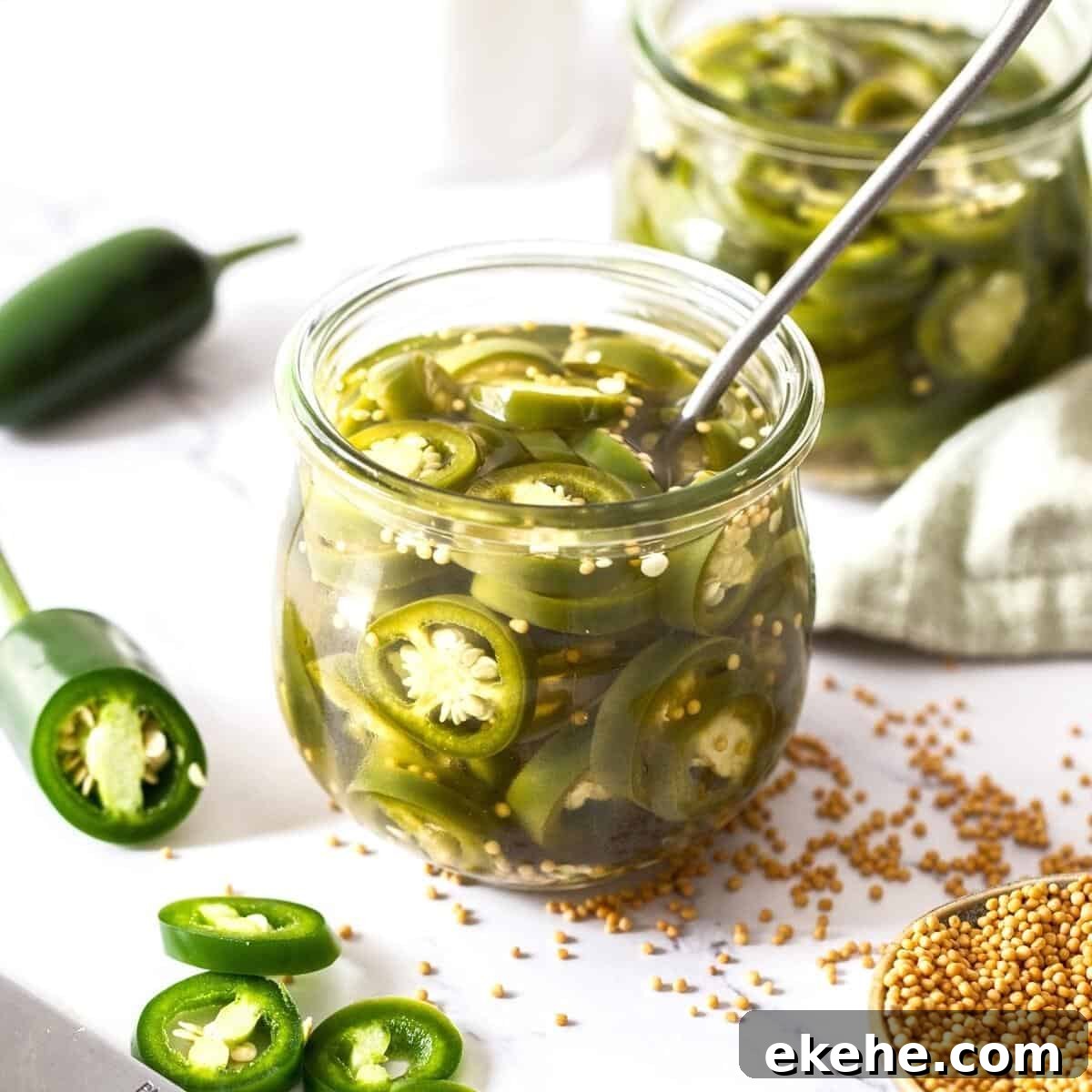
Homemade Pickled Jalapeños
-
Pickled Celery
Stay in touch!
Follow on social channels and subscribe to the newsletter to receive new recipes and tips.
Pickled Kohlrabi
Equipment
-
1 x 800ml (27 fluid oz) Jar
Please note:
For best results weigh ingredients when weights are provided. All oven temperatures are fan-forced unless stated otherwise.
Ingredients
- 400 g (14 oz) kohlrabi – prepared weight, approx. 1 large or 2 small.
- 2 teaspoon sea salt.
- 1 cup (250 ml) white vinegar (5% acidity).
- ¾ cup (180 ml) water.
- 2 ½ tablespoon sugar.
- 1 teaspoon whole yellow mustard seeds.
- 1 teaspoon whole black peppercorns.
- ¼ teaspoon red chilli pepper flakes.
- A bowl of water with lemon (optional) to prevent browning.
Instructions
To Sterilise the Jars:
-
Wash jars and lids in hot soapy water and rinse well. Preheat oven to 130°C (270°F), place jars in the oven for 15–20 minutes and keep them warm. If lids have rubber inserts, air dry them instead of heating.
For the Pickled Kohlrabi:
-
Trim and peel the kohlrabi. Cut into 1 cm pieces and then into 1 cm strips. Place the strips in acidulated water to prevent browning.
-
In a non-reactive saucepan combine water, vinegar, sugar, salt, mustard seeds, peppercorns and chilli flakes. Stir over medium heat until the sugar dissolves, bring to a boil, then remove from heat.
-
Pack the kohlrabi into the warm sterilised jar, pour the hot brine over to cover, then seal immediately.
-
Allow the jar to cool on the bench before refrigerating. Best after 12–24 hours for full flavour development.
Notes
- Kohlrabi: choose fresh, crisp bulbs for best texture.
- Salt: use cooking salt or coarse sea salt rather than fine table salt.
- Vinegar: keep acidity at about 5% if substituting vinegars.
- Water: filtered water avoids chlorine off-flavours.
- Tablespoon: the recipe uses a 20 ml tablespoon.
- Acidulated water: add a halved lemon to a bowl of water to prevent browning as you cut the kohlrabi.
- Non-reactive cookware: use stainless steel, enamel, ceramic or glass for acidic brines.
- Storage: refrigerate cooled jars for up to three weeks; this is a quick pickle, not a long-term canning method.
- Nutrition: values provided are estimates for the whole jar including the brine.
Leave a comment and rating
Nutrition Estimate:
Nutritional Disclaimer:
The nutritional information is an estimate and should be calculated based on the exact ingredients and brands you use for precise results.