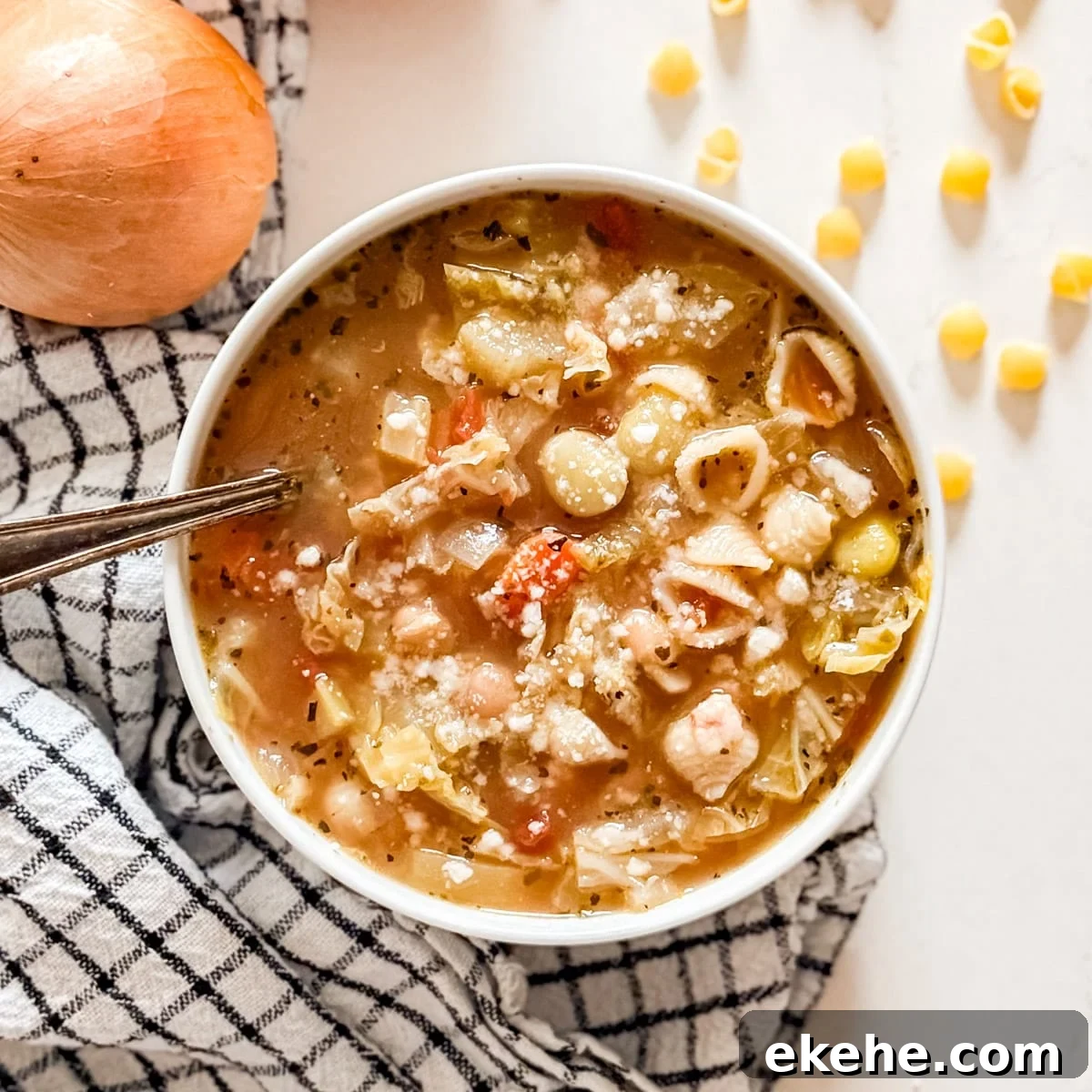
This traditional minestrone soup recipe comes together in about 35 minutes and is packed with vegetables, beans, and pasta for a cozy, satisfying meal.
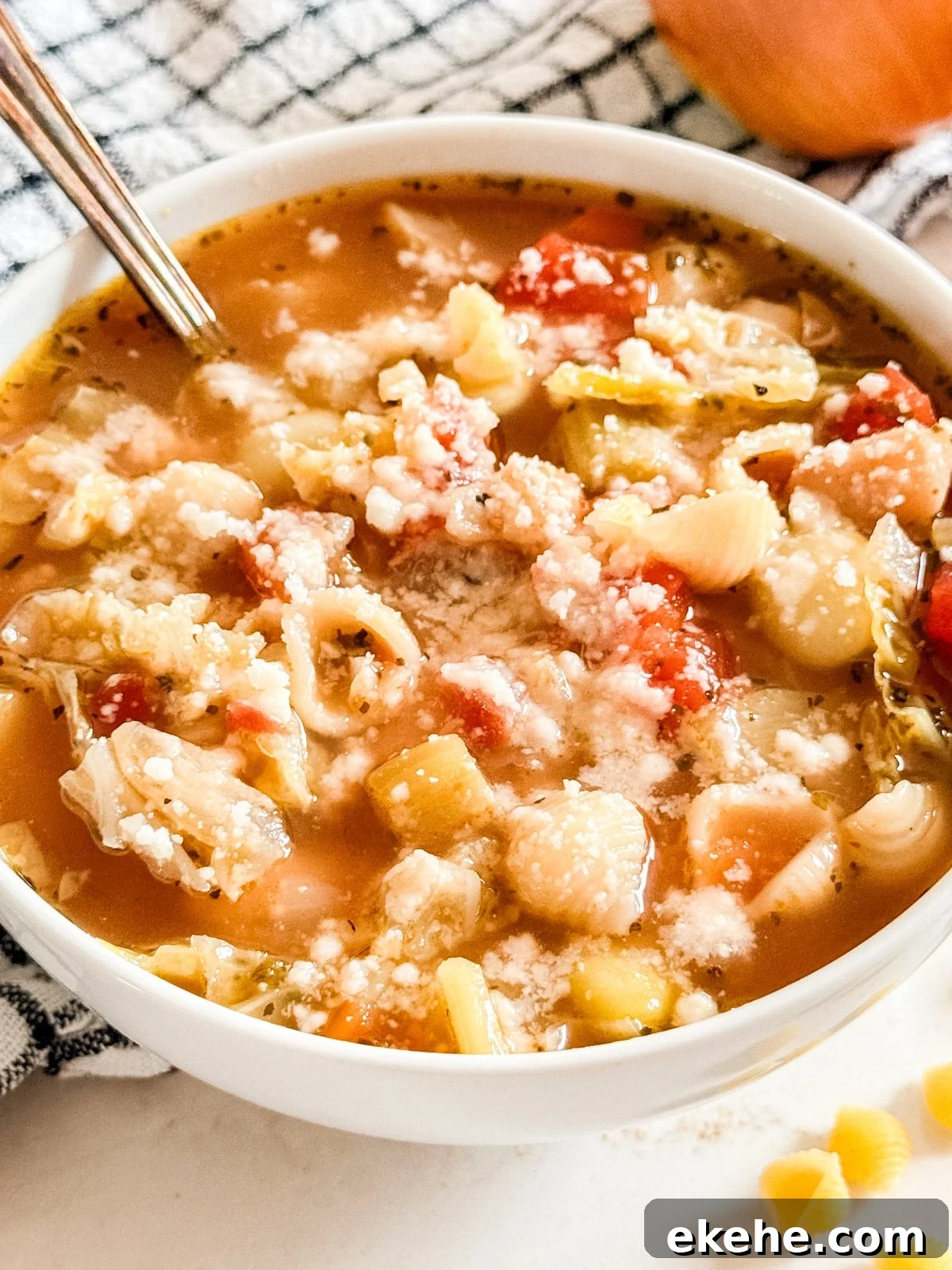
Why You’ll Love This Minestrone Italian Soup
Planning lunches can feel impossible some weeks. A big pot of minestrone solves that — it’s easy to make, stores well, and is comforting any time of year. This version has been refined over time to be hearty, flexible, and fridge-friendly. It combines vegetables, beans, and small pasta for a satisfying bowl that’s great for meal prep and for using up odds and ends in your produce drawer.
- Flexible with ingredients you already have
- Perfect for meal prep and leftovers
- Hearty without being heavy
- Easily adjusted for seasonal produce

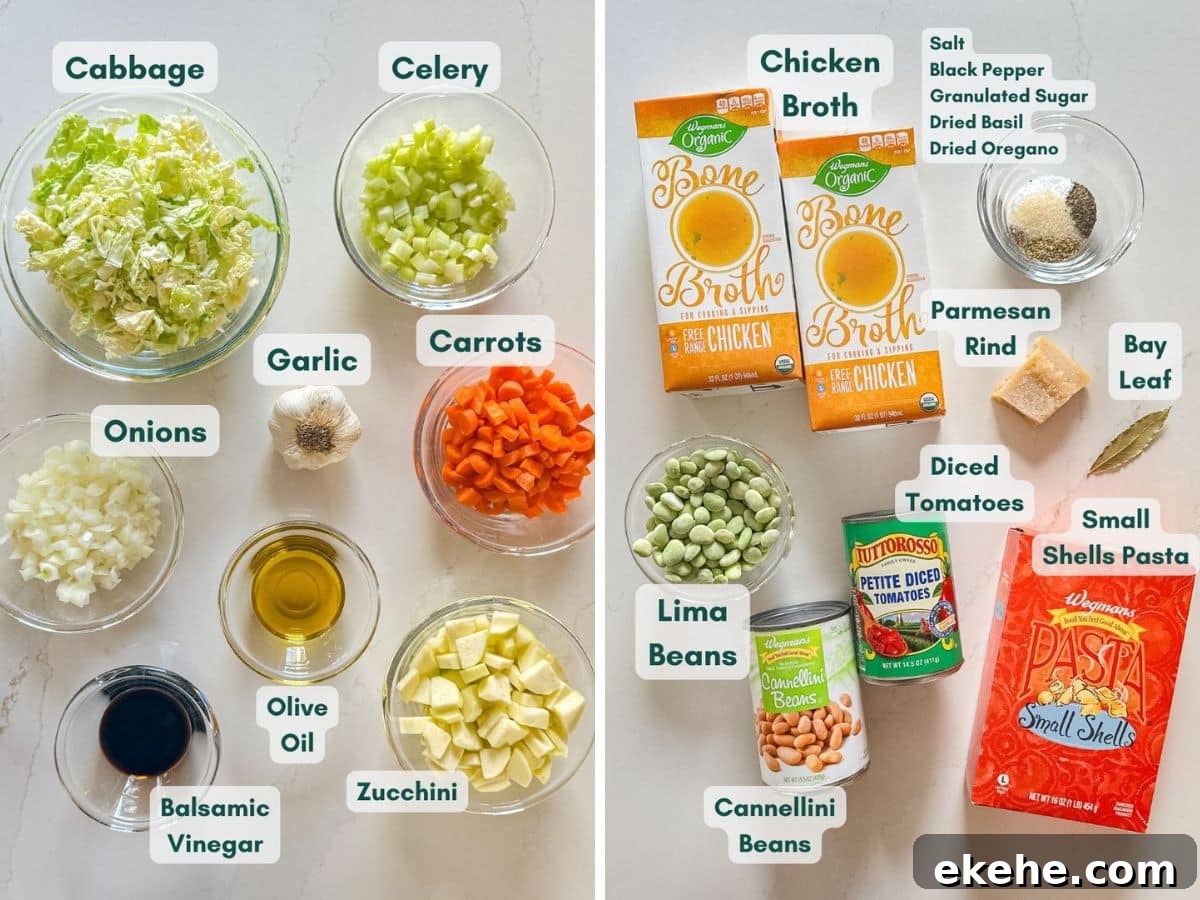
Ingredient Information And Substitutions
- Onion – Provides a savory base. Yellow or white both work.
- Carrots – Add gentle sweetness. Pre-cut carrots save time.
- Celery – Adds texture; can be substituted with extra carrots if needed.
- Zucchini – Light and tender; yellow squash is a good alternative.
- Savoy cabbage – Offers bulk and texture; green cabbage can be used instead.
- Garlic – Fresh is best, but jarred minced garlic will do in a pinch.
- Olive oil – For sautéing; avocado oil can substitute.
- Chicken broth – Adds depth; use vegetable broth for a vegetarian version.
- Canned diced tomatoes – Give acidity and body; crushed tomatoes create a smoother broth.
- Cannellini beans – Creamy and mild; great northern or navy beans are fine swaps.
- Lima beans – Add texture; replace with peas or omit if preferred.
- Small shell pasta – Holds the broth well; any small shape works.
- Dried herbs – Basil and oregano give classic Italian flavor; Italian seasoning can replace both.
- Sugar – Balances the acidity of the tomatoes.
- Bay leaf – Adds background depth; remove before serving.
- Parmesan rind – Optional, but enriches the broth nicely.
- Balsamic vinegar – A splash at the end brightens the soup; red wine vinegar also works.
- Romano or Parmesan cheese – For serving and extra savory flavor.
- Salt and pepper – Adjust to taste as the soup comes together.
How To Make Minestrone Soup With Pasta
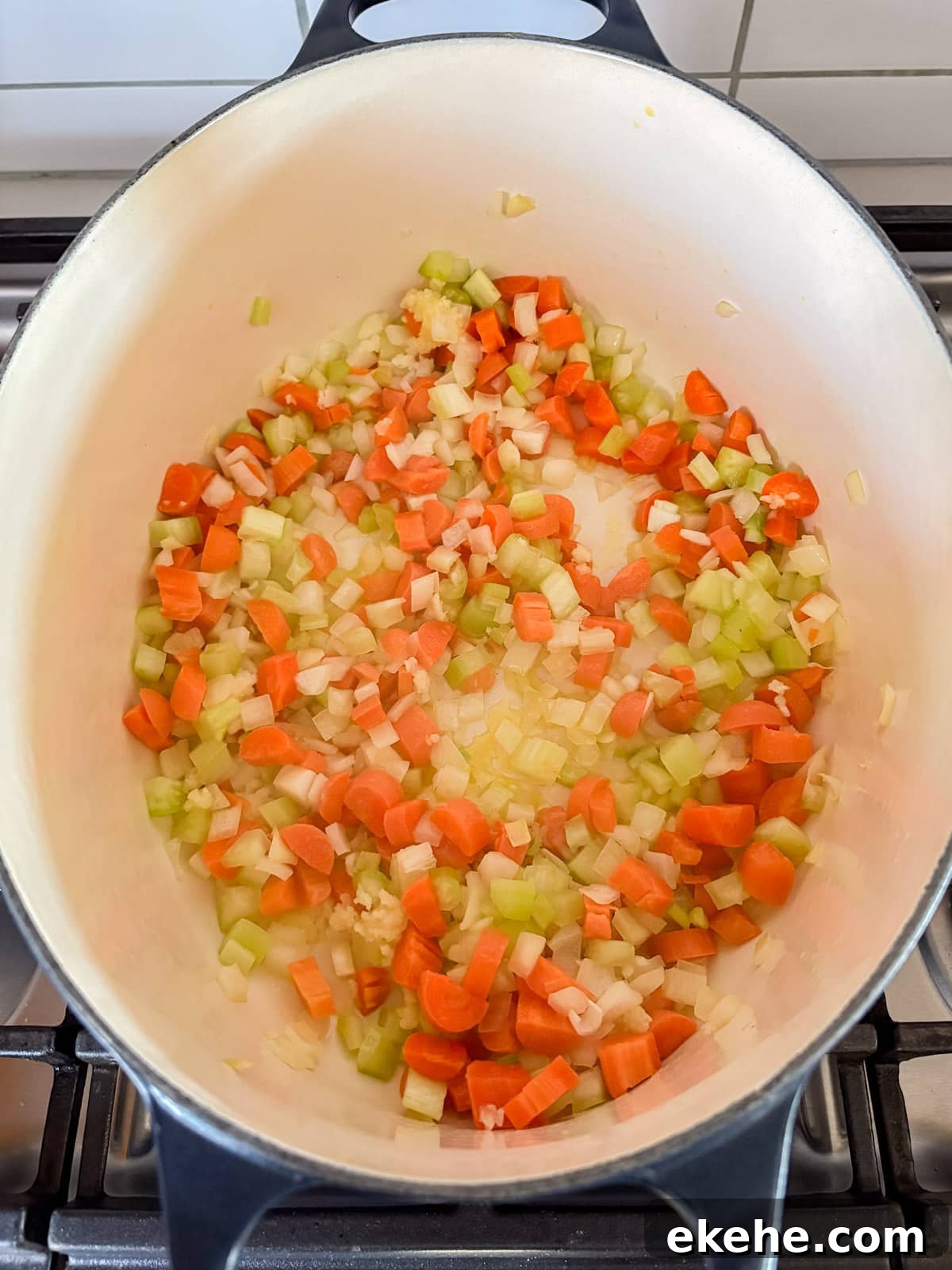
Step 1 – Cook the vegetables.
Warm the oil in a large pot over medium-high heat. Add the onion, garlic, carrots, and celery with a pinch of salt and pepper. Sauté 3–5 minutes, until they begin to soften.
Step 2 – Add the base ingredients.
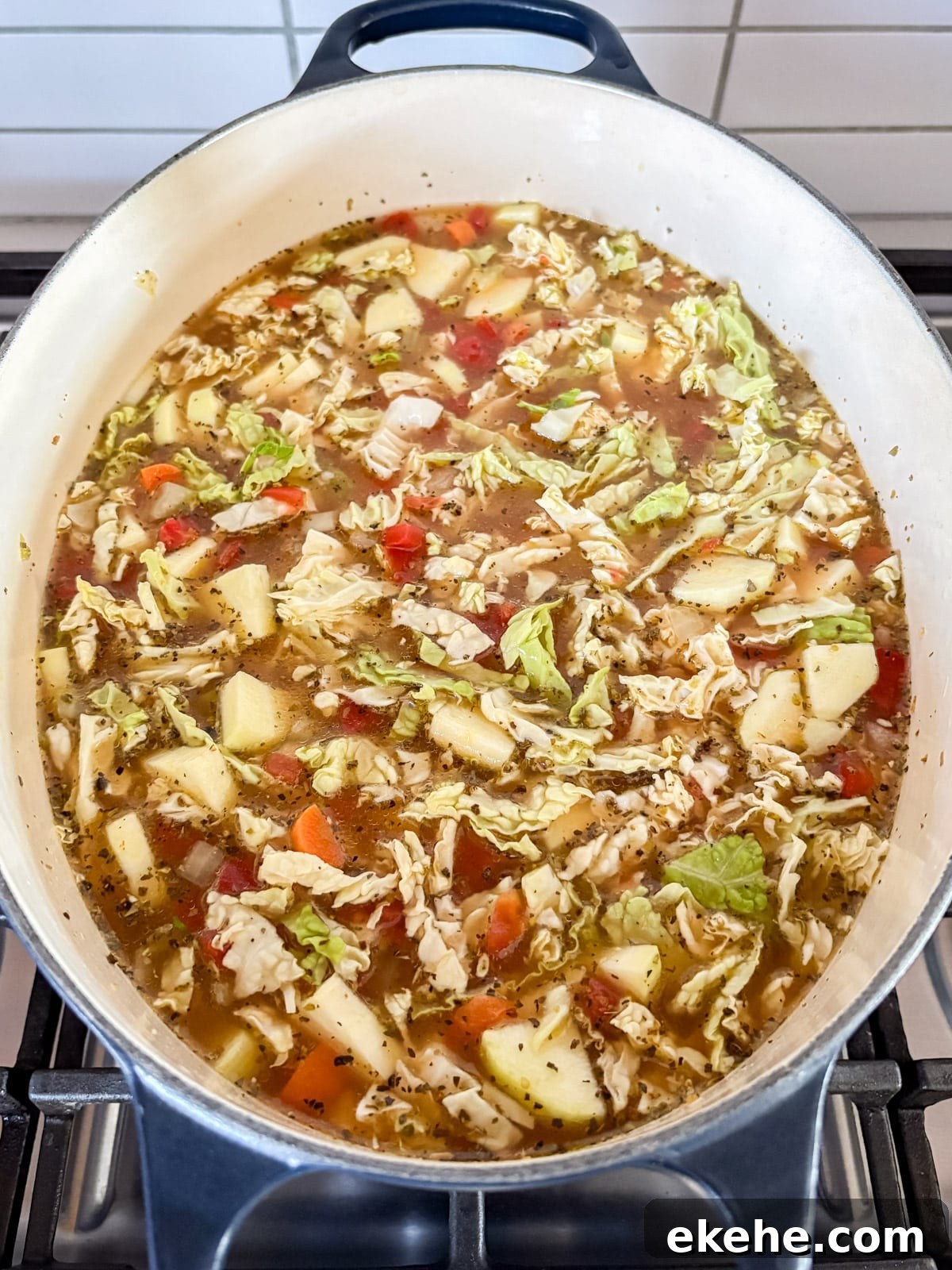
Pour in the broth and add the diced tomatoes, zucchini, cabbage, beans, dried herbs, sugar, bay leaf, and Parmesan rind. Bring the mixture to a boil.
Step 3 – Simmer.
Reduce heat and simmer gently for about 20 minutes to meld flavors.
Step 4 – Cook the pasta.
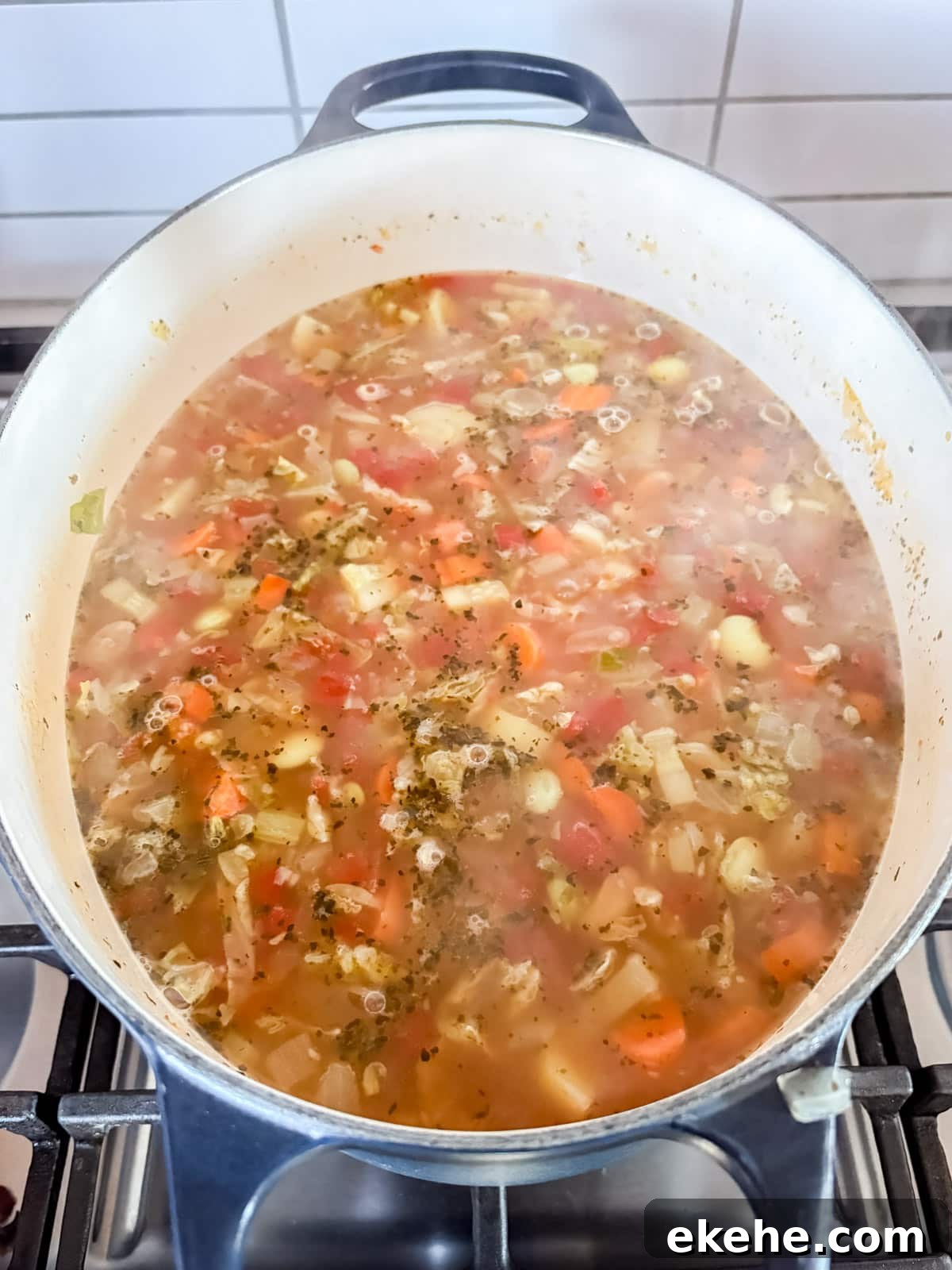
Add the small shell pasta and cook about 5 minutes, or until the pasta is tender. Stir in the balsamic vinegar and season with salt and pepper to taste.
Step 5 – Finish and serve.
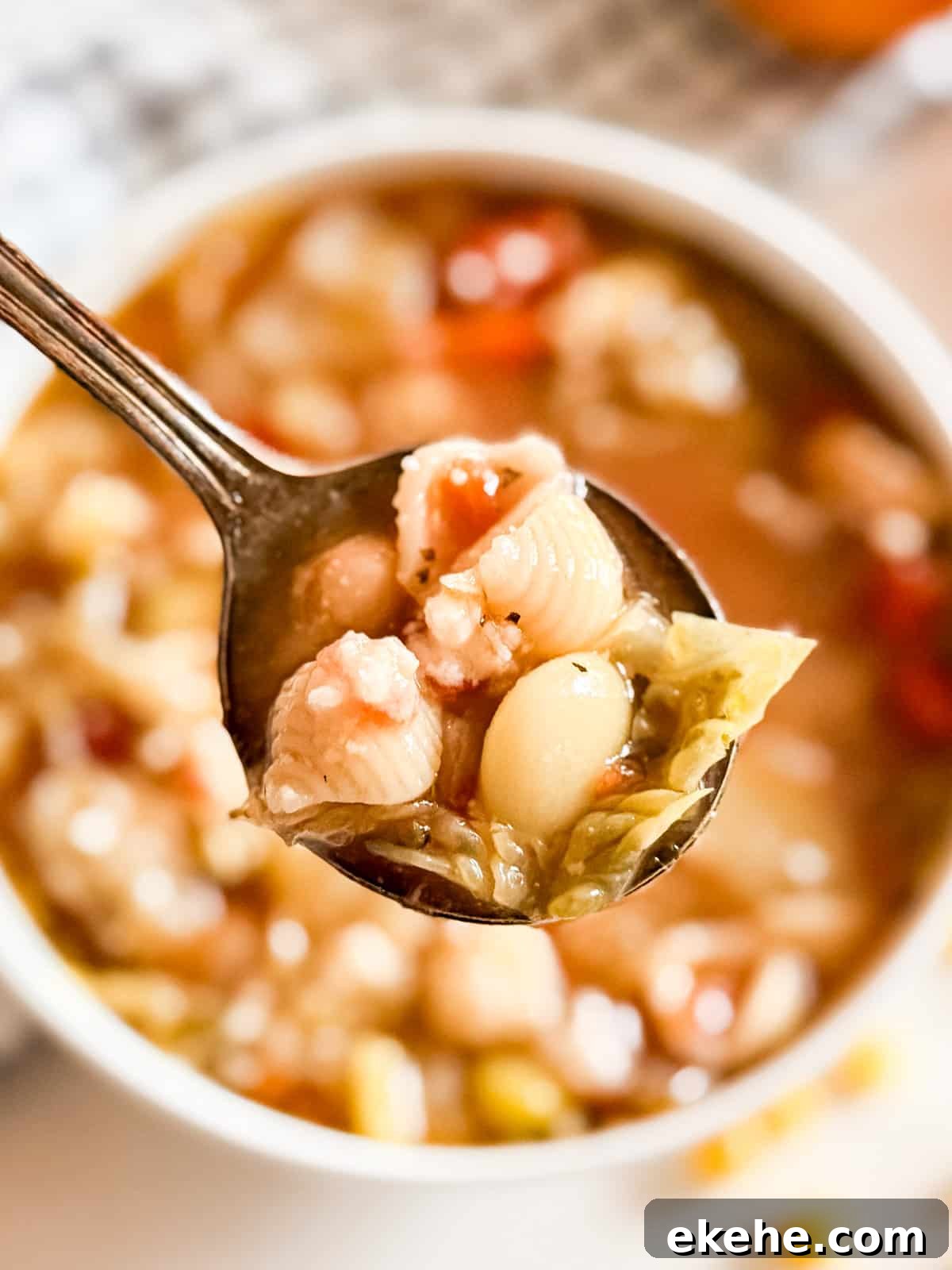
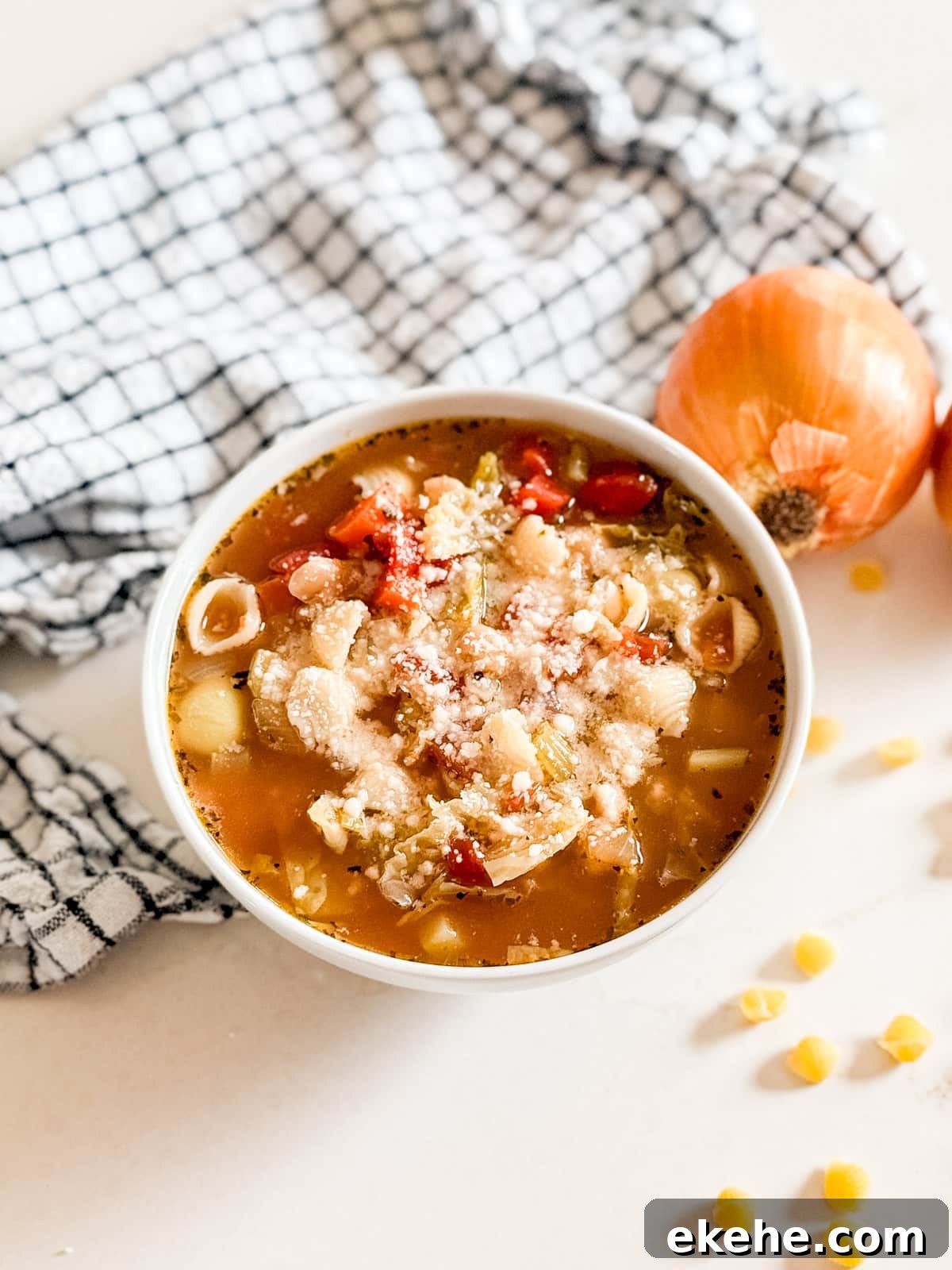
Remove the bay leaf and Parmesan rind. Serve hot with grated Romano or Parmesan cheese on top.
Frequently Asked Questions
Vegetarian minestrone uses vegetable broth instead of chicken broth and omits any meat while keeping the vegetables, beans, and pasta.
Minestrone originated in Italy as a peasant soup made from whatever vegetables were on hand, which explains the many regional variations today.
Yes. The flavors often improve after a day. For best texture, add pasta just before serving or cook it separately if planning leftovers.
Tips For Making This Italian Soup Minestrone
- Sauté the base well. Properly softened onions, carrots, and celery build a deeper flavor.
- Be flexible with vegetables. Swap in what you have; the soup is forgiving.
- Add pasta last. This prevents overcooking if you plan on storing leftovers. Alternatively, cook pasta separately and add to each bowl.
- Don’t skip the vinegar. A small splash brightens and balances the flavors.
- Let it rest. Allowing the soup to sit 10–15 minutes before serving helps flavors deepen.
- Prep ahead. Chop vegetables in advance and store in the fridge for quick assembly.
- Storage. Refrigerate in an airtight container for up to 4 days. Add a splash of broth when reheating if it thickens. Freeze for 2–3 months.
What To Serve With Italian Minestrone Soup
The soup is hearty on its own, but simple sides make it a fuller meal:
- Crusty bread or garlic bread
- A light green salad or tomato salad
- Simple roasted vegetables or stuffed zucchini
- Quick flatbread or a slice of focaccia
Other Soup Recipes To Try
-
Asian Soup with Cabbage and Meatballs
-
Carrot and Lentil Soup
-
Wild Rice Creamy Chicken Soup
-
Dutch Oven Chicken Noodle Soup



Love this recipe? Please leave a 5 star rating in the recipe card and a review in the comments if you try it. Check the recipe card below for measurements, times, and tips.

Traditional Minestrone Soup Recipe
Equipment
- 1 Dutch oven
- 1 chef’s knife
- 1 cutting board
- Measuring cups and spoons
- 1 wooden spoon
Ingredients
- 2 Tablespoons olive oil
- 1 cup onion, diced
- ½ cup celery, diced
- 1 cup carrots, diced
- 2 cloves garlic, minced
- 2 quarts chicken broth (or vegetable broth)
- 16 ounces diced tomatoes, canned
- 1 cup zucchini, diced (about 1 medium)
- 2 cups savoy cabbage, shredded
- 14.5 ounces cannellini beans, canned and drained
- ½ cup frozen lima beans
- 1 teaspoon dried basil
- 1 teaspoon dried oregano
- 1 teaspoon sugar
- 1 bay leaf
- 1 Parmesan rind (optional)
- ⅓ cup small shell pasta
- 1–2 Tablespoons balsamic vinegar
- Salt and pepper to taste
- Romano or Parmesan cheese for serving
Instructions
- Heat oil in a large pot over medium-high heat. Sauté the onions, garlic, carrots, and celery with a sprinkle of salt and pepper for 3–5 minutes, until softened.
- Stir in the broth, diced tomatoes, zucchini, cabbage, cannellini beans, lima beans, basil, oregano, sugar, bay leaf, and Parmesan rind. Bring to a boil.
- Reduce heat and simmer gently for about 20 minutes.
- Add the pasta and cook about 5 minutes, until tender. Stir in the balsamic vinegar and adjust seasoning with salt and pepper.
- Remove the bay leaf and Parmesan rind. Serve immediately topped with grated Romano or Parmesan cheese.
Video
Notes
- Sauté the base well. This builds a richer flavor.
- Forgiving recipe. Swap vegetables based on what’s available.
- Add pasta last. Prevents it from getting too soft for leftovers.
- Use the vinegar. It brightens the overall flavor.
- Let it rest. A short rest helps flavors settle.
- Prep ahead. Chop vegetables in advance for quick assembly.
- Storage. Refrigerate up to 4 days or freeze 2–3 months. Add a splash of broth when reheating if thickened.