Ahead of the game
Edouard de Pomiane was far ahead of his time. Born in Paris in 1875, nearly a century before contemporary chefs such as Jamie Oliver, he combined careers as a scientist, lecturer, broadcaster and writer. He understood that cooking need not be an obscure art reserved for professionals but could be simple, quick and enjoyable for everyone.
In the early 20th century many felt life had become rushed and frenetic, leaving little time to appreciate ordinary pleasures. French cuisine was often portrayed as mysterious and demanding, something only trained cooks could execute properly. De Pomiane challenged that notion by breaking cooking down into manageable steps and adapting techniques to modern rhythms, showing that good food can fit into busy lives without losing quality or pleasure.
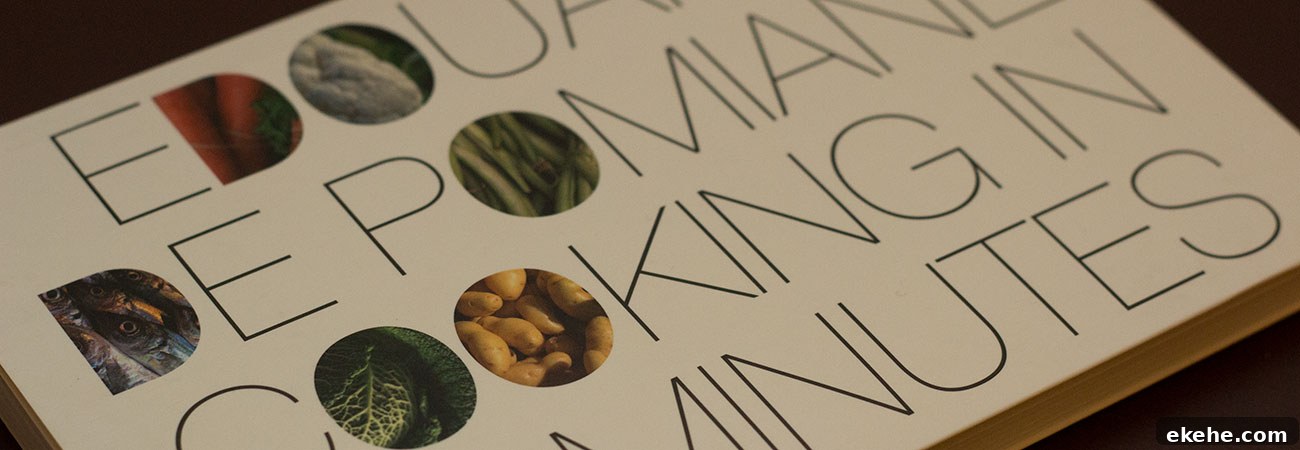
His response was the book first published in 1930 as La Cuisine en Dix Minutes ou l’Adaptation au Rythme Modern—usually translated as Cooking in Ten Minutes, or The Adaptation to the Rhythm of Our Times. The title may be long, but the book’s purpose is simple: to bring clarity and speed back to everyday cooking, so people can enjoy both preparing and eating without stress.
Modern life spoils so much that is pleasant. Let us see that it does not make us spoil our steak or our omelette. Ten minutes are sufficient – one minute more and all would be lost. Edouard de Pomiane
Cooking, simplified
Reading de Pomiane is like being guided by a charming, unpretentious teacher. His style is concise and confident: he avoids unnecessary detail and invites the reader to trust common sense. This economy of words encourages home cooks to act rather than overthink, and to rediscover the pleasure in straightforward recipes.
The recipes themselves are direct and swift to prepare, making the book easy to browse cover to cover. Occasionally a touch of whimsy or indulgence appears—an oyster-and-sausage suggestion, for example, where he recommends a hot sausage followed by a cooling oyster and concludes simply, “White wine, of course.” Those moments add personality without complicating the practical advice.
De Pomiane treats even the humblest dishes with a little ceremony. His boiled-egg sketch manages to be both practical and celebratory: slice the tops off, eat with crisp bread and fresh butter, add a fine sauce and a cool dry white—“This is a feast,” he writes. Many recipes omit exact weights or rigid measurements; the emphasis is on correct timing and technique rather than laboratory-style precision.
Throughout the book you sense a kind, modest writer whose aim is to empower the reader. He keeps ego out of the way so that the focus remains on doing and enjoying rather than on showmanship.
I love my book because I am writing it for you. Edouard de Pomiane
The ceremony of eating
De Pomiane also offers gentle guidance on dining etiquette and ambiance. He advises against letting guests help in the kitchen, arguing it creates “an atmosphere of chaos and destroys the repose which should follow a good meal.” He suggests small romantic touches—your gramophone “singing very softly a tango or rhumba”—to elevate the experience and remind readers that simple food tastes better when accompanied by calm and company.
Those recommendations reveal the broader intention behind the practical recipes: to reclaim the pleasures of eating slowly and well, even within the constraints of modern life. His advice is both pragmatic and affectionate, geared toward restoring dignity and enjoyment to everyday meals.
(Ratings are out of five stars)
Reviewed by Gavin Wren