Have you been wondering how to organize your genealogy research and files? I’ve got you covered!
Diving into genealogy feels like solving a historical mystery: each discovery adds another layer to your family’s story. Yet the excitement can quickly be overshadowed by stacks of documents and countless digital files, leaving you unsure where important evidence is stored. Without a simple, consistent organization system, research becomes harder, less reliable, and more time-consuming.
For both professionals and enthusiastic hobbyists, organizing your genealogy is not just about tidiness. It means making your findings reliable, searchable, and easy to share. Many researchers I meet want a system that brings order to the chaos so they can focus on real discoveries instead of hunting for misplaced records.
Below are three essential strategies to streamline your research so you can build a stronger, more accurate family history.
🤩 Learn how to organize your online bookmarks!
Why Organize Genealogy Anyway?
I love puzzles, and genealogy is the ultimate puzzle where you rarely have the picture on the box. Every name, date, and record contributes to the larger picture of your ancestors’ lives. The real challenge is keeping all these pieces—notes, records, and digital files—organized so you can trust and reuse your work.
Here are three key reasons an organization system matters:
- Know Exactly Where Records Are: Important documents should be safe and accessible. A consistent system ensures you can retrieve a record quickly when you need to verify a fact or share evidence.
- Be an Efficient Researcher: Genealogy yields a lot of data. A predictable filing and research method acts like a map that guides your work, reduces duplicated effort, and helps maintain accuracy.
- Build a Reliable Family Tree: A well-organized approach produces a family tree you can trust. When sources and notes are clear and easy to find, your tree reflects true connections and meaningful stories.
Putting effort into organization preserves your family history and makes future research more productive and enjoyable.
How To Use 3 Essential Strategies for Organizing Your Genealogy Research
There are three core things that will keep your genealogy research on track. They don’t require more subscriptions or endless record downloads—just consistent habits and simple systems.
#1 – Consistent Genealogy File Naming
Consistent file naming is a foundational habit. Think about how you’ll search for a file later and include those terms in your filename. I use a simple formula so I can find documents quickly across digital folders or printed archives.
My typical format is: Year DocumentType FirstName LastName Location. For clarity I list these elements, but in practice you don’t need the plus signs—just a consistent sequence that makes sense to you.
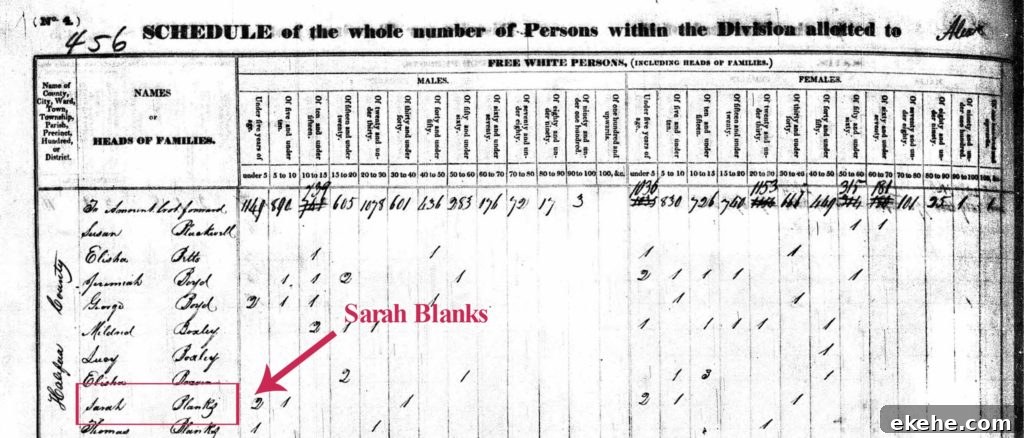
Example: An 1830 census entry for Sarah Blanks in Halifax County, VA, was named 1830 Census Sarah Blanks Halifax County. You might prefer a different order or include middle names, birth years, or repository names—choose a formula and stick with it.
Tip: Keep your naming formula written down where you can see it until it becomes a habit.
#2 – Genealogy Workflow and Habits
Following a consistent research workflow each time you sit down helps prevent mistakes, misfiled records, and repeated searches. A predictable sequence of steps keeps your work focused and makes it easier to pick up where you left off.
My workflow begins and ends with a research plan—start with a clear question and finish by recording what you found and what to do next. That loop prevents aimless browsing and ensures each session advances your project.
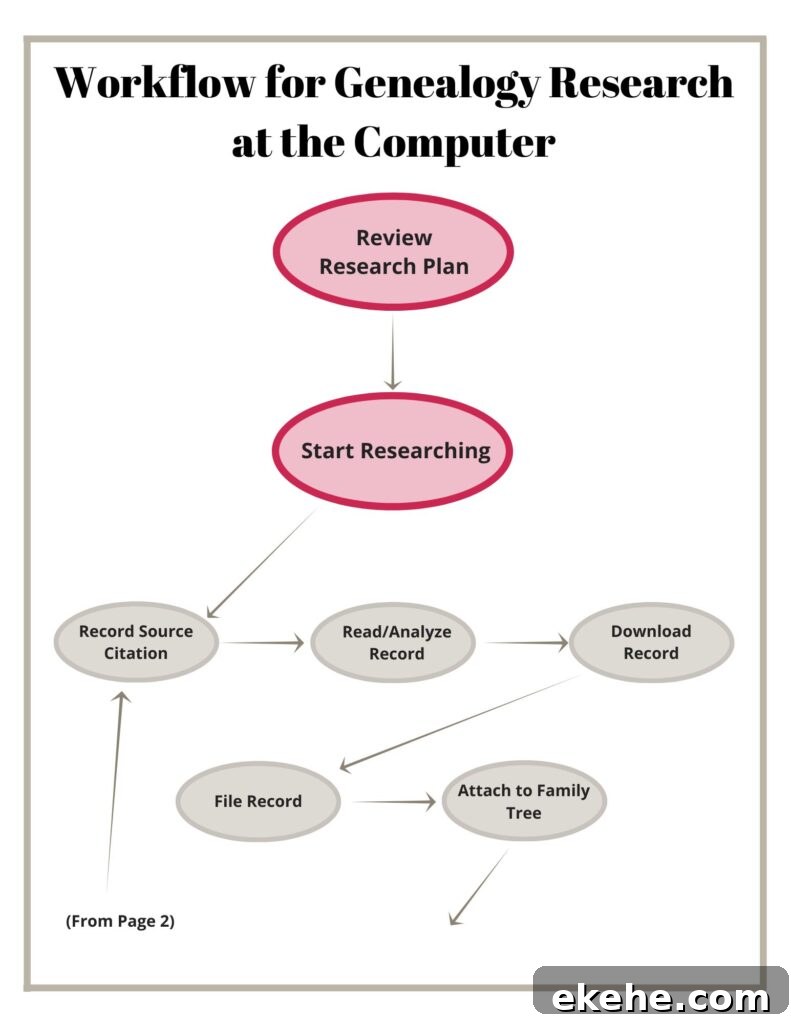
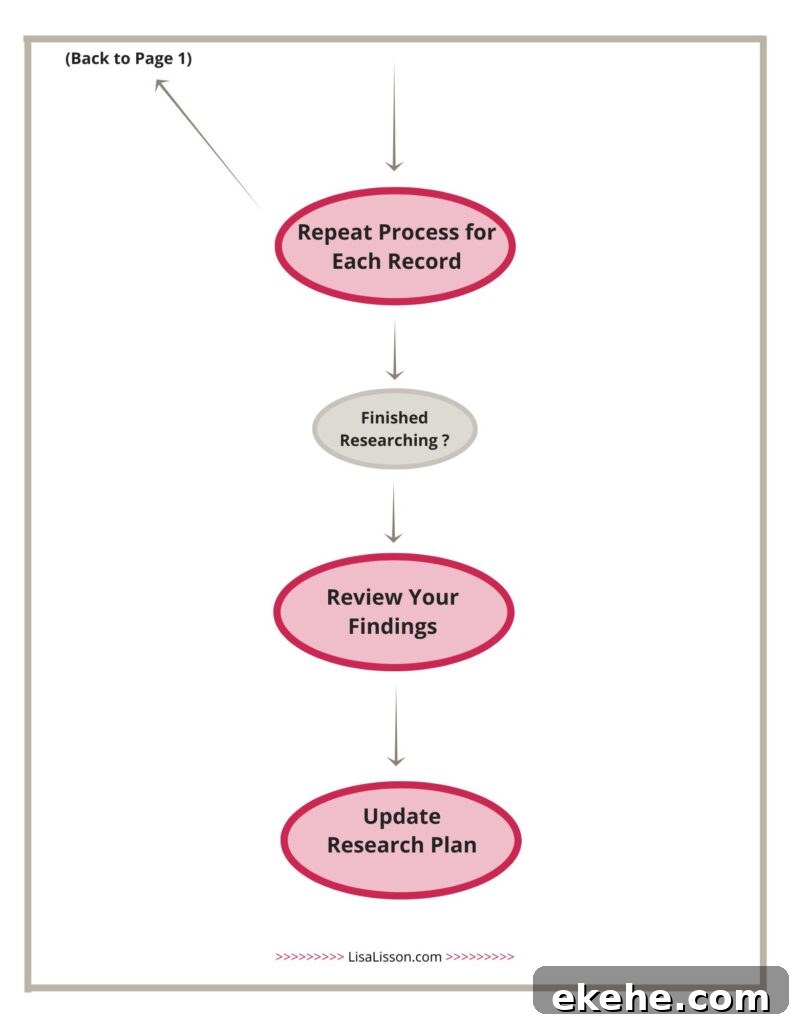
Use the same basic steps each session: identify the research question, search targeted sources, evaluate findings, save properly named files, and record conclusions and next steps.
#3 – A Genealogy Research Plan
A research plan is a roadmap for a focused, productive session. It can be very simple: state the research question, list the record types to pursue, and note the repositories or websites to check. With a plan you’ll avoid distraction and make measurable progress.
Here’s an example of a simple plan I use, created in a spreadsheet for easy tracking.
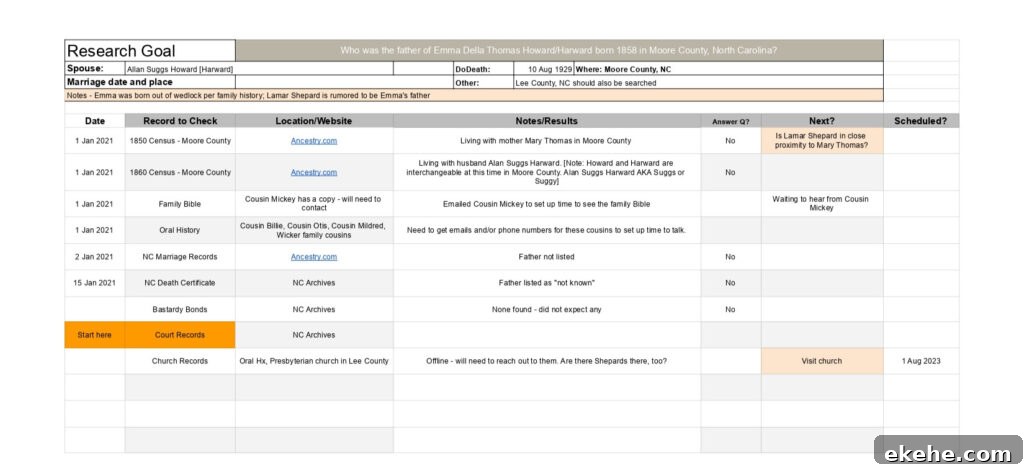
Keeping each plan short and actionable helps you complete tasks and document results so the next session starts with clarity.
🤩 Watch these strategies in action in this video: 3 Key Essentials Your Genealogy NEEDS.
FAQs
Both have benefits. Digitizing records makes them searchable and easy to back up, while paper copies and original documents should be protected and stored properly. Many researchers use a hybrid approach: keep originals safe and work with digital copies for daily research.
Regular backups are essential. Back up at least quarterly and always after major research sessions. Use both local external storage and off-site or cloud backups for redundancy.
Several programs support organization and source citation. Choose one that fits your workflow and makes source tracking easy.
Use acid-free sleeves or archival-quality folders, avoid direct sunlight, and keep items in a cool, dry place. Digitize items for easier access while preserving the originals.
🤩 Read more about creating that genealogy research plan!
Conclusion / Final Thoughts
Navigating your ancestry is a rewarding blend of discovery and dedication. As you uncover stories and piece together relationships, a clear system for naming files, following a consistent workflow, and using focused research plans will keep your work credible and usable.
Each document, photograph, and note is part of a larger puzzle. Organize them thoughtfully and your research will be easier to verify, share, and expand. Use the three strategies above to create a reliable practice that supports ongoing discoveries.
Watch the strategies in action in the video: 3 Key Essentials Your Genealogy NEEDS.
Read More:
- 14 of the BEST Genealogy Tips
- Your Guide To Cemetery Research – Are You Missing Important Genealogical Clues?
- Avoid Common Mistakes in Your Genealogy Research!
- 5 Websites Professional Genealogists Use To Research Ancestors for Free
- 11 Unique Genealogy Resources You May Have Missed in the Archives!
- Ancestors in Colonial America? Let’s Learn How To Find Them