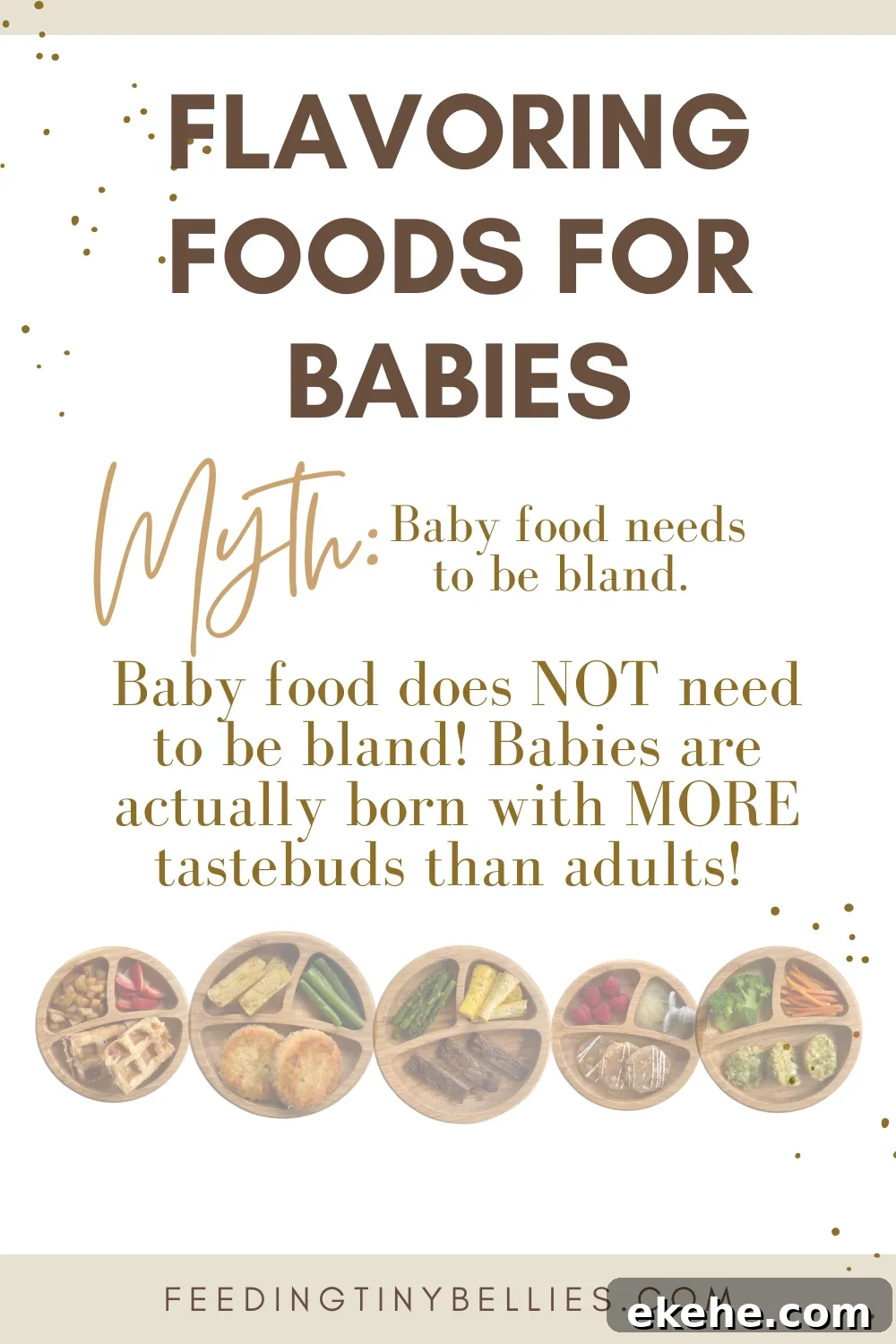
Baby food doesn’t have to be bland. From the first tastes of solids, infants can enjoy a wide range of flavors. This guide explains how to naturally add flavor to baby food using spices, fruits, and simple ingredients—without relying on added salt or sugar.
Many people assume baby food must be plain, but early exposure to varied tastes helps babies develop broader palates. You can safely introduce gentle seasonings and natural sweeteners that enhance flavor while keeping meals nutritious.
Table of Contents
- Myth: Baby Food Needs To Be Bland
- Do Babies Need No Salt or Sugar at All?
- Natural Ways to Sweeten Baby Food
- Best Spices for Baby Food
- Simple Flavor Combinations to Try
- How to Introduce Spices to Babies
- Foods to Watch for Sodium (Not Avoid Completely)
- Why Flavor Matters Early On
- More BLW Resources
Myth: Baby Food Needs To Be Bland
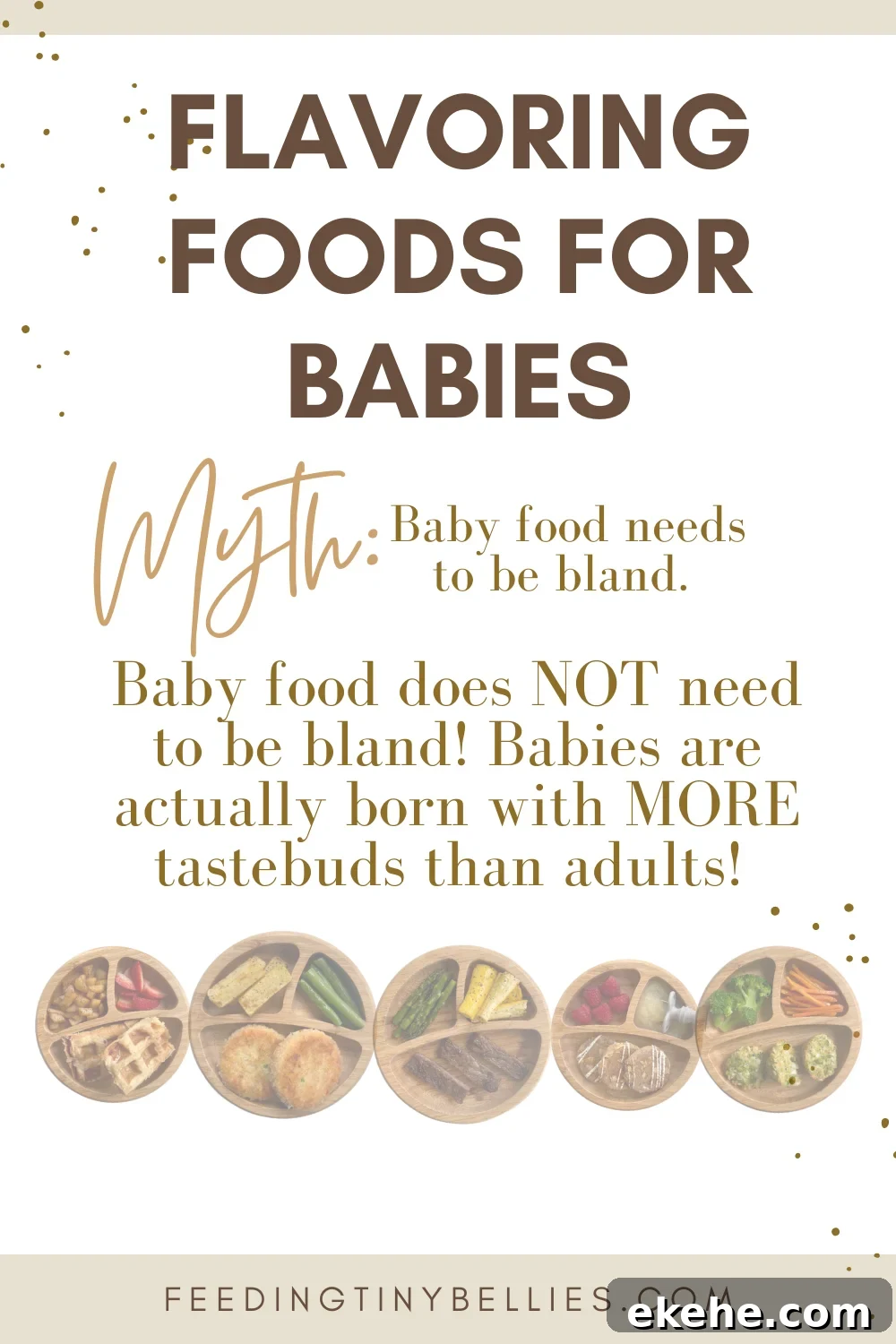
Babies are born with more taste buds than adults, so they experience flavors intensely. Introducing a range of tastes early can help children become more adventurous eaters later. There is no need to keep baby food flavorless—just choose mild, age-appropriate seasonings.
Do Babies Need No Salt or Sugar at All?
It’s best to limit added salt and sugar during the first year. Many common foods naturally contain sodium—such as bread, cheese, and some sauces—so the aim is balance rather than perfection.
Focus on:
- Whole, minimally processed foods
- Low-sodium packaged options when needed
- Natural flavor from fresh ingredients
Natural Ways to Sweeten Baby Food
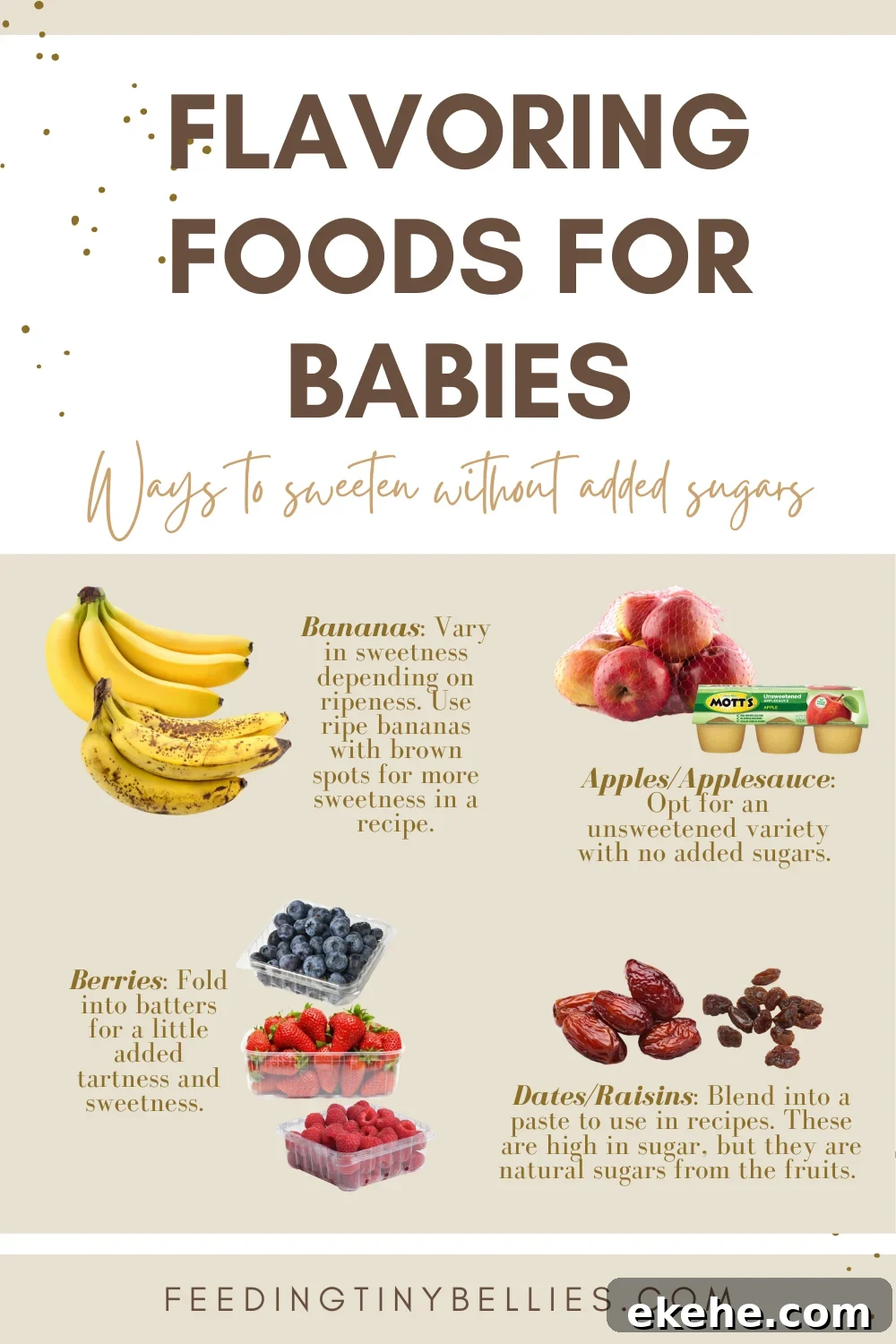
Instead of adding sugar, try naturally sweet ingredients:
Fruits (natural sweeteners):
- Bananas (especially ripe)
- Berries
- Unsweetened applesauce
- Mango
- Peaches
Natural sweet additions for recipes:
- Soaked, blended dates
- Soaked, blended raisins
These options add sweetness while contributing fiber and nutrients, making purees and mixes more appealing without refined sugar.
Best Spices for Baby Food
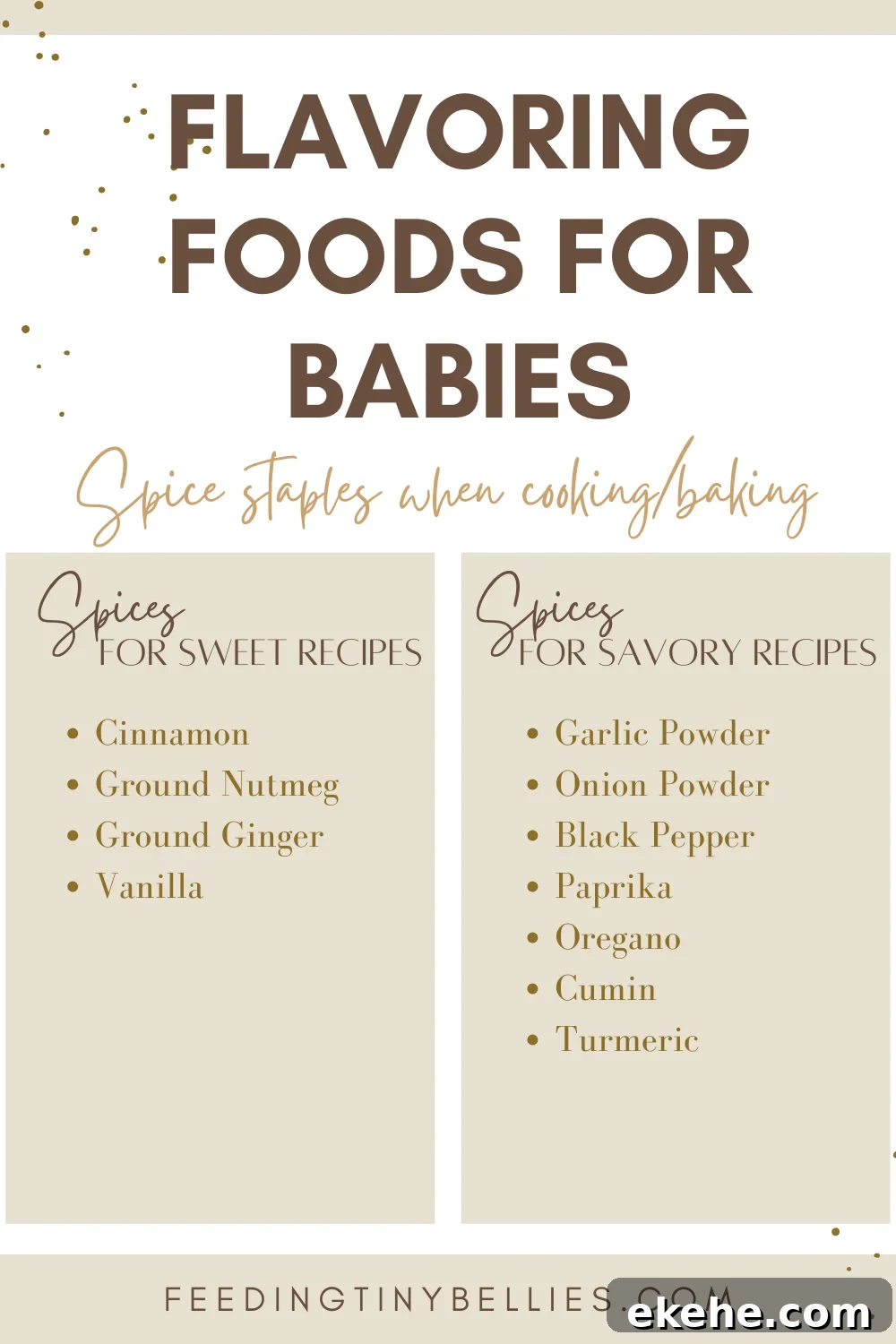
Spices are an easy, low-sodium way to introduce flavor. Start with small amounts of mild options and observe how your baby reacts.
Warm, sweet flavors (good for baking and breakfast):
- Cinnamon
- Nutmeg
- Vanilla
- Ginger
Savory flavors (good for meals and vegetables):
- Garlic powder
- Onion powder
- Paprika
- Oregano
- Cumin
- Turmeric
- A small amount of black pepper
These spices add depth and variety, helping babies become accustomed to the flavors used in family meals.
Simple Flavor Combinations to Try
Here are easy, baby-friendly combinations to get you started:
- Sweet potato + cinnamon
- Yogurt + cinnamon + mashed berries
- Chicken + garlic powder + paprika
- Eggs + mild cheese + oregano
- Oatmeal + banana + vanilla
- Avocado + lime + a tiny pinch of cumin
Keep seasonings light—babies only need a hint of flavor to start learning taste profiles.
How to Introduce Spices to Babies
Tips for adding new flavors safely and successfully:
- Introduce one new spice or flavor at a time
- Offer the new flavor multiple times—repetition helps acceptance
- Don’t conclude a dislike from a single refusal
- Blend spices into familiar foods to ease the transition
- Serve small portions when trying something new
Babies may need several exposures before accepting a new taste; patience and consistency pay off.
Foods to Watch for Sodium (Not Avoid Completely)
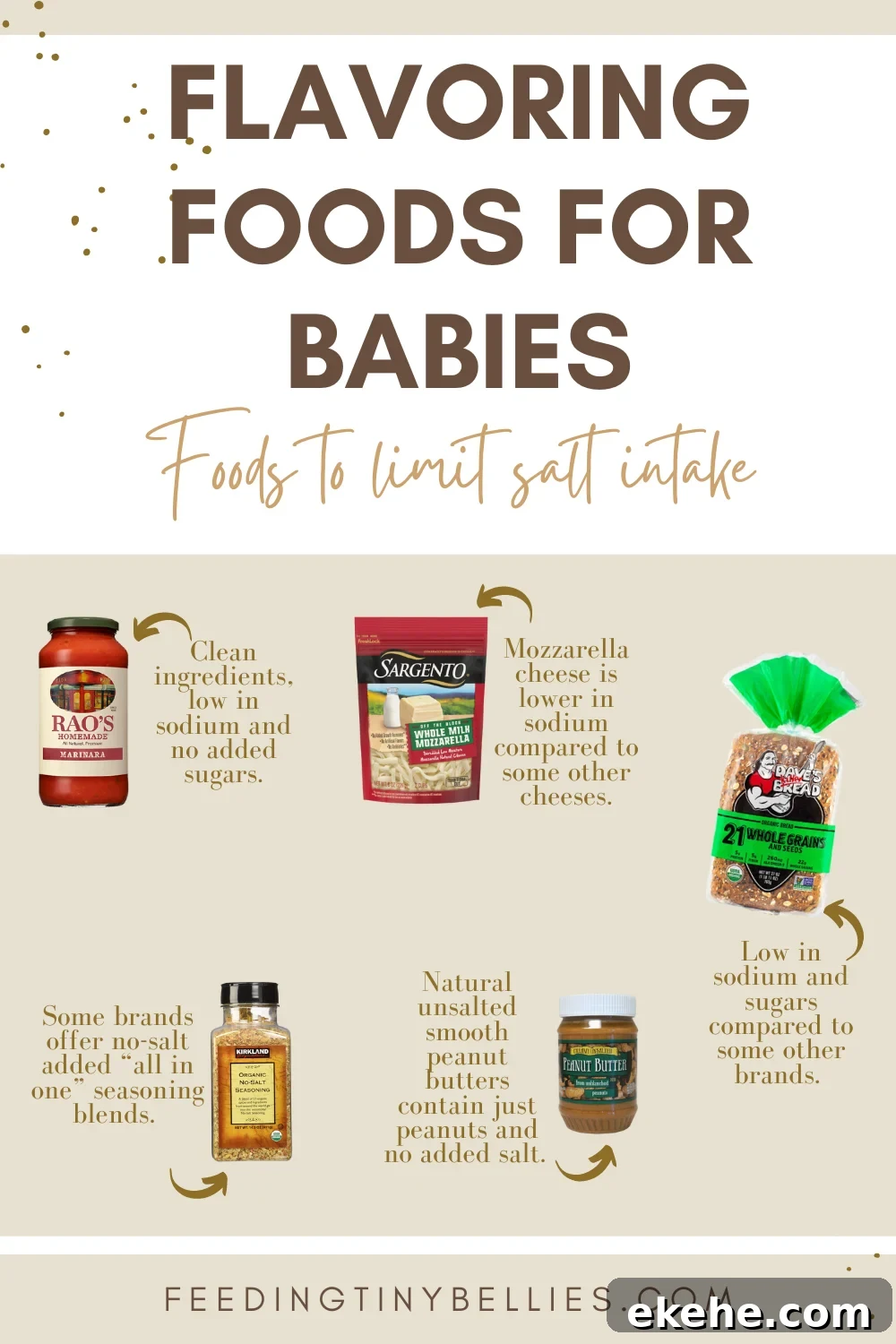
You don’t have to avoid these foods entirely, but be mindful of their sodium content and choose lower-sodium options when possible:
- Bread
- Cheese
- Pasta sauces
- Packaged snacks
- Deli meats
Balancing these items with fresh fruits, vegetables, and homemade dishes helps control overall sodium intake.
Why Flavor Matters Early On
Introducing a range of flavors early supports long-term healthy eating habits. Benefits include:
- Developing a more adventurous palate
- Reducing picky eating later in childhood
- Encouraging acceptance of vegetables, herbs, and varied textures
- Making family meals simpler because baby can share family flavors
Flavor does not need to be strong—consistency and variety are what matter most.
Frequently Asked Questions
Yes. Mild spices such as cinnamon, garlic powder, and paprika are generally safe and can enhance flavor without added salt or sugar.
Not necessarily. Babies often need multiple exposures before accepting a new taste. Try again later and mix the flavor into familiar foods.
No. Babies can often eat the same foods as the family when textures and seasonings are adjusted for safety and mildness.
More BLW Resources
Feeding After Age 1: Toddler Diet Changes Explained
Easy No-Cook Meals for Baby-Led Weaning (Fast & Healthy Ideas)
How Much Should My Baby Eat? Baby Portion Sizes Explained
Baby-Led Weaning Grocery List: Healthy Foods for Babies & Toddlers
Flavoring baby food can be simple and nutritious. With gentle spices, real fruits, and whole ingredients, you can make meals that introduce babies to varied tastes without added salt or sugar. Each new flavor is part of learning what food can be—approached thoughtfully, this supports healthier eating habits for life.