
Should my toddler be drinking almond milk? Is almond milk similar to cow’s milk? Read on to learn more.
We usually have several kinds of milk in the fridge at once. I’ll admit I’m indecisive, and having options works for our family. The milk situation developed naturally: my son drinks whole or 2% milk (I buy whichever organic option is on sale), I’m lactose intolerant so lactose-free is an option for me, I like almond milk in smoothies, and my husband prefers coconut milk in his coffee after trying it once.
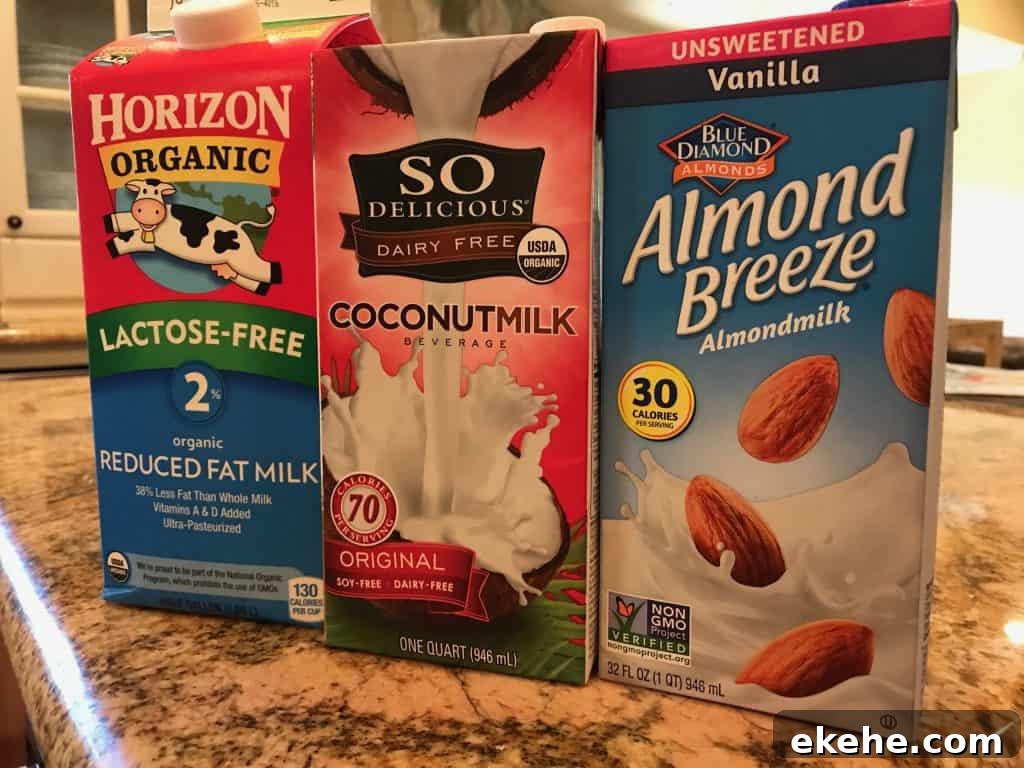
I buy my son’s milk primarily for its nutritional value; the adults’ choices are mostly taste-based. Many parents hesitate to switch their child to cow’s milk at one year because of concerns about dairy. Whether those concerns are valid is a different discussion. Today I want to focus specifically on almond milk, which is one of the most common non-dairy milks people offer toddlers. Because it’s called “milk,” many assume it’s nutritionally similar to cow’s milk, but the labels tell a different story.
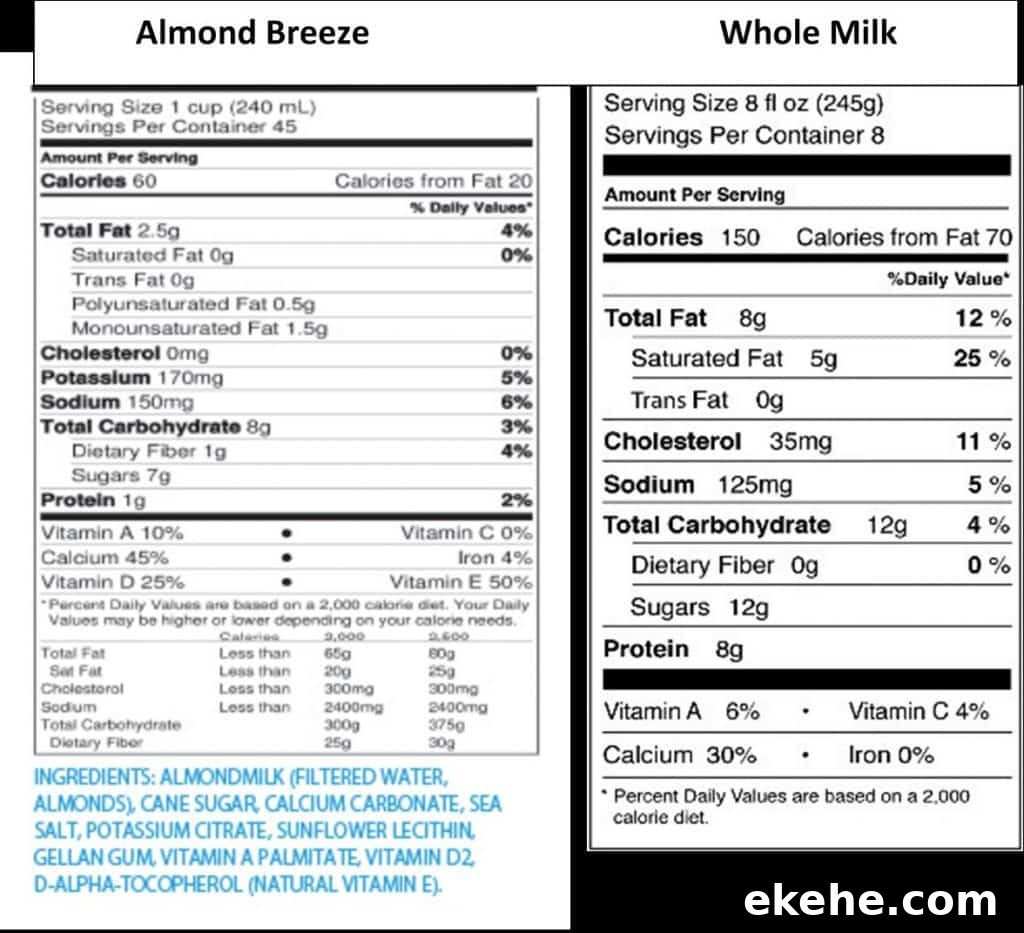
Below is a comparison of Almond Breeze (original) to whole cow’s milk. The differences are important to understand when deciding what to offer a toddler.
Calories
Almond Breeze contains less than half the calories of whole milk. That can be helpful for adults trying to lose weight, but toddlers need plenty of calories to support rapid growth and brain development. Toddlerhood is not the time to restrict calories. Substituting almond milk for cow’s milk or breast milk could reduce the calories available to your child, and that isn’t ideal at this stage.
To put it in perspective: a healthy two-year-old of about 30 pounds may need roughly 1,100 calories per day. Many adults consume between 1,200 and 1,600 calories daily, so toddlers—who are about a quarter our size—still require a substantial portion of energy relative to their body size. That’s why low-calorie options aren’t generally recommended for most toddlers.
Protein
Almonds themselves have protein, but almond milk is mostly water—water is usually the first ingredient—so the protein content is low. A cup of almond milk typically provides about 1 gram of protein versus roughly 8 grams in a cup of cow’s milk. For many toddlers, especially picky eaters who avoid meat, milk and yogurt are reliable protein sources. Although toddlers’ protein needs aren’t large, they still need adequate protein for growth, and substituting cow’s milk with almond milk can make meeting those needs harder.
In conclusion…
I’m not saying a toddler can never have almond milk. Rather, I want to clarify the myth that almond milk is nutritionally similar to cow’s milk or breast milk. Despite sharing the name “milk,” they differ substantially in calories, protein, and other nutrients.
If a toddler is allergic to cow’s milk or refuses it, there are alternative milk substitutes that are closer nutritionally to cow’s milk. One newer option is a pea-based beverage called Ripple, which contains about 8 grams of protein per cup. I haven’t tried it personally, but it’s an example of an alternative with more protein than almond milk.
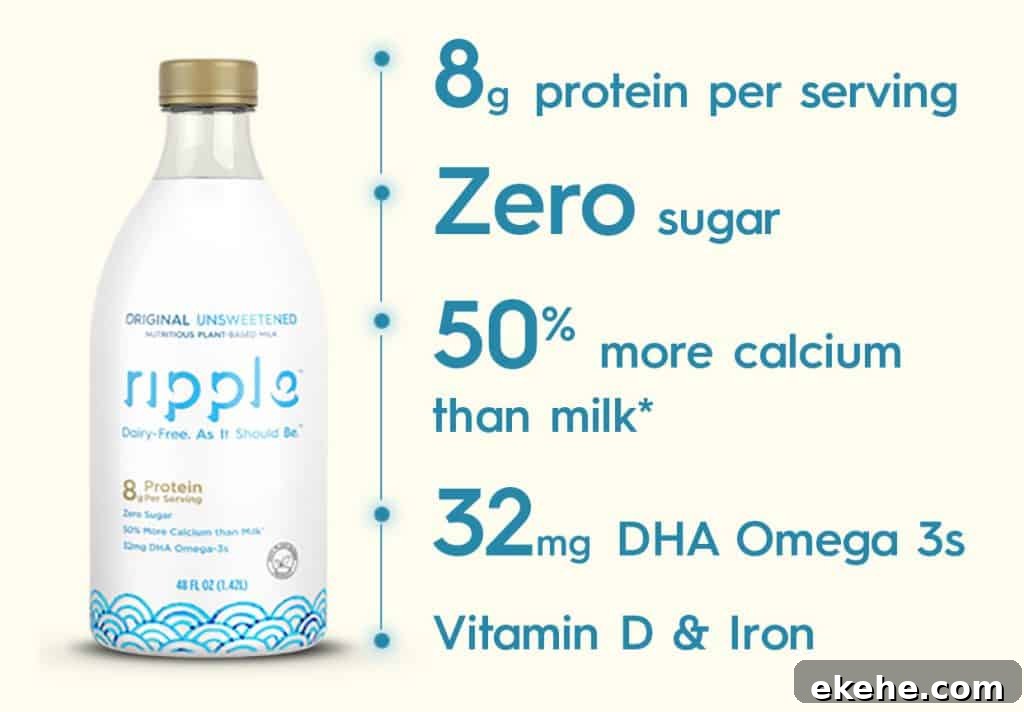
www.ripplefoods.com
Your toddler can certainly grow well without cow’s milk if their overall diet provides required nutrients. If you’re considering milk alternatives, consult a registered dietitian to ensure your child’s diet meets their nutritional needs.
——–
Need some healthy breakfast ideas for your little one?
When I think about toddlers and milk, I always think about breakfast. Mornings can be hectic, and having easy, nutritious options helps when you oversleep or are pressed for time.
If you’d like ideas for healthy toddler breakfasts, check out my favorite suggestions on the blog.